Skip to content
Menu

We earn a commission if you book through this link. You pay the same price.

Search

Attraction directory

Sanibel Island Attractions

Last updated

Sanibel Island attractions in order along the island, from the 1884 lighthouse at the east point to Blind Pass in the west, with honest post-Ian status.

  • 28Places listed
  • 19Free to visit
  • 12Areas
A narrow sand road running between dense green trees on Sanibel Island

Sanibel is a long, thin island with essentially two through roads, so it is easier to understand as a line than as a list. Periwinkle Way runs from the foot of the causeway along the eastern half to the lighthouse end; Sanibel-Captiva Road peels off north-west and carries the island out to the Blind Pass Bridge and on to Captiva. Almost everything a visitor wants is on one of those two roads or a few hundred metres off them. This page therefore runs the island in order, east to west, instead of ranking places against each other. Ranking would be dishonest anyway: the difference between one beach park and another here is parking, walking distance and which way the wind blew last night, not quality.

The second thing to understand is how much of the island is public. More than half of Sanibel is conservation land. The J.N. "Ding" Darling National Wildlife Refuge alone holds roughly 5,200 acres along the bay side and more than 40 percent of it is congressionally designated wilderness. Add the city's own preserves, the Sanibel-Captiva Conservation Foundation's holdings and the beach parks and the picture is an island where the main attraction is the ground itself. That has a practical consequence: most of what follows costs nothing to enter and something to park next to.

There are only a handful of ticketed places, and it is worth naming them up front so nobody plans a rainy week around attractions that do not exist. The Bailey-Matthews National Shell Museum and Aquarium on Sanibel-Captiva Road is the significant one, and it is genuinely singular — the only museum in the United States devoted to shells and molluscs. Wildlife Drive at the refuge charges per vehicle. The Sanibel Historical Museum and Village charges admission but runs on a season and closes for the summer. Beyond that you are paying for boat trips, bike hire and parking.

The third thing is status. Hurricane Ian came ashore on 28 September 2022 as a Category 4 and this island took the worst of it. Public land recovered fastest, because sand and mangrove repair themselves and a road can be regraded. Buildings did not. Both keeper's houses at the lighthouse were destroyed and have not been rebuilt, and several refuge trails are still closed for reconstruction with dates that have slipped more than once. Every entry below says what we could confirm and flags what we could not, and where a facility's status is genuinely uncertain we say so instead of writing it in the present tense.

Read this page as a route, not a checklist. A sensible visit picks one end of the island per morning and does it properly. The lighthouse end is compact and walkable and suits a first evening. The middle, around the refuge and the shell museum, wants a full morning and a falling tide. The western end past Bowman's Beach and out to Blind Pass is the quiet half, the better shelling, and the sunset. Nobody does all three well in a day, and the bike path connects all of them if you would rather not keep moving the car.

The eastern point: the lighthouse and the first beach

Come off the causeway, turn left, and Periwinkle Way runs out to the narrow eastern tip where the Sanibel Island Light has stood since 20 August 1884. It is not a masonry tower. It is a 98-foot iron skeleton, four legs and a central stair cylinder, a design chosen because it lets a hurricane blow through rather than against it — which is exactly what it did in 2022, when Ian tore away one of the legs but left the tower standing. It was repaired and relit at the end of February 2023 and has become the island's shorthand for the recovery.

Be clear about what you can and cannot do there. The grounds are open and the tower is the photograph. Climbing it has never been a public option, and both keeper's dwellings and the outbuildings that used to sit beneath it were destroyed in the storm and are gone.

Lighthouse Beach Park wraps the point. It is the only Sanibel beach that faces two directions at once, with the Gulf on one side and the channel into San Carlos Bay on the other, which makes it the best place on the island to watch boat traffic and a reliable spot for dolphins working the channel edge at a change of tide. The shelling here is decent rather than exceptional; the currents around a point sort material differently than an open beach does. There is a fishing pier, and it is the eastern terminus of the shared-use path.

Periwinkle Way: shops, the historical village and the old island

Periwinkle Way is as close as Sanibel comes to a main street: low buildings set back behind vegetation, small plazas, bike racks everywhere, and a sign ordinance that keeps everything smaller and quieter than you expect from a Florida resort island.

Off Dunlop Road, beside the city hall and library, the Sanibel Historical Museum and Village collects nine genuinely historic island structures that were moved here and restored, together with replicas of a packing house and Bailey's garage. It is the best account anywhere of what Sanibel was before the causeway arrived in 1963 — a farming island, reached by ferry, growing tomatoes and peppers and shipping them out by boat. The critical planning detail is the season: the village closes to the public through the summer and reopens in the middle of October, so a July visitor should not build a rainy afternoon around it.

This stretch is also where the island's practical life happens: the grocery stores, the bike hire, the post office, the restaurants. If you are here for a week, this is the part of the island you will end up knowing best, and it is worth noting that the commercial recovery along here has been uneven. Some businesses reopened within a year of Ian, some took three, and some did not return. Confirm anything specific before you drive to it.

The refuge and Wildlife Drive

The bay side of the island is the refuge, and it is the reason a lot of people come. Established in 1945 by executive order under Harry Truman and renamed in 1967 for the cartoonist and conservationist Jay Norwood "Ding" Darling, it forms part of the largest undeveloped mangrove ecosystem in the United States and has recorded more than 245 bird species.

Wildlife Drive is the way in: a one-way road of about four miles running along the impoundments off Sanibel-Captiva Road, with pull-offs, an observation tower and short spur trails. It is closed every Friday, all year, holidays included. Entry is charged per vehicle with a much smaller per-person rate for cyclists and walkers over fifteen, and children are free; between June and September a vehicle pass is valid for three consecutive days.

Go on a falling tide. Draining water strands fish in shrinking pools and the wading birds concentrate — roseate spoonbills, reddish egrets, white ibis, yellow-crowned night herons, and in winter shorebirds in numbers. On a full high tide the flats are covered and the same drive can feel empty.

Post-hurricane reconstruction is still under way inside the refuge. The Calusa Shell Mound Trail and the Mangrove Overlook have been closed, part of the Indigo Trail between the visitor centre and the fee booth has been closed, and the Visitor and Education Center has had extended closures for Ian-related construction with reopening dates that have moved. Check the refuge's own notices the week you travel.

The Bailey Tract, a separate freshwater parcel off Tarpon Bay Road with about three miles of level trails, is free, open sunrise to sunset, and open on Fridays.

The Bailey-Matthews National Shell Museum and Aquarium

On Sanibel-Captiva Road, and the one indoor attraction on the island that would justify a visit on its own merits. It is the only museum in the United States dedicated to shells and molluscs, which on this island is less a curiosity than the obvious civic institution.

The upstairs galleries are the classic collection: shells from every ocean, the fossil record, the Great Hall of Shells, and the local cases that let you finally identify the things you have been picking up all week. The aquarium level added downstairs gives you the animals themselves — living molluscs, octopus, and tank displays of the habitats the empty shells came out of. Seeing a live lightning whelk plough through sand changes how you look at the one in your bag.

It was badly damaged by Ian and has reopened in phases rather than all at once: second-floor exhibits first in early 2023, then the aquarium level, and more recently the restored Great Hall of Shells and the museum store. Treat that as a sign of how thorough the rebuild has been rather than as a caveat.

Two practical notes. It closes one day a week, so check before you plan around it. And it is busiest in the middle of the day in high season for the obvious reason — everyone else has also worked out that midday high tide is the right time to be indoors.

The western half: Bowman's Beach to Blind Pass

Past the shell museum the island thins and quietens. This is the better half for shelling, for the simple reason that the access is harder.

Bowman's Beach is the island's best-known shelling beach and the least convenient, which are related facts. You park, then walk a footbridge over a tidal creek and a few hundred metres of path to reach the sand. That walk filters out a meaningful share of casual visitors, and the wrack line shows it. Facilities are basic and the parking is metered like everywhere else.

Gulfside City Park, sometimes still called Algiers Beach, sits further east off Algiers Lane: smaller, quieter, backed by Australian pine stumps and sea grape, with a short walk in and a reputation among residents rather than visitors.

Tarpon Bay Beach is the mid-island Gulf access at the end of Tarpon Bay Road, the one most people can actually find, and correspondingly busier.

Blind Pass is where Sanibel ends and Captiva begins. The pass is a working tidal cut and it moves; it has shoaled closed and been dredged open more than once in living memory. The beach either side of the bridge collects shell heavily because the current sorts it there. It is also genuinely hazardous for swimming near the bridge, where the water deepens fast and the flow through the pass runs hard. Fish the jetty, shell the beach, swim somewhere else.

Turner Beach, on the Captiva side of the bridge, is Lee County rather than City of Sanibel: open 24 hours, parking around $5 an hour paid by phone, ADA-accessible restrooms, and no dogs — the Captiva rule, which catches out visitors who walked one over from Sanibel.

The places you can only reach by boat

Three of the most rewarding destinations in this area have no bridge at all, and getting to them is a half or full day out of Fort Myers, Captiva or Pine Island rather than a Sanibel morning.

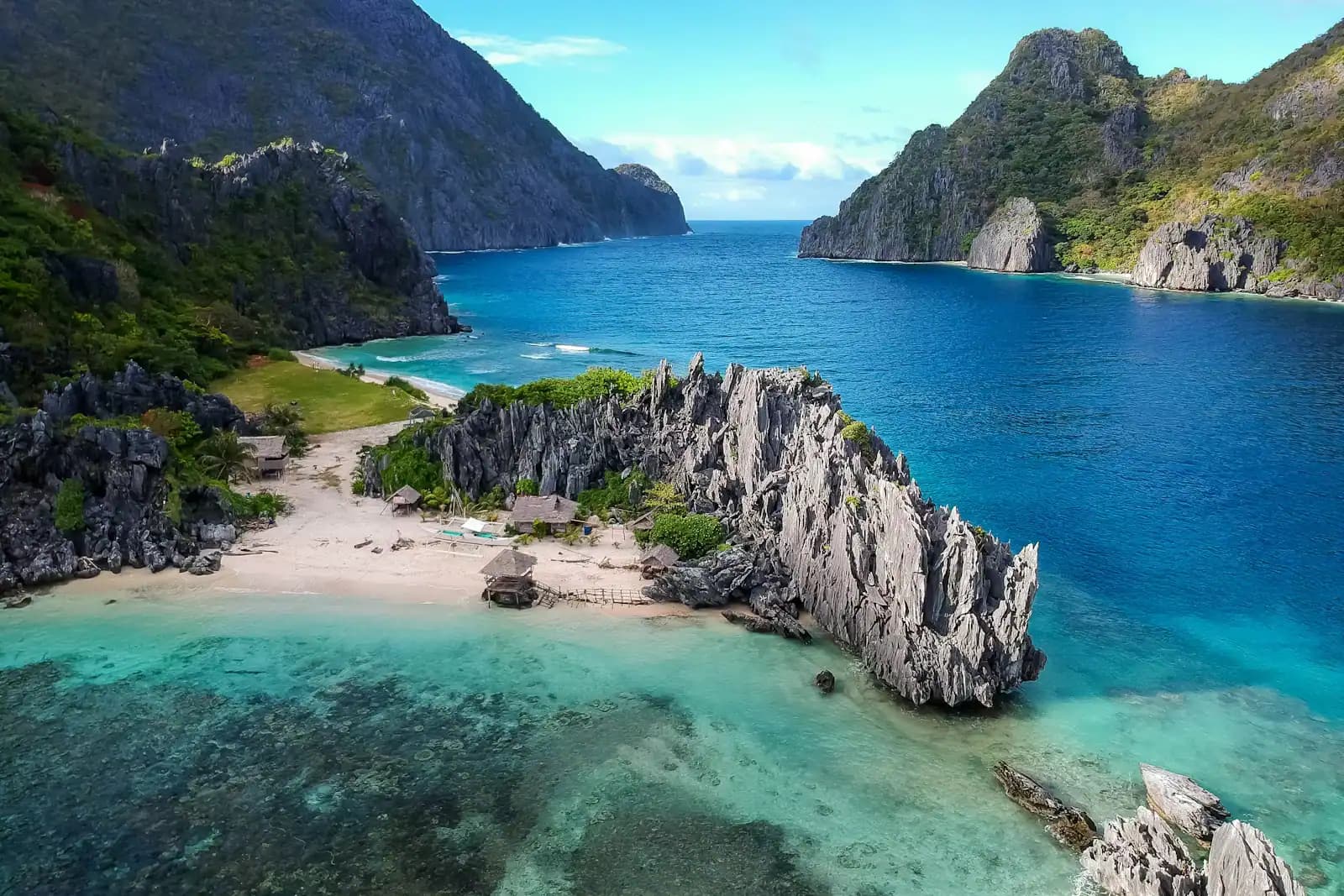
Cayo Costa is a barrier island state park north of Captiva, reachable only by boat, with seven miles of almost entirely undeveloped Gulf beach. It has the reputation for producing the shells Sanibel is famous for, precisely because far fewer people walk it. Facilities are minimal; bring water.

Cabbage Key is a small island in Pine Island Sound with a restaurant built into a 1930s house on top of a Calusa shell mound, where the walls are papered in signed dollar bills. It is reached by boat and is the standard lunch stop on a Pine Island Sound cruise.

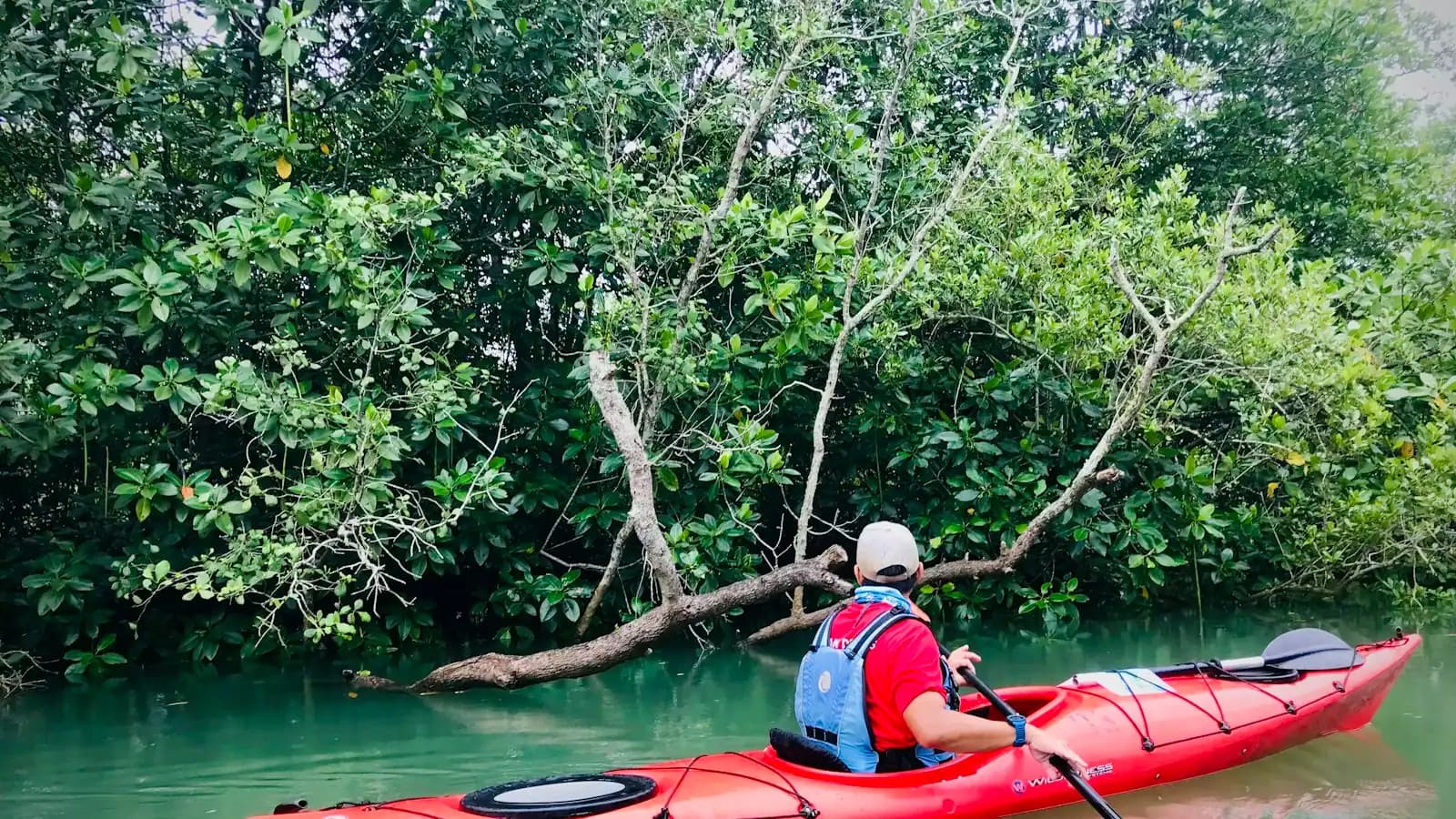
Buck Key sits behind Captiva and is a mangrove paddling destination rather than a landing — a marked kayak trail through tunnels of red mangrove, best on a mid to high tide when there is water under the boat.

None of these are day-trippable without booking something. Check where the boat actually leaves from: a listing titled for Sanibel may well depart from Punta Rassa, Fort Myers Beach or Pine Island, and the drive back over the causeway in the late afternoon is not quick.

The conservation sites most visitors miss

Beyond the refuge, two island institutions are worth knowing about, though both have been through heavy rebuilding since 2022 and you should confirm current opening before making a trip.

The Sanibel-Captiva Conservation Foundation runs a nature centre and trail system on Sanibel-Captiva Road and manages a large share of the island's interior wetlands, including the freshwater Sanibel River. Its long-running work on water quality, sea turtles and shorebirds is the reason a good deal is known about this coast at all.

The Clinic for the Rehabilitation of Wildlife, universally called CROW, is a wildlife hospital on Sanibel-Captiva Road that treats thousands of native animals a year, most of them brought in by residents. Its visitor education centre, when open, is one of the better hours on the island with children, because the connection between what you saw on Wildlife Drive in the morning and what is being treated in the afternoon is immediate.

Also on the list, and free: the Pond Apple Trail and the Shipley Trail in the island's interior, short, flat and shaded, and much less walked than anything with a beach at the end of it. Both are mosquito country in the wet season. Go in the morning, in long sleeves, or do not go in August at all.

How to string them together

Three sensible half-days, each anchored to one part of the island.

East end, late afternoon. Lighthouse Beach Park and the tower, the fishing pier, then back along Periwinkle Way for dinner. Parking is easiest here outside the middle of the day, and the light on the tower at the end of the afternoon is the reason to come then rather than at noon.

Middle, early morning on a falling tide. Wildlife Drive first, before the light goes hard and the birds move off, then the shell museum when the heat arrives. Not on a Friday.

West end, morning then evening. Bowman's Beach at low tide for the shelling, and Blind Pass at the other end of the day for the sunset and the current running through the pass.

Two constraints to plan around rather than fight. Parking is the limiting factor at every Gulf beach in high season and the lots at Bowman's and Tarpon Bay fill early on a good winter day. And Wildlife Drive being closed on Fridays reshuffles a lot of itineraries; the Bailey Tract, the beaches and the shell museum are the Friday answer.

Every attraction in Sanibel

All 28 places we cover, grouped by area. Filter, sort, or read straight down.

Narrow it down

28 places

Type
Best for
Setting
Time needed
Admission

Sanibel22

  • A roseate spoonbill with pink wings spread standing in shallow water

    Nature preserve

    J.N. "Ding" Darling National Wildlife Refuge

    Around 5,200 acres of mangrove estuary named after a newspaper cartoonist, covering a large share of the island. Closed one day a week.

    1.5–5 hoursWildlife Drive costs $10 per vehicle, or $1 per cyclist and pedestrian over 15. The Bailey Tract is free.

  • A scatter of small shells and pebbles part-buried in damp grey sand

    Beach

    Bowman's Beach Park

    Free

    The island's largest lot, and a quarter-mile walk over a bayou footbridge before you reach sand. The walk is what keeps it empty.

    2–6 hoursFree to enter. Parking is $5.00 per hour, enforced 24 hours a day.

  • A beach cruiser bicycle leaning against a white picket fence at the head of a sandy beach access path

    Trail

    Sanibel Shared Use Path

    Free

    Twenty-five-plus miles of separated paved path from the lighthouse to Blind Pass, on an island with no traffic signal to stop you.

    1–5 hoursFree to use. Bicycle hire and refuge entry are separate costs.

  • A tight flock of white pelicans standing together in shallow water

    Wildlife

    Wildlife Drive

    Four miles, one way, through mangrove and tidal flat. Closed every Friday, and worth far more on a falling tide than a full one.

    1–3 hours$10 per vehicle, $1 per cyclist or pedestrian over 15, free for ages 15 and under.

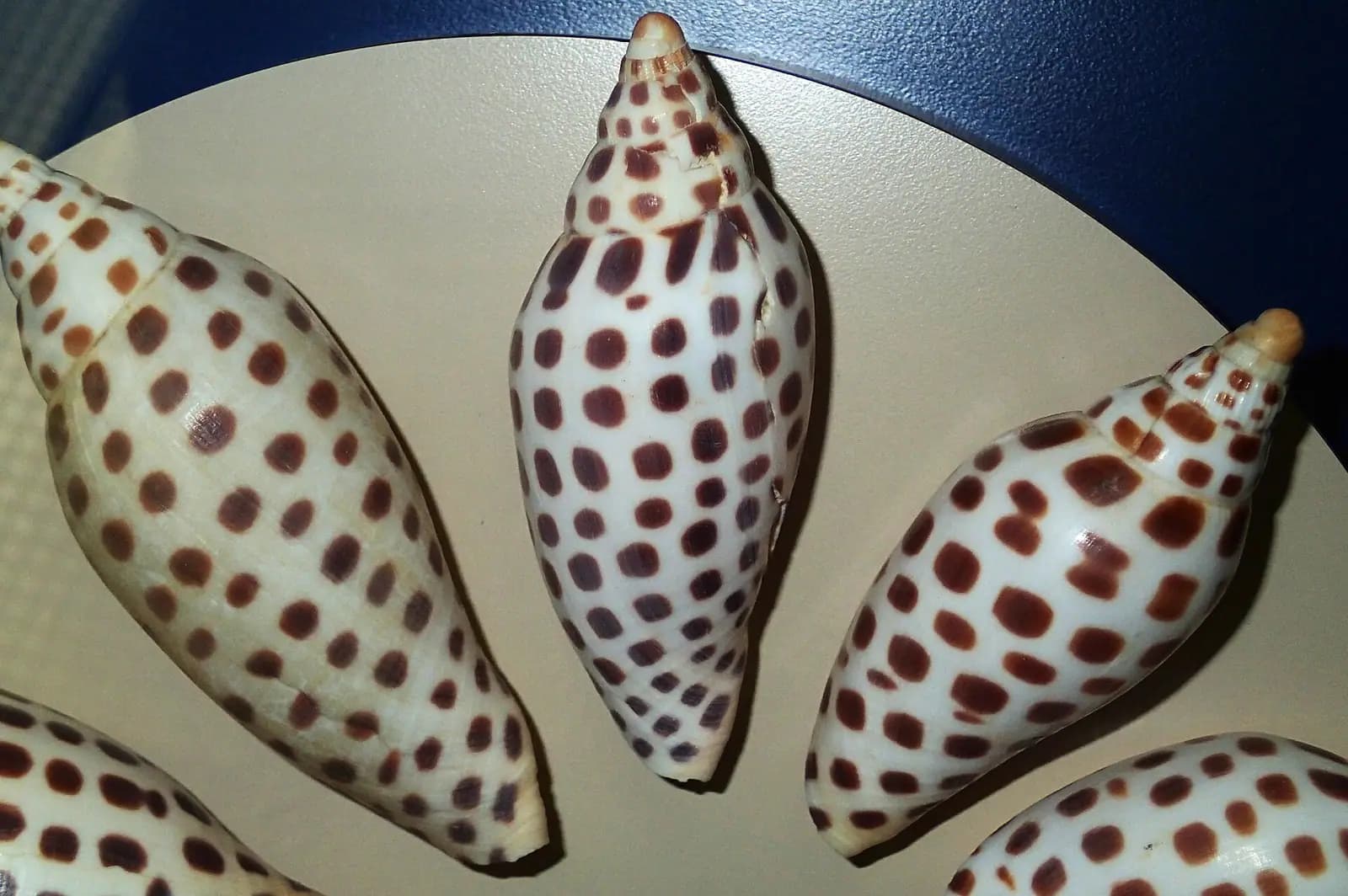
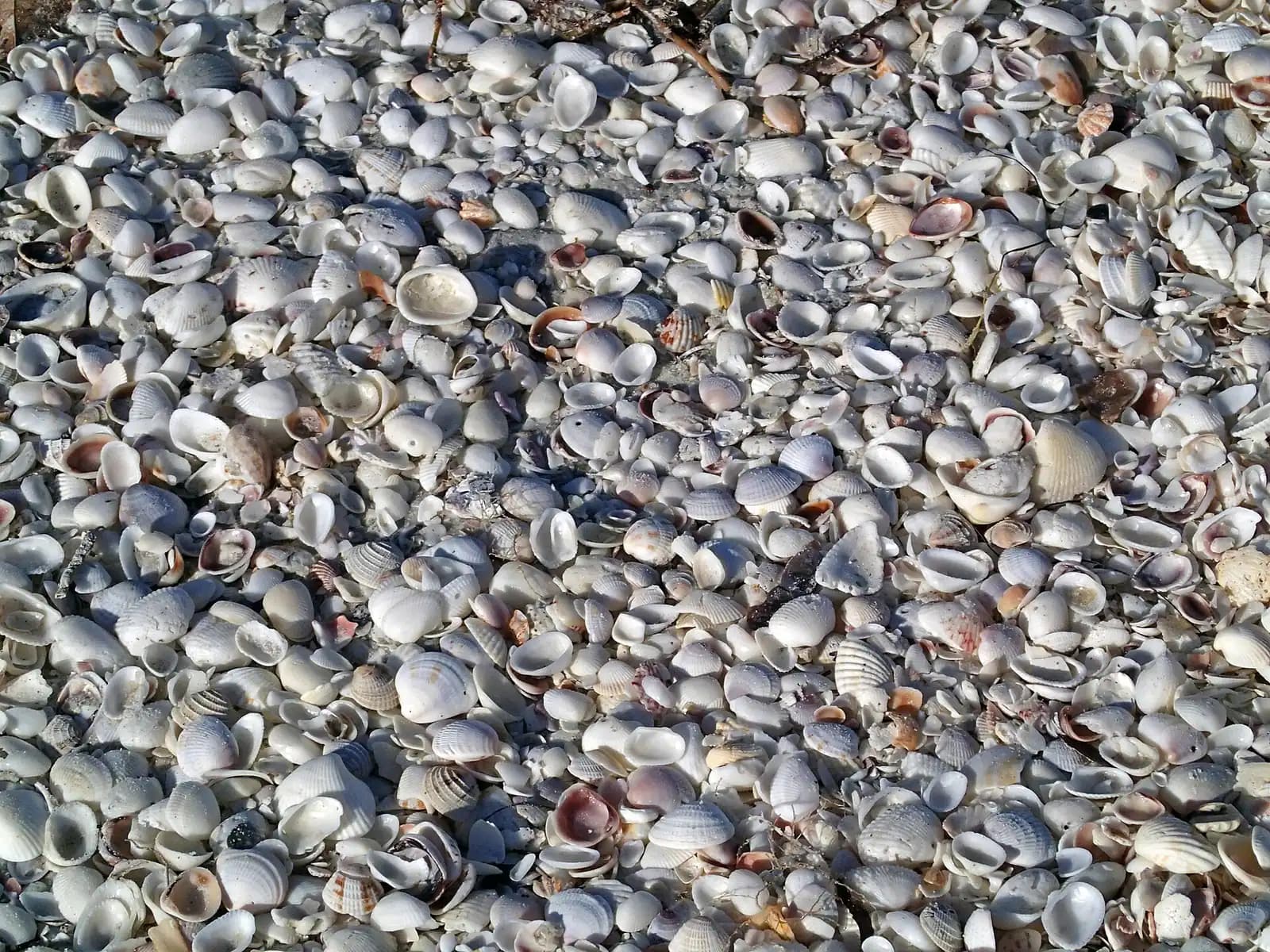
  • A close-packed group of patterned seashells in warm browns and creams

    Museum

    Bailey-Matthews National Shell Museum & Aquarium

    The only museum in the country devoted to shells and the animals that make them — and now an accredited aquarium as well.

    1.5–3 hoursAdults $25, seniors and veterans $20, youth and students $15, children 5–11 $10, under 5 free.

  • The gallery and lantern room of a lighthouse seen from below, framed by palm fronds against a bright sky

    Landmark

    Sanibel Island Lighthouse

    Free

    An iron skeleton tower first lit in 1884, dark after Ian and burning again since February 2023. You can walk to it, not up it.

    0.5–2 hoursFree to visit the grounds. Parking is $5.00 per hour, enforced around the clock.

  • An angler casting a line from a rocky shoreline into moving water at dusk

    Water feature

    Blind Pass

    Free

    The narrow gap between Sanibel and Captiva, where tidal current does the sorting — and where the swimming that looks inviting is not.

    1–3 hoursFree to visit. Parking on either side is a paid City of Sanibel session by the hour.

  • A dense bank of small dark and pale shells piled together on wet beach sand

    Beach

    Blind Pass Beach Park

    Free

    The island's densest shell beds and a posted no-swimming warning, caused by the same thing: the current running through the pass.

    1–3 hoursFree to enter. Parking is $5.00 per hour in a 29-space lot, enforced 24 hours a day.

  • Mangrove prop roots arching over shallow clear water in a narrow channel

    Wildlife

    Tarpon Bay Explorers

    The refuge's licensed concession and the only way onto the water inside Ding Darling. Kayaks, trams, pontoons and bikes.

    1.5–4 hoursPaid tours and rentals, priced per activity. Parking is free.

  • A fish-eating bird perched on a slim branch against a green background

    Wildlife

    Clinic for the Rehabilitation of Wildlife (CROW)

    A wildlife hospital where the goal is release, so what you watch is surgery on a camera feed rather than animals on display.

    1–2 hoursAdmission charged for the Visitor Education Center, with guided tours ticketed separately.

  • A dense bed of small pale seashells heaped together on wet sand

    Beach

    Lighthouse Beach Park

    Free

    The island's east point, where the Gulf beach and San Carlos Bay meet — and the biggest beach lot on Sanibel at 162 spaces.

    1.5–5 hoursBeach access is free. Parking is $5.00 per hour, enforced 24 hours a day.

  • A long fixed highway bridge arcing over a wide tidal river under a pale sky

    Landmark

    Sanibel Causeway

    Three bridges, two man-made islands, one toll charged in a single direction, and the only place you can park at the water's edge.

    0.5–3 hoursToll charged island-bound only — recently around $6 with a transponder and $9 by plate. Free leaving the islands.

  • A sandy path running beneath an arch of overhanging coastal trees

    Beach

    Gulfside City Park (Algiers Beach)

    Free

    Locals call it Algiers. A shaded pavilion, a gently shelving shore, and only 46 spaces to fight over.

    2–6 hoursNo entry charge. The 46-space lot costs $5.00 an hour, charged around the clock.

  • People standing waist deep on a bright sand flat with a small boat moored beyond them

    Entertainment

    Sanibel Sea School

    A marine science school on Periwinkle Way where children spend the session in the water rather than looking at it through glass.

    3–6 hoursPaid by programme. Day courses, camps and guided walks are priced separately.

  • Dense low wetland vegetation spreading out towards a distant treeline

    Nature preserve

    SCCF Nature Center and Erick Lindblad Preserve

    Free

    The foundation that has shaped this island since 1967 — with trails still partly closed and a public front door that has moved.

    1–2.5 hoursTrails are free and open sunrise to sunset. Parking at the trailheads is free.

  • A shaded sandy path running under arching trees between low vegetation

    Historic site

    Sanibel Historical Museum & Village

    The island's surviving pioneer buildings, moved onto one site off Dunlop Road. Closed for the season from August to mid-October.

    1–2 hoursSelf-guided: adults 19+ $20, youth 6–18 $10, children 5 and under free. Parking is free.

  • An empty stretch of Gulf beach with a low dune line and no buildings in sight

    Beach

    Silver Key

    Free

    An undeveloped mile of Sanibel's west end with no car park and no facilities, which is why the tide line is still intact at nine.

    1.5–4 hoursFree. The cost is the parking session at whichever lot you walk in from.

  • A bicycle leaning against a pale fence beside palm foliage on a sunny day

    Shopping

    Periwinkle Way

    Free

    Sanibel's main street and the birthplace of its bike path network. No traffic lights, no chain fast food, shops set back behind planting.

    1–4 hoursFree. The plaza car parks along the street are free to customers.

  • Dense green woodland with light breaking through the upper branches

    Trail

    Shipley Trail

    Free

    A shaded interior trail from a 1890s homestead and native-plant nursery to the boardwalk where the city's Pond Apple Trail begins.

    0.5–2 hoursFree. Parking at the preserve is free too.

  • Clear shallow water over a rippled pale sand bottom seen from directly above

    Beach

    Tarpon Bay Road Beach Park

    Free

    Under an acre of Gulf access in the middle of the island, with the car park a quarter-mile back up the road.

    1–4 hoursFree to enter. Parking is $5.00 per hour at the lot a quarter-mile north.

  • A muddy tidal creek winding through low marsh grass on a grey, misty morning

    Trail

    Pond Apple Trail

    Free

    The island's wettest public trail, named for a tree that grows standing in water — and the closest walk to the causeway toll plaza.

    0.5–1.5 hoursFree, with no gate, no ticket and no staff.

  • Low evening sun across a wide expanse of tall golden marsh grass

    Neighbourhood

    Dixie Beach

    Free

    A residential lane to Sanibel's quiet bay shore that is not a public beach — and is one of the best roadside bird stops on the island.

    15–45 minutesFree, because there is nothing provided to charge for.

Captiva4

  • Low wooden storefronts with corrugated roofs along a quiet two-lane road in a small coastal settlement

    Neighbourhood

    Captiva Island

    Free

    A different island across a 200-foot pass: one road, one village, no dogs on the sand and parking that costs several times Sanibel's.

    3–8 hoursNo charge to visit. Parking is the real cost, and it varies by which authority runs the lot.

  • Aerial view of a pale sandy point at the end of a low wooded island, with small boats in the shallows

    Beach

    Turner Beach Park

    Free

    On Captiva, run by Sanibel, and the last of the island beach parks to reopen after Ian — in April 2025.

    1–3 hoursFree to enter. Parking is $5.00 per hour in a 28-space lot, enforced 24 hours a day.

  • An empty wide sand beach backed by dune vegetation with small surf offshore

    Beach

    Alison Hagerup Beach Park

    Free

    Captiva's north-end public beach, where the parking pays for the sand you are standing on and an all-day space costs more than lunch.

    1.5–5 hoursNo admission charge. Parking is paid by the hour or by the day and is the most expensive on either island.

  • Red mangroves standing on their prop roots at the edge of a shallow saltwater channel

    Nature preserve

    Buck Key

    Free

    The mangrove island that shelters Captiva's back side — somewhere you paddle around rather than somewhere you step ashore.

    1.5–4 hoursFree to paddle. Kayak hire and guided trips are the cost.

Cabbage Key1

  • A wooden pioneer-era house with wide verandahs shaded by mature trees

    Historic site

    Cabbage Key

    Free

    A hundred acres, one inn, no cars and no bridge — an island lunch on top of a shell mound the Calusa spent centuries building.

    2–4 hoursNo charge to land. The boat fare is the real cost, and meals are priced as an ordinary restaurant.

Cayo Costa1

  • A long empty beach of pale sand backed by low dune vegetation with no buildings in sight

    Park

    Cayo Costa State Park

    Nine miles of state-park beach with no bridge, where the tide line rebuilds itself between boats instead of being picked over by nine.

    4–8 hoursFlorida state park entry fee, usually collected on arrival; the boat fare is a separate and much larger cost.

Where everything is in Sanibel

Every pin is also a link in the index beside it, so the list works before the map loads.

Every place shown on this map is also listed below as a link, grouped by area.

Guided ways to see Sanibel

Nothing on this island announces itself. These are the trips that put the places above into an order that makes sense — and the operators who can get you inside the gates.

Some links below go to Viator, our booking partner. We earn a commission on bookings made through them — at no extra cost to you, and with no influence on what we recommend.

Editor's Pick

Best way to see the refuge properly

Why we chose it

A guided tram or small-boat trip inside the refuge does what a self-drive cannot: someone reading the water for you, a stop held long enough to watch a bird actually feed, and an explanation of why the impoundments are managed at the levels they are. Go on a falling tide and remember the drive is shut on Fridays.

Best Value

Best-value trip to the outer islands

Why we chose it

The cheapest way to stand on a beach with no bridge to it. Shared departures to Cayo Costa and Pine Island Sound sit well below charter prices and deliver the one thing Sanibel's own beaches cannot: sand that almost nobody walked this morning. Bring water and sun cover; facilities out there are minimal.

Best for Families

Best guided outing with children

Why we chose it

Short, shaded and hands-on beats scenic and long with anyone under about ten. The trips that work here put a net, a shell or a pair of binoculars in a child's hands within the first ten minutes. Two hours on calm bay water is the format; a long Gulf crossing in the afternoon chop is not.

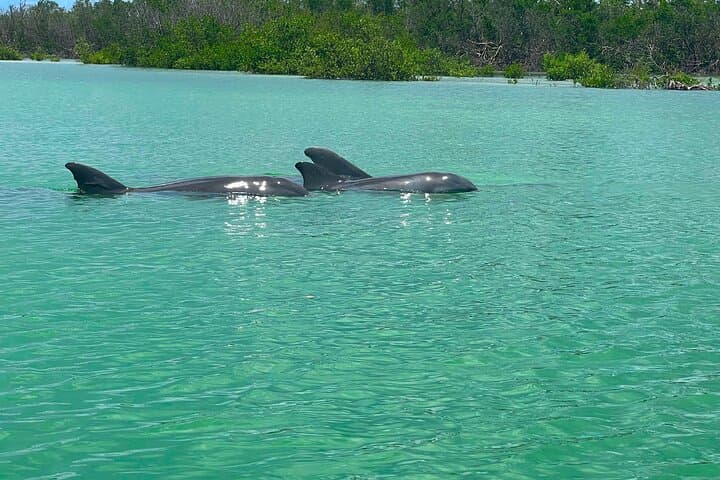
Sunset Dolphin Cruise with Sanibel Lighthouse Views

Private and Luxury

Sunset Dolphin Cruise with Sanibel Lighthouse Views (opens in a new tab)

Best for FamiliesFree cancellationLikely to sell out
455 reviews

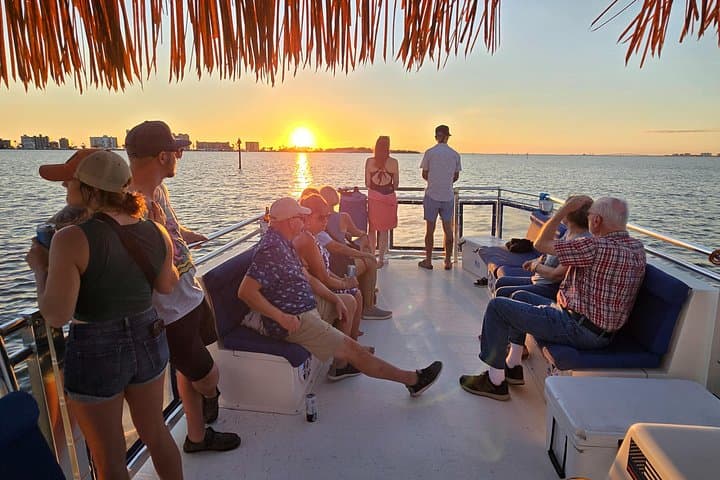
While enjoying a complimentary alcoholic or nonalcoholic beverage we will cruise the back waters of Fort Myers Beach. During the cruise…

1–2 hours

Prices checked

from $69.99
Small Group

Best small-group nature and photography trip

Why we chose it

A boat carrying eight instead of forty can hold position off a rookery and can enter water the bigger hulls cannot. For photographers and birders that is the whole difference. Expect a higher price per head and a morning departure, because the wind on Pine Island Sound generally builds after lunch.

Best Private Tour

Best private boat charter

Why we chose it

Worth the money at four or more, and the only way to make the tide fit your plan rather than the other way round. A private captain will run out to the bars on a falling tide, hold there while you shell, and be back before the afternoon storm. Ask whether landings on the outer islands are included.

Shelling Tours - Fort Myers Beach / Naples

Short term availability

Shelling Tours - Fort Myers Beach / Naples (opens in a new tab)

Best Private TourFree cancellationPrivate tour
80 reviews

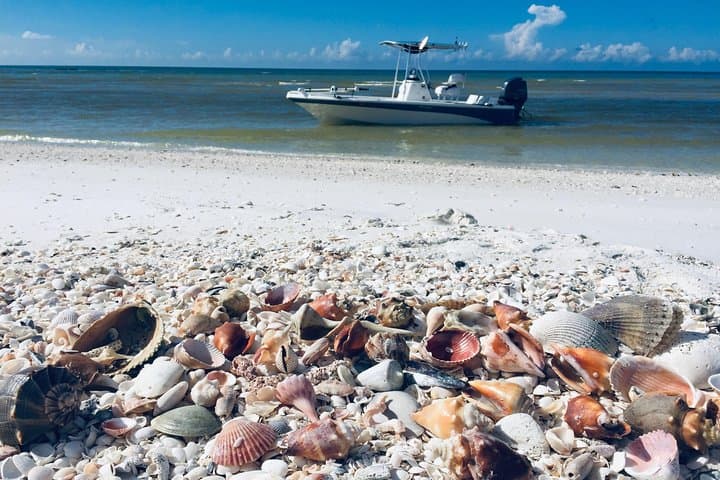
On this trip, Guests will be exploring the local Islands around Fort Myers and Naples area. The Islands are well known for their excellent…

2 hours

Prices checked

from $350

Shared departurespriced per seat, best value for one or two

Private and small-group optionsoften cheaper per head for a family or a group of six

Explore by what you want to do

The directory lists places. These pages plan days.

  • A willet standing at the waterline on a beach graded in broken shell rather than sand

    Guide hub

    Things to Do on Sanibel Island

    Sanibel lies east to west. Nearly every other barrier island on Florida's Gulf coast lies north to south, running parallel with the mainland, and…

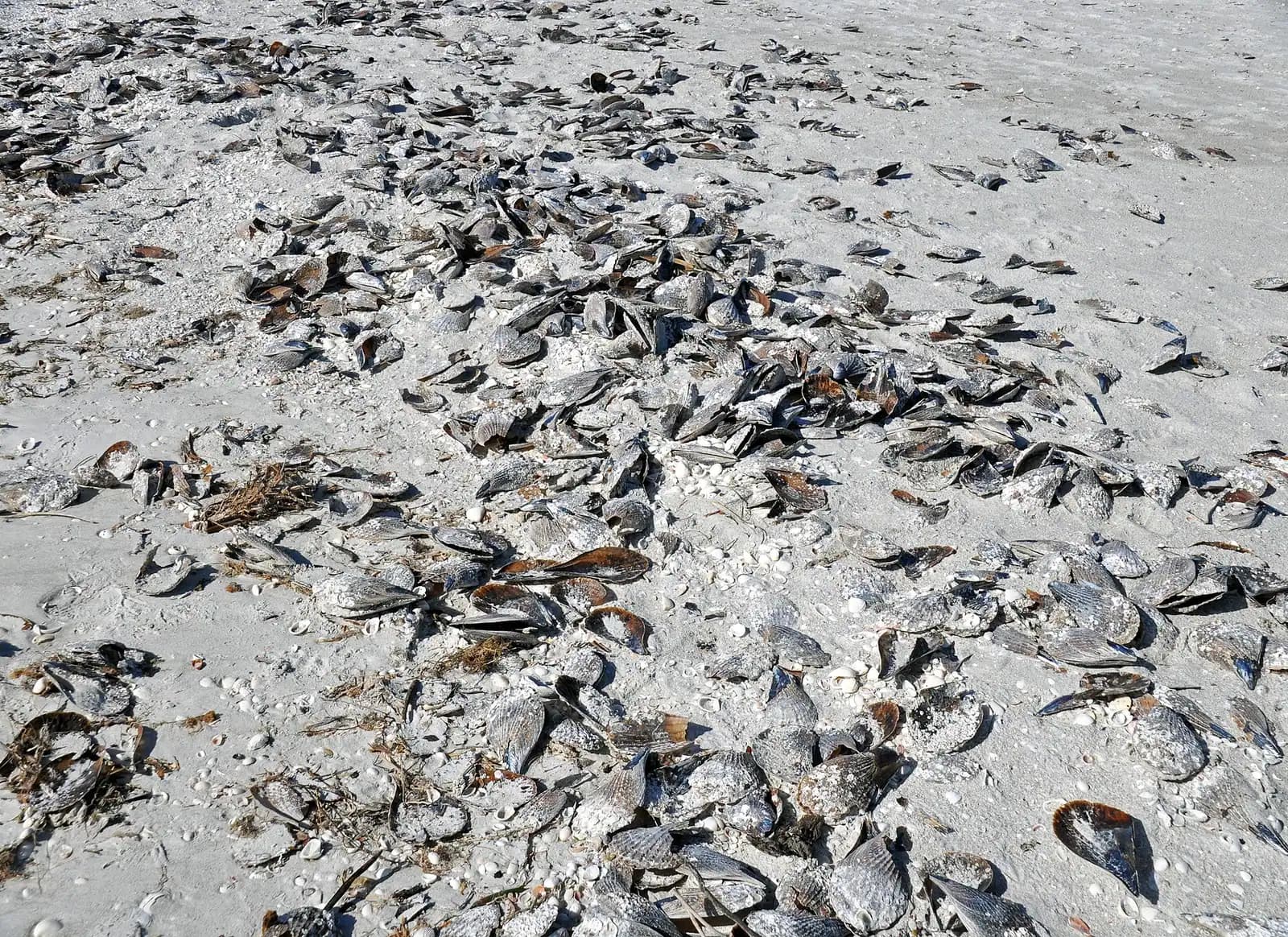
  • A dense line of whole and broken shells piled along the wrack line on wet sand

    Things to do

    Shelling on Sanibel Island

    Sanibel lies on its side. Almost every barrier island between Tampa Bay and the Ten Thousand Islands runs north to south and turns a narrow shoulder…

  • A person paddling a red kayak along a narrow channel walled in by mangrove roots

    Guide hub

    Tours on Sanibel Island

    Most of what makes Sanibel worth visiting is free and needs no guide. You can walk any beach on the island, ride 26 miles of path, drive the refuge…

  • A long empty beach of pale sand backed by low dune vegetation with no buildings in sight

    Guide hub

    Sanibel Island Beaches

    The first thing to understand about a Sanibel beach is which way it points. The island lies on an east-west axis, so its Gulf shore faces south and…

  • Dense mangrove shoreline with arching prop roots meeting still green water

    Things to do

    Ding Darling National Wildlife Refuge

    Start with three facts, because between them they decide whether your visit is any good. The J.N. "Ding" Darling National Wildlife Refuge is closed…

  • A palm tree leaning over a quiet beach with the sun low over the water behind it

    Guide hub

    Captiva Island from Sanibel

    Captiva is not part of Sanibel and it does not behave like it. It is a separate island, a separate community and, for beach purposes, a separate…

Longer reads

  • A low sun breaking through broken cloud over choppy water, photographed from just above the surface

    Guide

    Sanibel After Hurricane Ian: What Is Open Now

    Featured

    Four years on, most of the island is trading and some of it is bare ground. Here is what has actually reopened, with dates, and what has not.

    9 min readHarriet Lowell

Common questions

What are the main attractions on Sanibel Island?

The Sanibel Island Light at the eastern point, the J.N. "Ding" Darling National Wildlife Refuge and its four-mile Wildlife Drive along the bay side, the Bailey-Matthews National Shell Museum and Aquarium on Sanibel-Captiva Road, and the beach parks — Lighthouse, Tarpon Bay, Gulfside City Park, Bowman's and Blind Pass. Almost all of it is public land, so most of what you pay for is parking, the refuge entry fee and museum admission.

Can you climb the Sanibel Lighthouse?

No, and you never could. The 1884 tower is an iron skeleton structure and has not been open to the public for climbing. The grounds around it are open and are the reason to go. Hurricane Ian destroyed both keeper's houses and the surrounding outbuildings in September 2022 and tore one leg off the tower itself; the structure was repaired and the light relit at the end of February 2023, but the keeper's dwellings have not been rebuilt.

How much does Ding Darling Wildlife Drive cost?

Entry is charged per vehicle, currently in the region of $10, with a much smaller per-person rate of about $1 for cyclists and walkers over fifteen and no charge for children under sixteen. Between June and September the vehicle pass is valid for three consecutive days rather than one. Federal annual and interagency passes are accepted. The drive is closed every Friday, and gate times shift with the season, so check current hours before you set out.

Is the Bailey-Matthews Shell Museum worth visiting?

Yes, particularly on a midday high tide when the beach is not working anyway. It is the only museum in the United States devoted to shells and molluscs, and the aquarium level lets you see the living animals whose empty shells you have been collecting all week. Allow an hour and a half to two hours. It closes one day a week and reopened in phases after Hurricane Ian, so confirm current days and hours before planning a trip around it.

What is there to do on Sanibel besides the beach?

The refuge and its Wildlife Drive, the shell museum and aquarium, more than 26 miles of separated bike path, the freshwater trails of the Bailey Tract, the Pond Apple and Shipley trails in the interior, kayaking in the mangroves behind the island, and boat trips out to Cayo Costa and Cabbage Key. The Sanibel Historical Village covers the pre-causeway farming island, but it closes for the summer and reopens in mid-October.

Which Sanibel beach is best for shelling?

Bowman's Beach has the strongest reputation, largely because reaching it means a walk over a footbridge and a few hundred metres of path from the car park, which thins out the crowd that works the wrack line. Blind Pass collects heavily because the tidal current through the pass sorts material there. Lighthouse Beach at the point is good for watching boats and dolphins but is not the island's best shelling.

Are Sanibel's attractions open after Hurricane Ian?

Most of the public ones, yes. The causeway had permanent repairs completed in 2024, the beaches and beach parks are open, Wildlife Drive is running and the shell museum has reopened in stages. What remains unfinished is mostly buildings and trails: several refuge trails including the Calusa Shell Mound Trail are closed for reconstruction, the refuge visitor centre has had extended closures, and the lighthouse keeper's houses are gone. Confirm private businesses individually.

How long does Wildlife Drive take?

The road is about four miles one way and takes roughly an hour if you drive it slowly and stop at the main pull-offs. Give it two to three hours if you want to walk the open spur trails, climb the observation tower and wait for the light. Cyclists should allow longer again. The single biggest factor is the tide rather than your schedule: a falling tide concentrates the birds and a full high tide scatters them.

Do you have to pay to get onto Sanibel beaches?

The beaches themselves are free; the parking is not. Every beach park on the island charges by the hour, paid at a machine or by phone, and in high season the lots at Bowman's and Tarpon Bay fill early on a good day. Turner Beach on the Captiva side of Blind Pass is a Lee County lot charging around $5 an hour. Budget for parking the way you would budget for lunch.

Can you visit Captiva from Sanibel?

Yes, by road. Sanibel-Captiva Road runs to the Blind Pass Bridge and continues onto Captiva, so no boat is needed. Captiva is narrower and quieter with more resort accommodation at its northern end and no equivalent of the refuge. One rule catches people out: dogs are not permitted on Captiva's beaches, including Turner Beach on the Captiva side of the pass, even though they are allowed on leash on Sanibel's.

What can you only reach by boat from Sanibel?

Cayo Costa, a state park barrier island north of Captiva with seven miles of undeveloped Gulf beach and a strong shelling reputation; Cabbage Key in Pine Island Sound, with its restaurant in a 1930s house built on a Calusa shell mound; and the mangrove paddling trail around Buck Key behind Captiva. Check the departure point before booking, because many listings marketed for Sanibel actually leave from Punta Rassa, Fort Myers Beach or Pine Island.