Skip to content
Menu

We earn a commission if you book through this link. You pay the same price.

Search

Nature & Wildlife

Kayaking and Paddling on Sanibel

Last updated

Paddling on Sanibel happens inside a national wildlife refuge. Tarpon Bay launches, the Commodore Creek trail, Buck Key, rental costs and the rules.

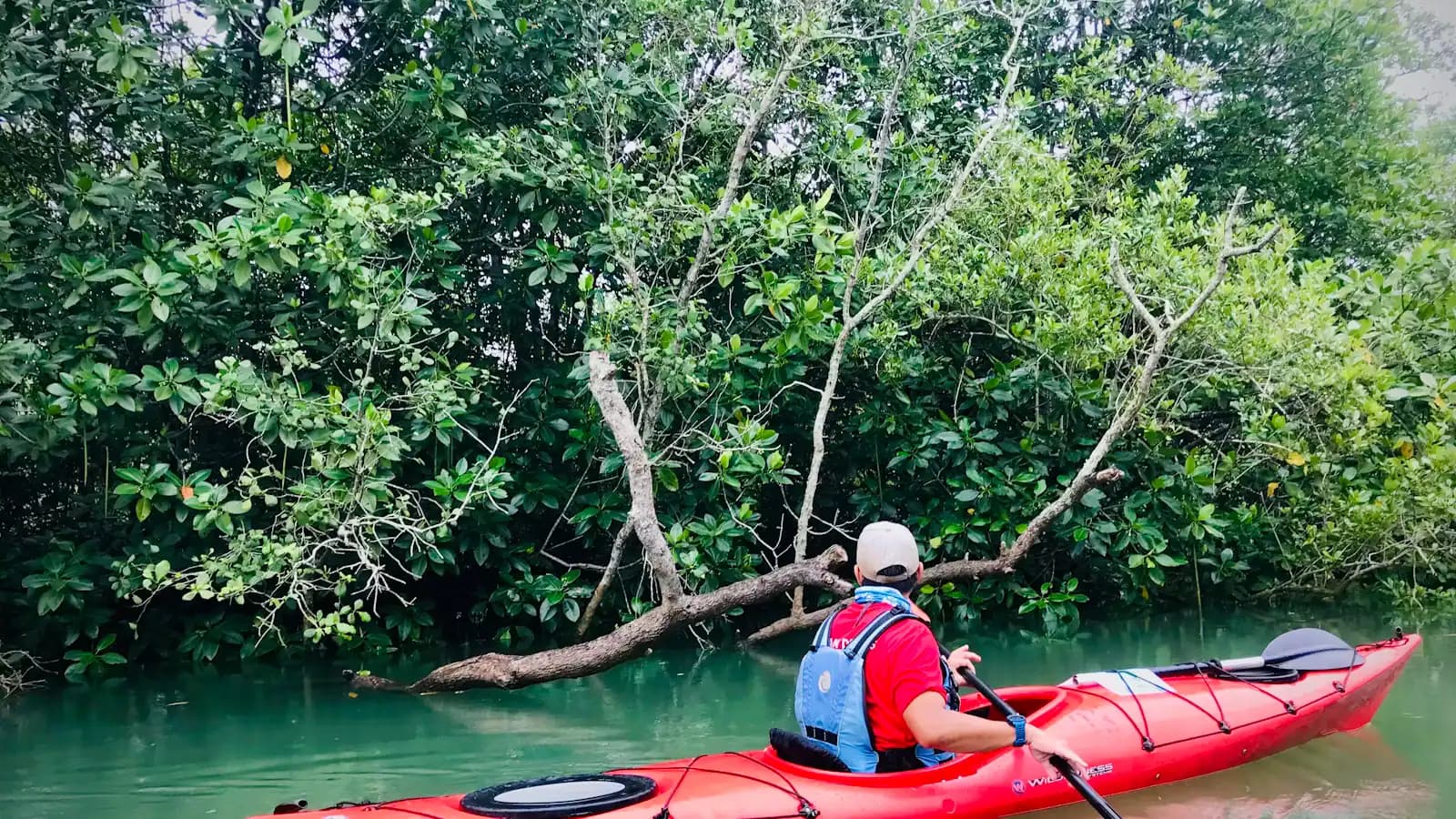
A paddler in a red kayak moving through a narrow channel walled with mangrovesUnsplash

Most of the paddling worth doing on this island happens on federal land, and that single fact shapes everything else. Tarpon Bay sits roughly in the middle of Sanibel, a broad shallow basin enclosed on almost every side and connected to San Carlos Bay through one narrow opening. It lies inside the J.N. "Ding" Darling National Wildlife Refuge, which means the launch is a concession rather than a public ramp, the motor rules are the refuge's rules, and the wildlife you paddle up to is legally protected rather than merely admired.

The geography is unusually forgiving. Because the bay is almost landlocked, it stays flat when the Gulf is not, which is why a paddling trip here is one of the few outdoor plans on the island that rarely gets cancelled by wind. Depths are measured in feet rather than fathoms, the bottom is soft, and there is no boat traffic moving at speed. A first-time paddler can be on the water inside twenty minutes of arriving and be perfectly safe.

Three separate places account for nearly all of it. Tarpon Bay itself, where the concession sits at the end of Tarpon Bay Road and where the marked Commodore Creek water trail loops away through red mangrove. Buck Key, a small undeveloped island off Captiva with a paddling loop around and through it. And the Bailey Tract, a freshwater section of the refuge south of Periwinkle Way with no paddling at all — walking only — which is worth knowing before you drive there with a boat on the roof.

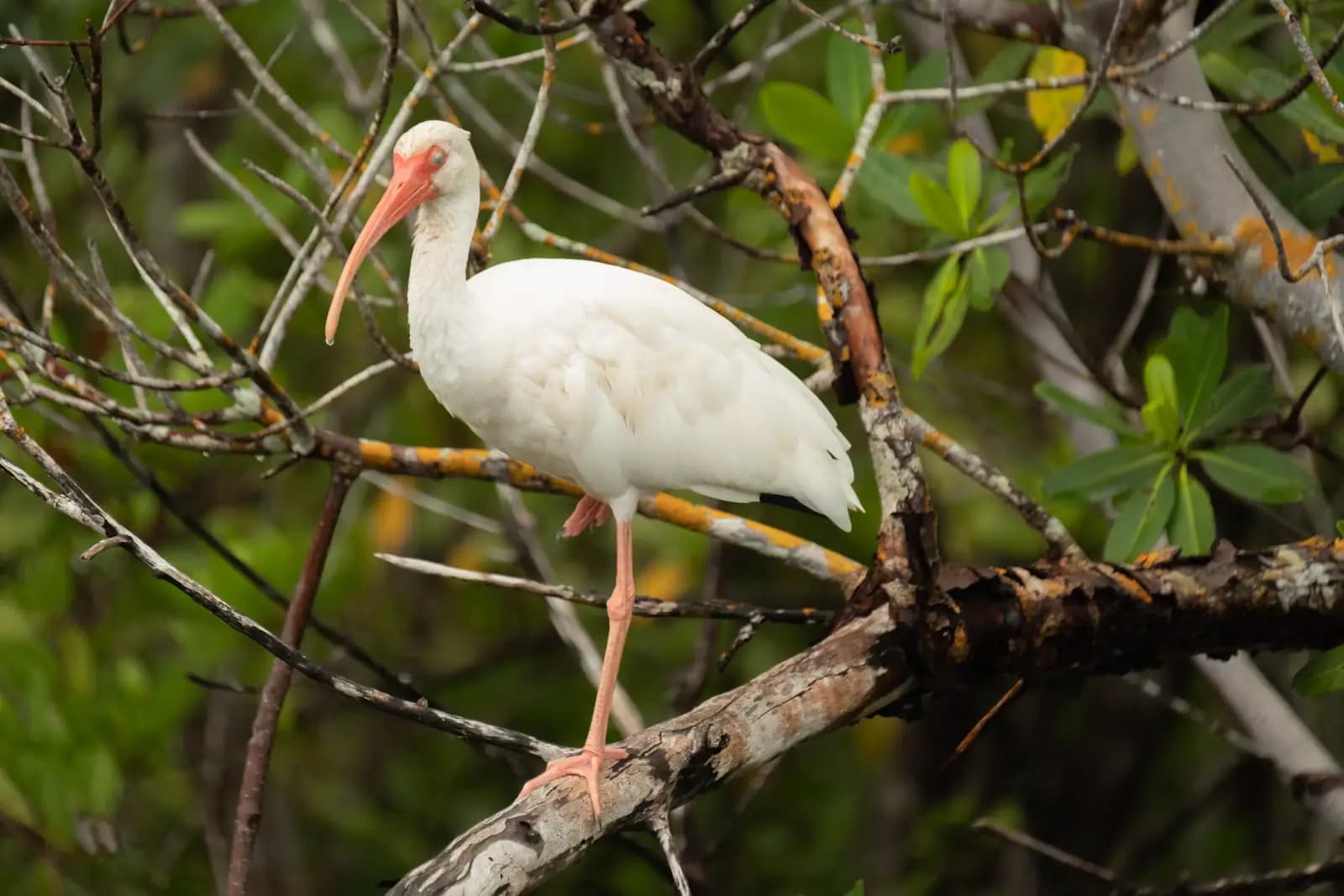
The wildlife is the reason people come and it is genuinely reliable. The refuge counts more than 245 bird species. From a kayak at close range in the right hour you can reasonably expect white pelicans in winter, roseate spoonbills working the shallows, yellow-crowned night herons in the mangrove edge, ospreys overhead and, if the water is clear, stingrays sliding out from under the hull. Manatees move through the bay. None of that is guaranteed on any given morning, and anyone promising it is selling.

One scheduling rule overrides everything. The refuge closes every Friday, along with Wildlife Drive and the Visitor and Education Center. The concession publishes its own calendar, which does not always match the refuge's, so check it directly rather than assuming. And bring more water than you expect to drink; there is nothing to buy once you are on the bay.
Our picks

The ones we would book

  • Editor's Pick

    Best guided paddle inside the refuge

    Why we chose it

    A naturalist-led trip on Tarpon Bay, which is where the difference between seeing birds and understanding them gets made. Two to three hours, protected water that stays flat when the Gulf will not, and a guide who knows which flat is holding spoonbills this week. The trip to book on a first visit, before you rent anything.

  • Best for Beginners

    Best first-time paddle on marked water

    Why we chose it

    The Commodore Creek loop is marked, which sounds trivial until you are in mangrove that looks identical in every direction. Shallow, shaded, no current worth the name and no boat traffic. A capable adult with a child in a tandem can do it comfortably in about two hours at a pace that allows stopping.

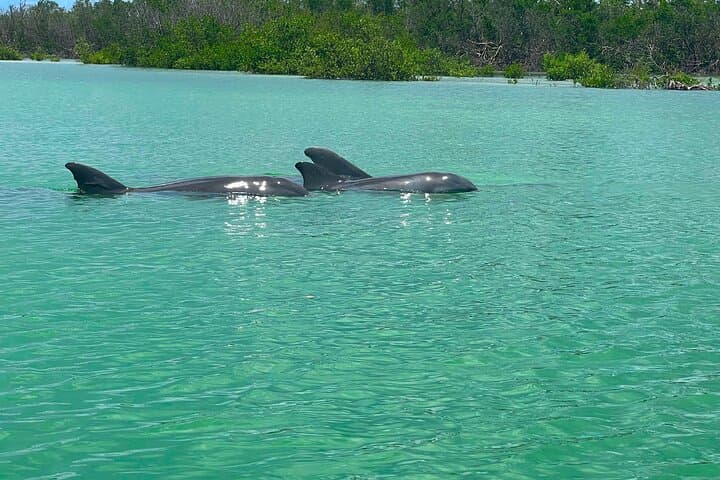
    The dolphins can be so curious!

    Involves Animals

    Dolphin and Manatee Adventure Tour of Fort Myers (opens in a new tab)

    Best for BeginnersFree cancellationInstant confirmation
    3K reviews

    Come join us for a once in a lifetime experience that is great for all skill levels. There are only a few places on earth to see the West…

    2 hours

    Prices checked

    from $76.68
  • Best Value

    Best value for a family on the water

    Why we chose it

    Hire tandems by the half day rather than booking four seats on a guided departure and the arithmetic changes sharply. You lose the naturalist and you gain the ability to stop for forty minutes when a manatee surfaces. Works best on the marked trail, where nobody has to navigate.

  • Sunset

    Best evening paddle

    Why we chose it

    Birds come back to roost in the last hour of light and the bay goes glassy, which is the case for an evening departure rather than a morning one. These trips are guided and timed because refuge land closes within half an hour of sunset. Take repellent; no-see-ums work the mangrove edge at dusk.

  • Small Group

    Best small-group trip for photographers

    Why we chose it

    Fewer boats means less noise, and less noise means birds that stay put. A small group also moves at the pace of what it finds rather than the schedule. Ask whether the trip runs to the low tide, when wading birds concentrate on exposed flats instead of scattering through flooded mangrove.

    Southwest Florida Sunset Sail

    Wildlife Watching

    Southwest Florida Sunset Sail (opens in a new tab)

    Small GroupFree cancellationInstant confirmation
    514 reviews

    SWFL sunsets are the best, and there is no better place to watch them than from the deck of our 36ft. Sailing Catamaran, "Copacetic". The…

    2 hours

    Prices checked

    from $70

What it means to paddle inside a wildlife refuge

The refuge is not a park with a boat ramp. It is managed habitat, and paddling is permitted because it is quiet, not because it is recreation.

Practically, that produces a few conditions that regular paddlers from elsewhere find unfamiliar. Launch access is organised through the refuge's authorised concession at the end of Tarpon Bay Road rather than through a public slipway, so if you have brought your own boat, confirm where you are allowed to put it in before you carry it down. Parts of the refuge are closed to motorised craft entirely, and the closures exist to keep propellers off seagrass and away from manatees. Everything on refuge land is day use: visitors must be off within half an hour of legal sunset, which is why evening trips here are guided and timed rather than open-ended.

The wildlife rules are the ones with teeth. Feeding any animal is prohibited. Approaching a manatee, following it or separating a cow from a calf is a federal matter, not a local courtesy. Nesting birds on the spoil islands and rookeries are watched closely, and a paddler who drifts too close can flush an entire colony off its nests in a few seconds, which in nesting season is a real harm rather than a minor disturbance.

None of this makes the paddling difficult. It makes it quiet. Keep your distance, let the animals close the gap if they want to, and you will see more than the group that chased something.

Commodore Creek: the marked trail

The Commodore Creek water trail is the route almost everyone means when they say they kayaked Sanibel. It leaves the Tarpon Bay shoreline and loops through a red mangrove system on a marked course, which is the detail that makes it work for people who have never navigated on water before.

Mangrove country looks identical in every direction. Without markers, a first-timer in a maze of prop roots is genuinely lost within ten minutes, and the standard outcome is an anxious hour paddling in circles. The markers remove that problem, which is why the trail is the sensible self-guided option on the island rather than merely the popular one.

What it is like: narrow in places, roofed in others, shaded, still, and much quieter than the open bay. The water is often only a foot or two deep and clear enough to watch the bottom go past. Mangrove crabs scuttle up the roots as you pass. Small fish scatter ahead of the bow. Wading birds sit in the branches and let a slow, silent boat get remarkably close before they lift.

Allow two hours for the loop at a relaxed pace, longer if you stop to watch things, which is the point. The trail is doable in a rented sit-on-top and is fine for reasonably capable children in a tandem with an adult.

Water level matters. The creek system needs water in it, and the concession's published schedule is worth reading rather than assuming any hour works.

Buck Key, the Captiva side and the wider sound

Buck Key sits behind Captiva, separated from it by a narrow channel, and it is the obvious next trip once Commodore Creek is done.

The island is undeveloped. There is a paddling loop around it and an interior route through mangrove, and because it is off the main visitor track you will often have long stretches to yourself. It is a more committing trip than Commodore Creek: less signage, more exposure to wind and boat wake in the channel, and a longer distance back if the weather changes. Go guided the first time or go with a chart and a plan.

North of Buck Key the water opens into Pine Island Sound, a broad, shallow, island-dotted estuary that runs for miles toward Cayo Costa. It is beautiful and it is not a beginner's paddle. Distances are deceptive, powerboat traffic is real, and an afternoon breeze across open water is the thing that turns a pleasant outing into a long grind home. Most visitors who want to see the sound should do it from a boat rather than a kayak, and that is what the island-hopping cruises exist for.

On the Sanibel side, the stretch of water inside Blind Pass is sheltered and short, but the pass itself runs hard on a moving tide and is not a place to be in a rented sit-on-top. Stay inside it.

What it costs and how the day runs

What it costs

Treat every figure below as a band and confirm it when you book. Prices on the islands have moved a good deal in recent years.

  • Single kayak rental, a few hours: usually in the thirty to fifty dollar range.
  • Tandem kayak or canoe: modestly more, and the better choice for a parent with a child under about ten.
  • Stand-up paddleboard: similar to a single kayak.
  • Guided paddling trip, two to three hours: commonly in the fifty to ninety dollar range per adult, with child rates usually lower.

The concession at the end of Tarpon Bay Road publishes rental hours of roughly eight in the morning to four in the afternoon, with the shop open a little later. That is a hard constraint rather than a guideline: boats have to be back.

What to bring, in order of how often people forget it: a hat with a brim and a strap, polarised sunglasses which genuinely double what you can see under the surface, high-factor sunscreen because the water reflects everything back at you, a dry bag or a waterproof phone case, and water. Wear shoes you can get wet. Leave anything you would mind losing in the car.

Reserve in the winter months. From January through March the morning departures fill, and turning up hoping for a boat on a February Saturday is optimistic.

Time of day, time of year, and the things that stop a trip

When to go

Early morning is the best paddling on Sanibel in every season, for three separate reasons that happen to align. The water is at its flattest before the breeze fills in. Birds feed hardest in the first hours of light. And in summer, the heat and the afternoon thunderstorms make anything after about eleven a poor idea.

The winter months from December through April are the island's high season and its best birding. White pelicans are on the water, the migratory species are in, the humidity is gone and the air is comfortable for paddling all day. Book ahead.

Summer is hot, wet and much quieter, and the paddling is still good early. Afternoon storms on this coast build fast and carry lightning, and open water is exactly where you do not want to be when they do. Watch the sky to the east from about one o'clock onward.

Two things cancel trips. Lightning, always and immediately. And, less predictably, red tide, a naturally occurring algal bloom that affects this coast in some years and can make the air near the water genuinely unpleasant. Blooms are patchy and change week to week. Check current conditions before you travel rather than assuming, and expect operators to be honest with you about it.

The refuge is closed every Friday. Build that into the week's plan rather than discovering it at the gate.

Book it

Everything else we track

Some links below go to Viator, our booking partner. We earn a commission on bookings made through them — at no extra cost to you, and with no influence on what we recommend.

Sharing, or having it to yourselves

Most of what is bookable here sells two ways, and the cheaper one is not always the cheaper one. A shared departure is priced per person; a private booking is priced for the party, so the arithmetic flips somewhere around four to six people — and it is the only version where you pick the time. Check the party size each listing actually covers before you decide.

  • Book a seat

    A shared departure, priced per person. The cheapest way to do this for one or two people.

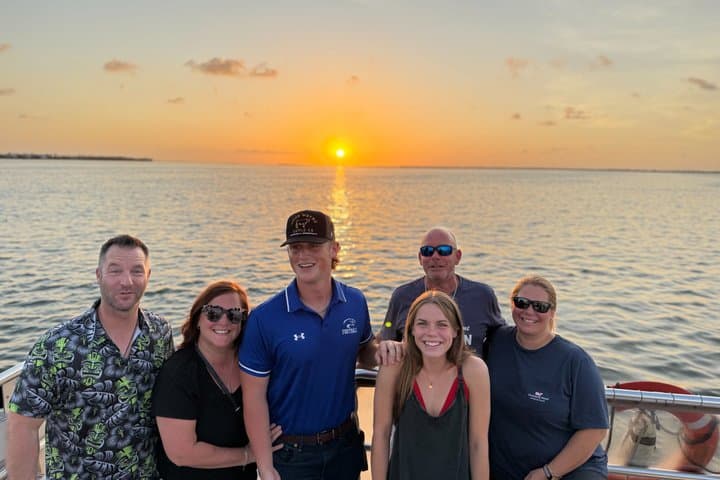
    Sunset Cruise Fort Myers Beach

    Private and Luxury

    Sunset Cruise Fort Myers Beach (opens in a new tab)

    Free cancellationInstant confirmation
    23 reviews

    Join us for a scenic 90 minute cruise at sunset that blends comfort, adventure, and the wonders of nature. Book your spot today and…

    1–2 hours

    Prices checked

    from $47.92
  • Book the whole thing

    Priced for the party rather than the seat, and you choose the departure time.

    Shelling Tours - Fort Myers Beach / Naples

    Short term availability

    Shelling Tours - Fort Myers Beach / Naples (opens in a new tab)

    Free cancellationPrivate tour
    80 reviews

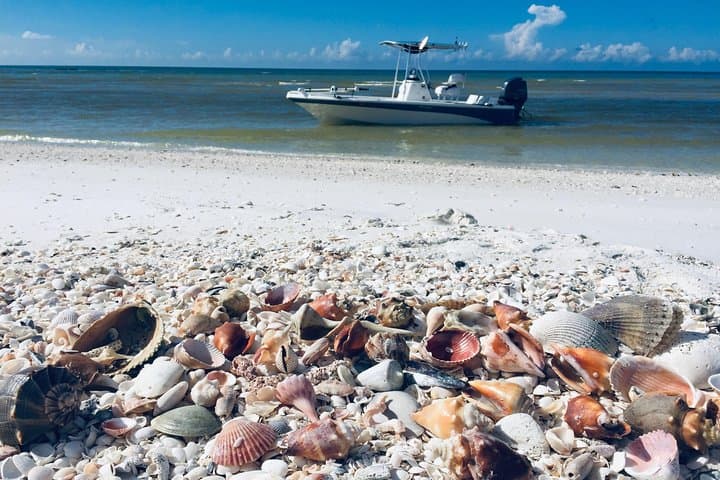
    On this trip, Guests will be exploring the local Islands around Fort Myers and Naples area. The Islands are well known for their excellent…

    2 hours

    Prices checked

    from $350

Guided trip or rental: how to choose

How they compare

The two are genuinely different products here, and the right answer depends less on skill than on what you want out of the morning.

Guided tripRental
Typical lengthTwo to three hours, fixed departureYou choose, within the concession's opening hours
NavigationHandledYours, which is why the marked trail matters
WildlifeA naturalist who sees what you would missYou will see less and not know it
Best forFirst visit, birders, children, anyone nervousRepeat visitors, photographers, people who want to stop for an hour
CostHigher per personLower, and cheaper again for a family

The case for guided on a first visit is simple: the difference between a nice paddle and a memorable one on this island is knowing what you are looking at. A guide will name the bird, explain why the spoonbill sweeps its bill sideways, and take you to the part of the bay that is working today rather than the part that was good last week.

The case for a rental is time. On a guided trip you move when the group moves. Photographers and anyone who wants to sit still for forty minutes watching one heron are better off alone.

Published departures on the bay include a low-tide paddle and a sunset rookery trip, which tells you something useful about how this water works: the birds concentrate on exposed flats when the water drops, and gather to roost in the evening.

On the ground

Where to go

Every place below has its own page — hours, parking, what it costs and what to expect when you get there.

  • A roseate spoonbill with pink wings spread standing in shallow water

    Nature preserve

    J.N. "Ding" Darling National Wildlife Refuge

    Around 5,200 acres of mangrove estuary named after a newspaper cartoonist, covering a large share of the island. Closed one day a week.

    1.5–5 hoursWildlife Drive costs $10 per vehicle, or $1 per cyclist and pedestrian over 15. The Bailey Tract is free.

  • An angler casting a line from a rocky shoreline into moving water at dusk

    Water feature

    Blind Pass

    Free

    The narrow gap between Sanibel and Captiva, where tidal current does the sorting — and where the swimming that looks inviting is not.

    1–3 hoursFree to visit. Parking on either side is a paid City of Sanibel session by the hour.

  • Mangrove prop roots arching over shallow clear water in a narrow channel

    Wildlife

    Tarpon Bay Explorers

    The refuge's licensed concession and the only way onto the water inside Ding Darling. Kayaks, trams, pontoons and bikes.

    1.5–4 hoursPaid tours and rentals, priced per activity. Parking is free.

  • Dense low wetland vegetation spreading out towards a distant treeline

    Nature preserve

    SCCF Nature Center and Erick Lindblad Preserve

    Free

    The foundation that has shaped this island since 1967 — with trails still partly closed and a public front door that has moved.

    1–2.5 hoursTrails are free and open sunrise to sunset. Parking at the trailheads is free.

  • Red mangroves standing on their prop roots at the edge of a shallow saltwater channel

    Nature preserve

    Buck Key

    Free

    The mangrove island that shelters Captiva's back side — somewhere you paddle around rather than somewhere you step ashore.

    1.5–4 hoursFree to paddle. Kayak hire and guided trips are the cost.

  • Clear shallow water over a rippled pale sand bottom seen from directly above

    Beach

    Tarpon Bay Road Beach Park

    Free

    Under an acre of Gulf access in the middle of the island, with the car park a quarter-mile back up the road.

    1–4 hoursFree to enter. Parking is $5.00 per hour at the lot a quarter-mile north.

Straight answers

Questions people actually ask

Where can you kayak on Sanibel Island?

Tarpon Bay is the main paddling water, reached from the end of Tarpon Bay Road, and the marked Commodore Creek trail loops away from it through red mangrove. Buck Key behind Captiva offers a longer loop for more confident paddlers. The Bailey Tract, despite being part of the same refuge, is a walking area rather than a paddling one, which catches people out who arrive with a boat on the car.

Do you need a guide to kayak at Ding Darling?

No, but a guide is worth it on a first visit. The Commodore Creek trail is marked, which makes self-guided paddling reasonable for beginners in a way it would not be in unmarked mangrove. What you lose without a guide is identification: the naturalist is the reason you notice the yellow-crowned night heron six feet away rather than paddling past it. Rentals are cheaper and give you the freedom to stop.

How much does kayaking cost on Sanibel?

A single kayak for a few hours typically falls in the thirty to fifty dollar range, tandems and canoes somewhat more, and stand-up paddleboards around the same as a single. Guided trips of two to three hours commonly run fifty to ninety dollars per adult, usually less for children. Rates move with the season and have risen in recent years, so confirm when you reserve rather than relying on older figures.

Can you see manatees kayaking on Sanibel?

Manatees do move through Tarpon Bay and the surrounding water, and paddlers see them, but no operator can promise it on a given morning. If you encounter one, the rules matter: do not approach, do not follow, do not touch, and never get between a cow and her calf. Stop paddling and let the animal decide. Harassment of manatees is a federal offence, not a local guideline.

What is the best time of day to kayak on Sanibel?

Early morning, in every season. Tarpon Bay goes glassy overnight and stays that way until the sea breeze arrives, wading birds do most of their feeding in the first hours of light, and in summer the heat and the storm risk rule out anything much after eleven. Evening paddles are good too and the rookery activity is worth seeing, but refuge land closes within half an hour of sunset, so those trips run guided and to a fixed clock.

Is Tarpon Bay open on Fridays?

The refuge itself closes every Friday, including Wildlife Drive, the Indigo Trail and the Visitor and Education Center. The paddling concession on Tarpon Bay publishes its own operating calendar, which does not necessarily match the refuge's, and it also takes short seasonal maintenance closures. Check directly before you build a Friday around it rather than assuming either way.

Are there alligators in Tarpon Bay?

Tarpon Bay is saltwater estuary, so alligators are not the concern there that they are in the island's freshwater interior. Sanibel does have alligators in its freshwater wetlands, including parts of the Sanibel River system and the Bailey Tract, and the island takes them seriously. Never feed one, keep dogs well back from freshwater edges, and treat any animal that approaches rather than retreats as a reason to leave.

Can you kayak on Sanibel after Hurricane Ian?

Yes. Paddling on Tarpon Bay resumed and the concession is operating, though not everything came back at once — some facilities, including the touch tank display, have remained out of service while rebuilding continues. The mangrove itself took damage in places and regrew in others. Check current operations directly before you travel, because provision on the islands has changed repeatedly since September 2022.