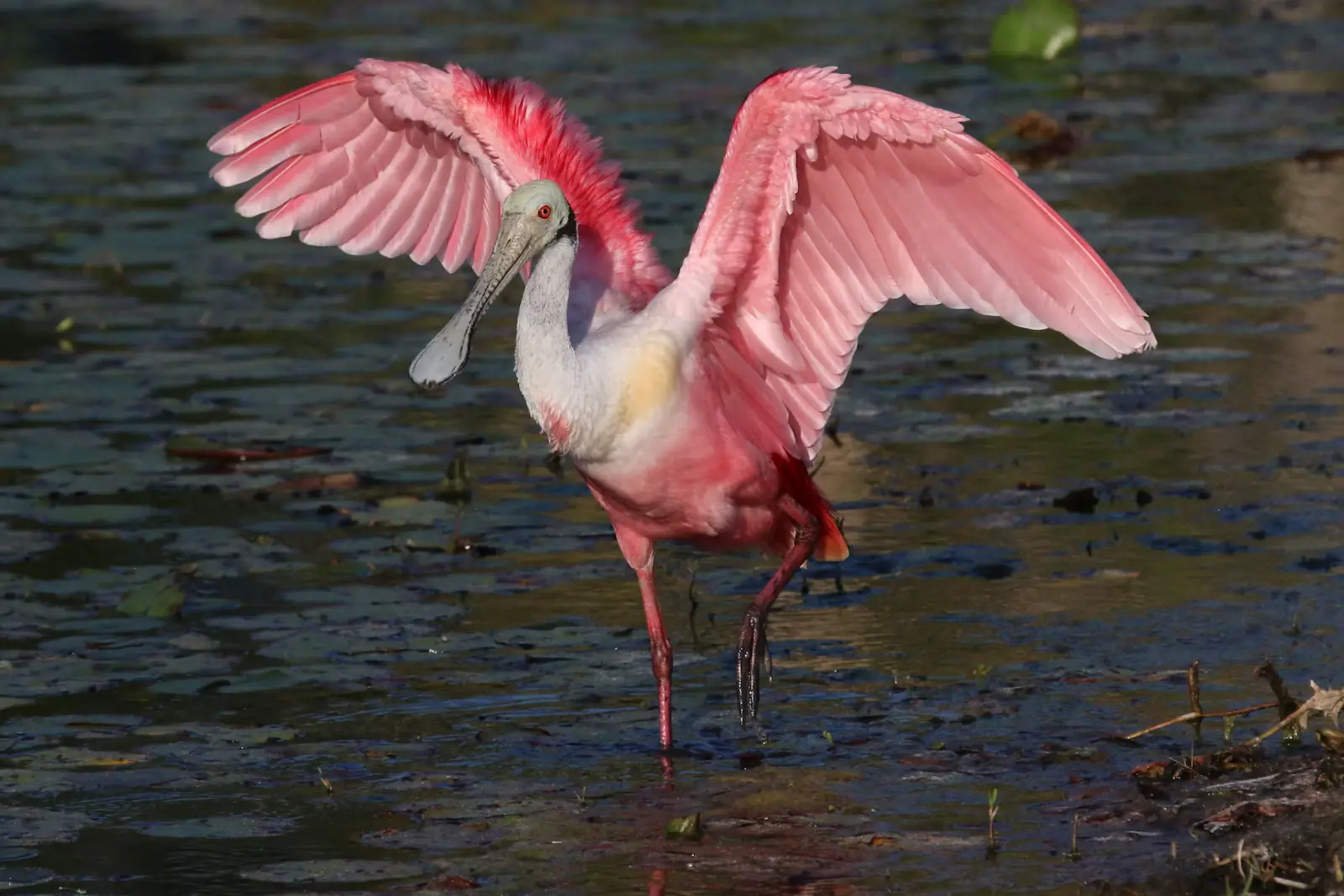
Sanibel is one of the easiest places in the United States to see a lot of birds without working very hard, and one of the easiest to visit at completely the wrong moment.
More than 245 species have been recorded at the J.N. "Ding" Darling National Wildlife Refuge alone, and the island adds the freshwater slough, the beach, the bay flats and the interior preserves on top of that. The habitats sit within a few miles of each other. You can be watching wading birds on a saltwater impoundment at nine and rails in a freshwater marsh at ten.
The rule that matters more than the location
Birding on Sanibel is governed by the tide, not the clock.
The refuge's Wildlife Drive runs along a tidal impoundment. At high water the birds are dispersed through the mangrove and largely invisible. As the tide falls, mudflats emerge and the fish and crustaceans in them are concentrated into shrinking pools. Every heron, egret, ibis and spoonbill in the neighbourhood arrives to work the same hundred square yards.
Aim to be there about two hours before low water, on a falling tide. Light is a secondary consideration. A middling afternoon on a good dropping tide beats a perfect golden dawn at high water, and most visitors have that backwards.
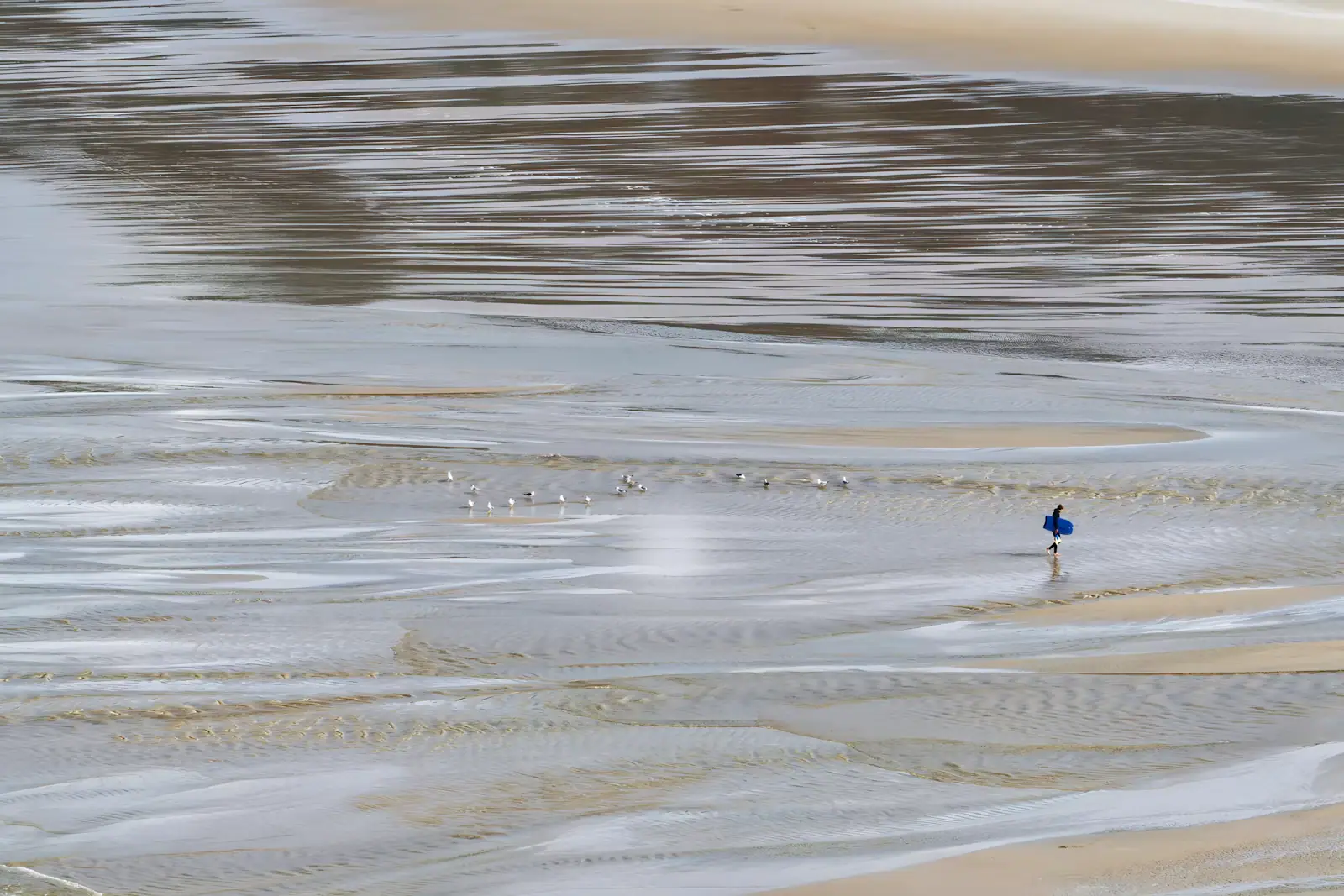
The same applies on the beach. Shorebirds feed on the exposed flats at low tide and roost above the tide line when the water comes up, so low water gets you feeding activity and high water gets you a roost you should not walk into.
Where to go
| Site | What it gives you | Practical |
|---|---|---|
| Wildlife Drive | Spoonbills, reddish egrets, ibis, all the herons, white pelicans in winter, ospreys | Four miles, one-way, closed every Friday. Vehicle fee, or a fraction of it on a bicycle |
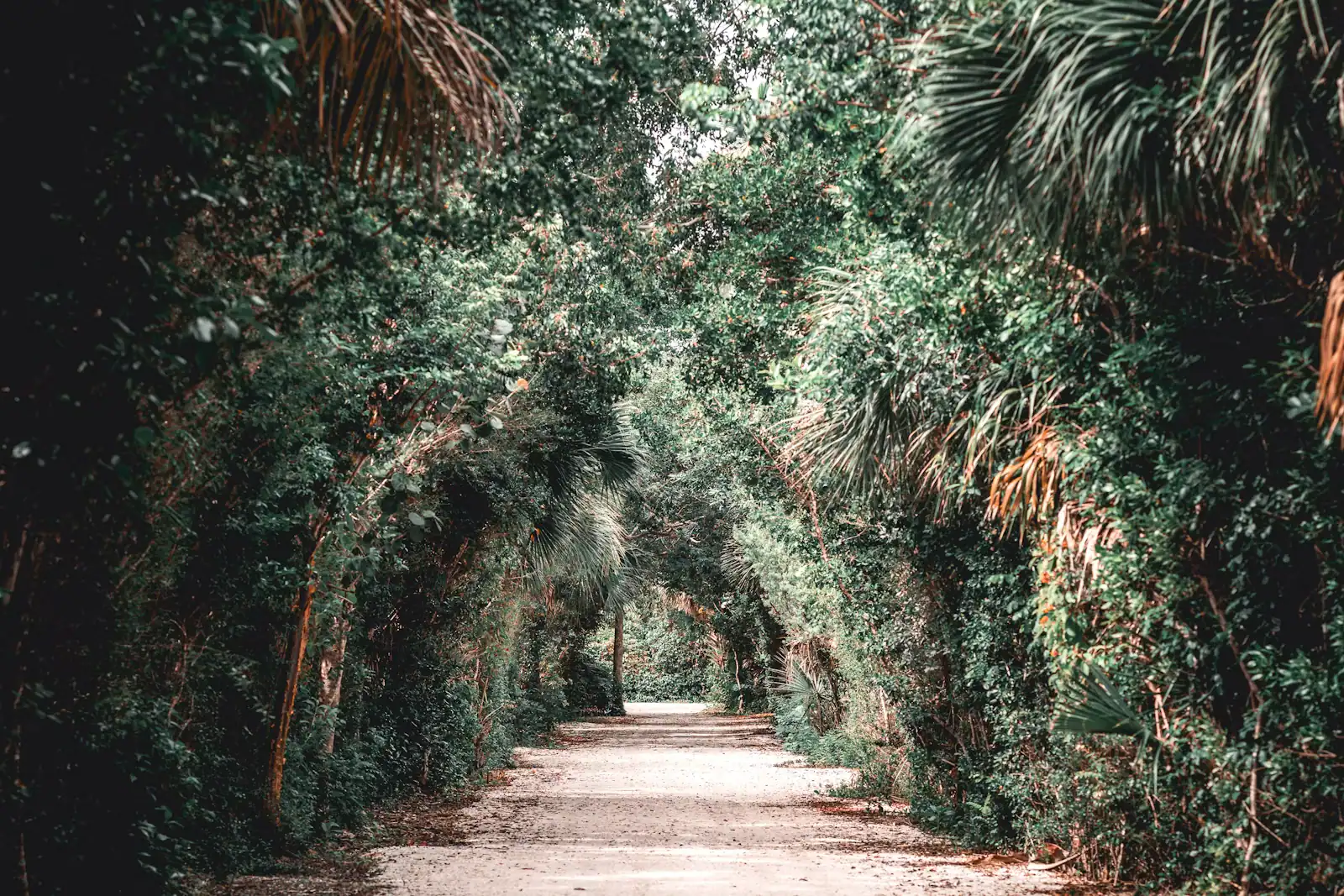
| Indigo Trail | Warblers and passerines in migration, alligators, rails at the edges | Two miles out and back from near the visitor centre, level, shaded in parts |
| Bailey Tract | The freshwater cast — gallinules, rails, grebes, wading birds at pond edges | Free, open dawn to dusk, unpaved, almost always empty |
| Tarpon Bay by kayak | Rookeries, roosting birds, mangrove specialists you cannot see from a road | Refuge concession runs guided paddles; the dusk trip is the good one |
| Lighthouse Beach Park flats | Shorebirds, terns, skimmers, plovers where the Gulf meets the bay | Busy lot, get there early, walk east onto the point |
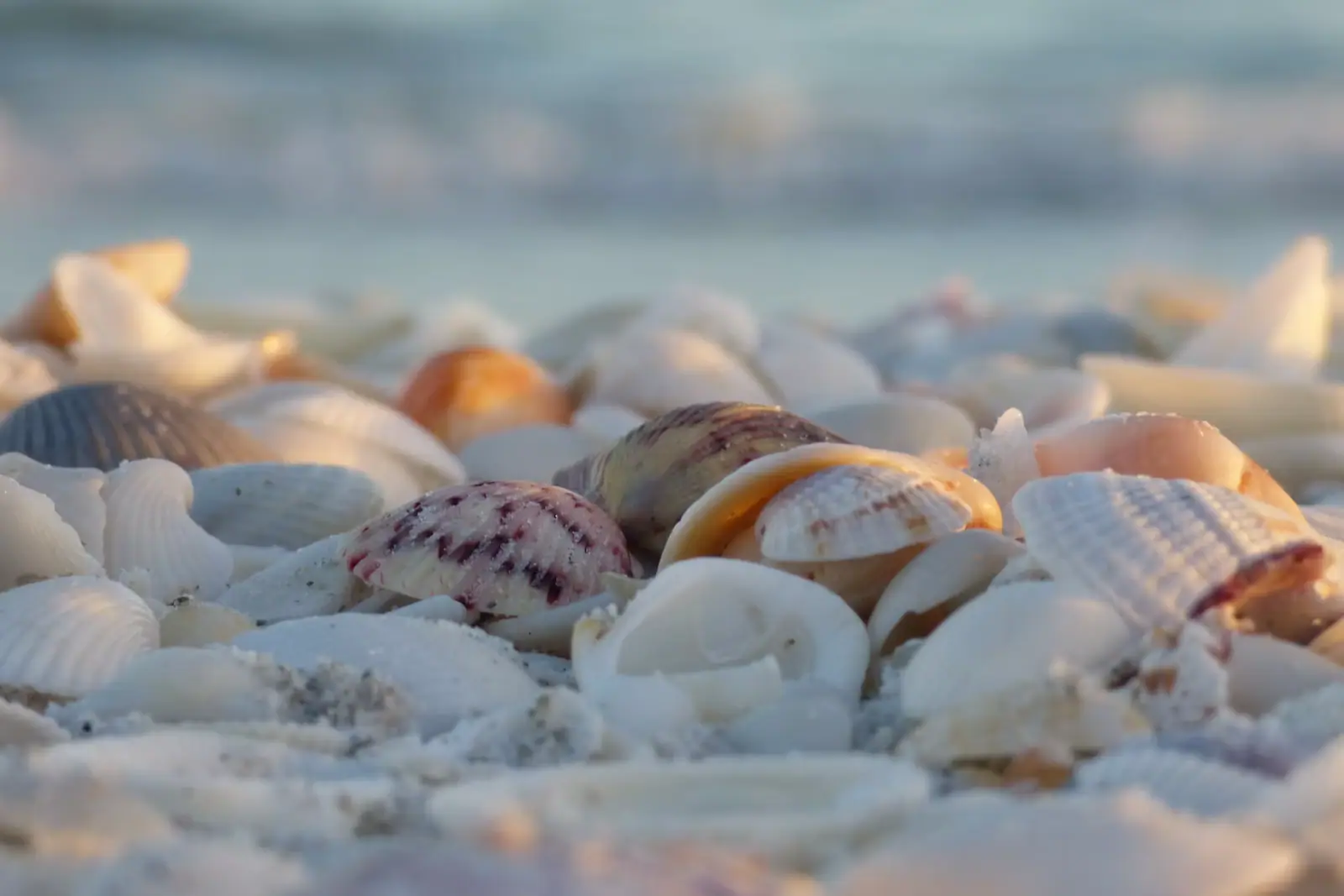
| Bowman's and Blind Pass | Shorebirds along the wrack line, skimmers loafing, gulls and terns | The same low tide that gives you shells gives you birds |
| SCCF trails and the interior preserves | Land birds, woodpeckers, raptors, the slough's freshwater edge | Flat, short, unpaved. Check current access before you drive out |
| The shared-use path itself | A twenty-five-mile transect through every habitat on the island | Underrated. Ride slowly and stop at the slough crossings |
The headline birds
Roseate spoonbill. Pink, improbable, and the reason a lot of people come. It feeds by sweeping that spatulate bill sideways through shallow water, which is why it needs the flats the falling tide exposes. Reliable through winter and early spring.
Reddish egret. The one to actually look for. There are only a few thousand in the country, and it hunts by sprinting, lurching and throwing its wings forward to shade the water. Nothing else on the flats behaves like it; once you have seen it you will never misidentify it again.
American white pelican. A winter visitor, enormous, with a wingspan around nine feet, fishing cooperatively in lines. Not to be confused with the brown pelicans plunge-diving off the beach year-round.
Mangrove cuckoo and black-whiskered vireo. The two species that bring serious listers to these islands, both hard, both far more often heard than seen, both in the mangrove edges in the warmer months.
Yellow-crowned night heron. Common here and easy once you know to look at the mangrove roots rather than the open water.
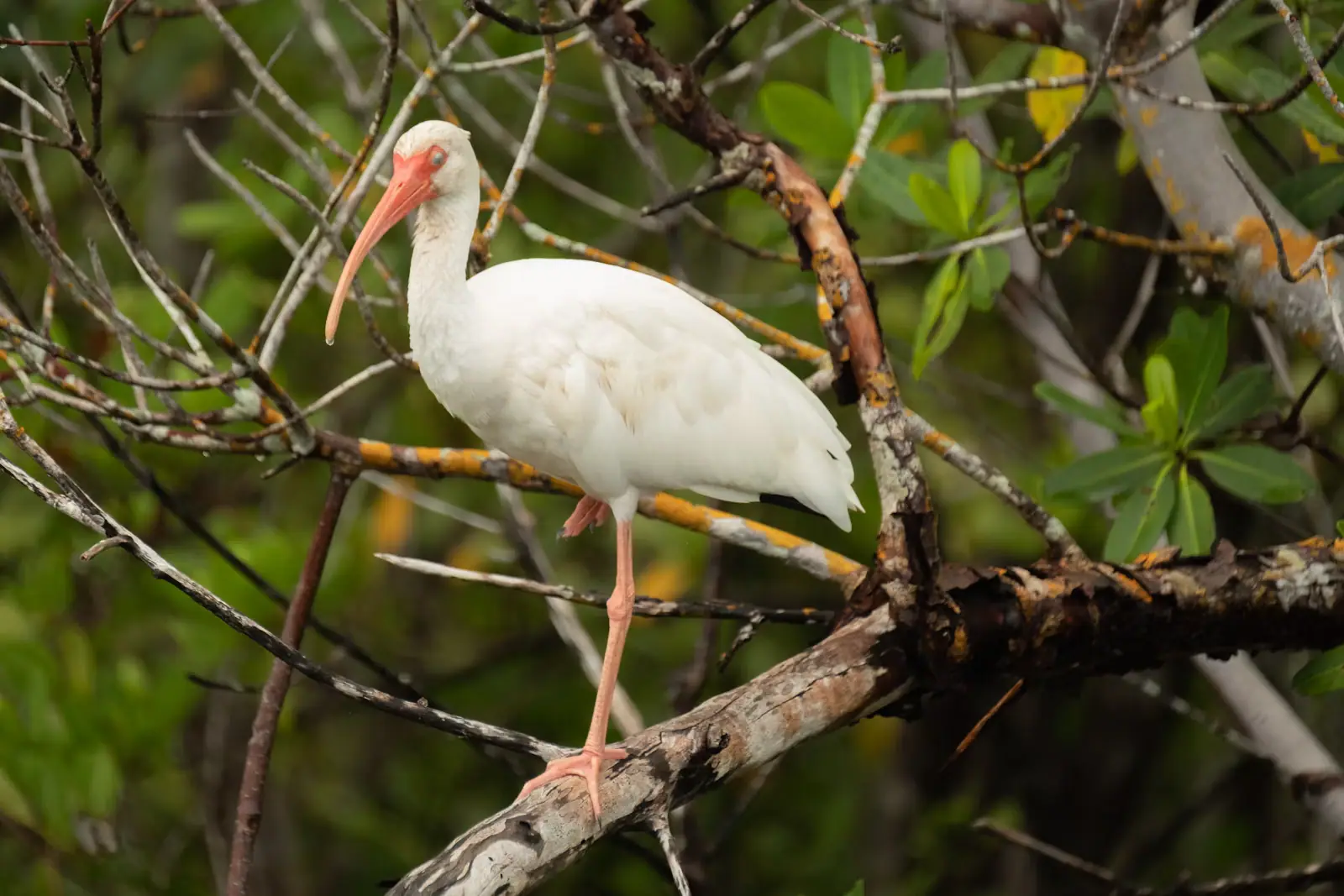
Wood stork, anhinga, tricolored heron, little blue heron, snowy and great egret, white ibis. The dependable supporting cast, all present in numbers.
On the beach: black skimmers loafing in tight flocks, snowy plovers and Wilson's plovers nesting in spring and summer, least terns, and in winter red knots, ruddy turnstones, sanderlings and piping plovers on migration and wintering.
Overhead: ospreys on practically every pole, bald eagles nesting on the islands, magnificent frigatebirds offshore in the warm months, and swallow-tailed kites for a few weeks in spring, which is one of the better sights in Florida.
The year, in birding terms
| Season | What is happening | Where to concentrate |
|---|---|---|
| December – February | Peak. Wintering waterfowl, white pelicans, the densest wading bird numbers, spoonbills in colour | Wildlife Drive on every falling tide |
| March – April | Spring migration through the trees. Swallow-tailed kites arrive. Shorebird nesting begins | Indigo Trail, the preserves, the beach for nesting areas |
| May – July | Breeding. Mangrove cuckoo and black-whiskered vireo singing. Shorebird chicks on the beach | Mangrove edges by kayak, early mornings, posted beach areas from a distance |
| August – September | Quiet and hot, but shorebird migration starts moving south through the flats | Low-tide beach flats, early only |
| October – November | Autumn migration builds, the first wintering birds return, humidity breaks | Wildlife Drive, the Bailey Tract, the beach |
The refuge runs an annual festival in the autumn with walks, talks and free days; dates move, so check the refuge's own calendar rather than assuming.
Practicalities
Binoculars are enough for almost everything here, because the birds on Wildlife Drive are genuinely close. A scope earns its place on the beach flats and for distant rafts of pelicans.
The car is a hide. Birds on Wildlife Drive tolerate vehicles far better than people on foot, so stay in it except at designated pull-offs, and pull fully off the lane before you stop.
A bicycle is the better tool if you can manage the pace. You hear far more, you can stop anywhere, and the walk-in rate at the refuge gate is a fraction of the vehicle fee.
Mosquitoes and no-see-ums are serious at the Shell Mound trail and around the slough at dawn and dusk. Repellent is not optional in summer.
Checklists and current sightings are worth a look before you go out; the refuge and the local Audubon chapter both publish, and eBird has good coverage of these islands.
Field ethics on a busy island
Do not flush a roosting flock. A tight group of skimmers, terns and gulls packed above the tide line is resting between feeding windows, and putting them up costs energy they need. Walk below them along the water, not through them, and give a wide berth to any group that starts getting restless.
Stay out of posted areas entirely. Shorebird nests on these beaches are scrapes in open sand and are effectively invisible; the ropes exist because people cannot see what they are standing on. Snowy and Wilson's plovers abandon nests readily.
If a bird is calling insistently at you, dive-bombing, or dragging a wing in a broken-wing display, you are too close to a nest or a chick. Retreat the way you came.
Do not use recorded playback to draw out mangrove cuckoos or vireos. It is heavily discouraged here, it stresses breeding birds, and on a refuge with this much traffic the cumulative effect is real.
Keep dogs leashed, and off the beach entirely where nesting is posted. Dogs are not permitted out of vehicles on Wildlife Drive.
Drones are prohibited across the refuge and are a straightforward way to flush every bird within half a mile.
And if you are photographing, let the bird set the distance. A picture that made the animal move is a worse picture and a worse day for the bird.
Last updated
Opening hours, ordinances and prices move with the season. We re-check this guide rather than rewrite it, and the date above is the last time someone did. How we research and correct.