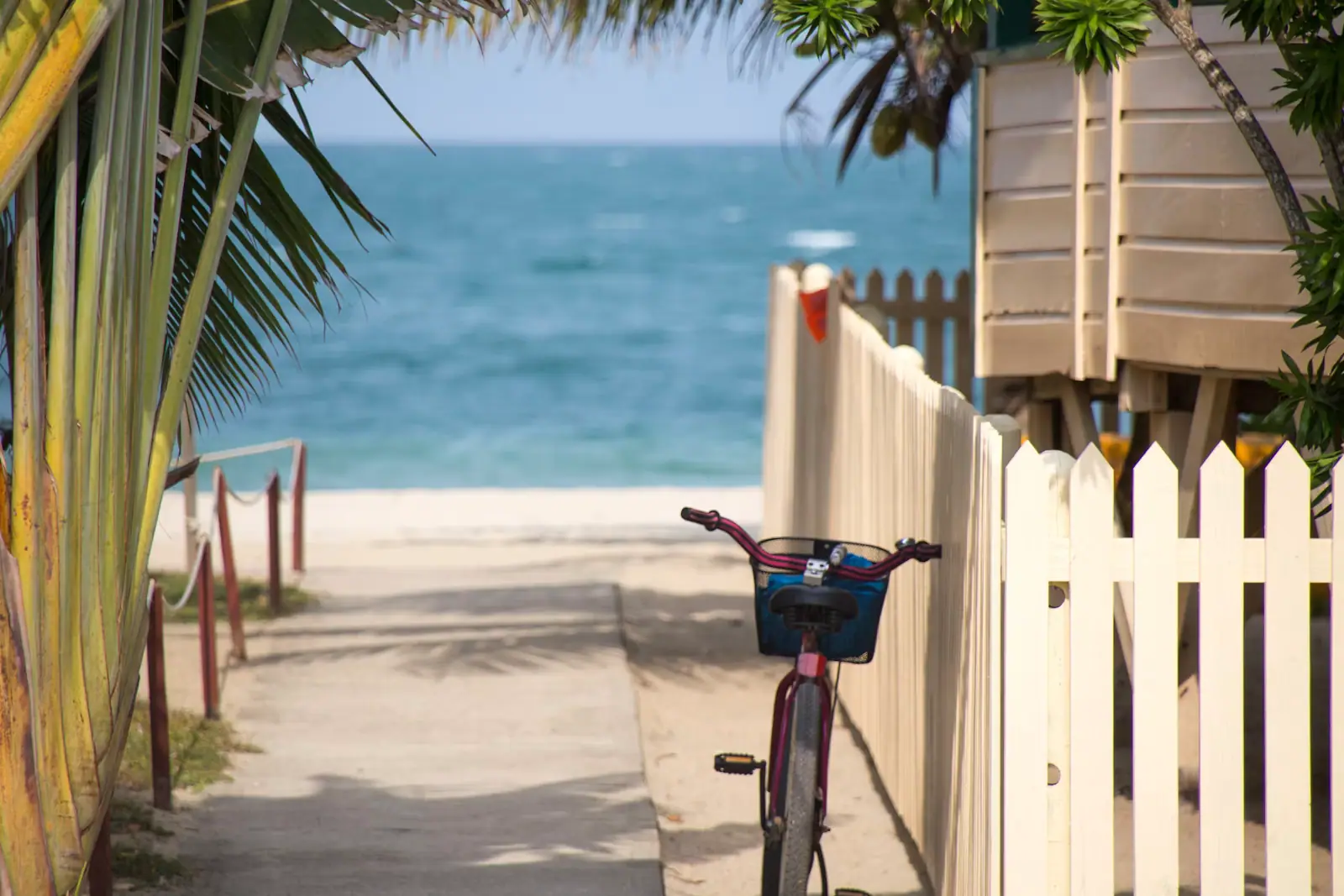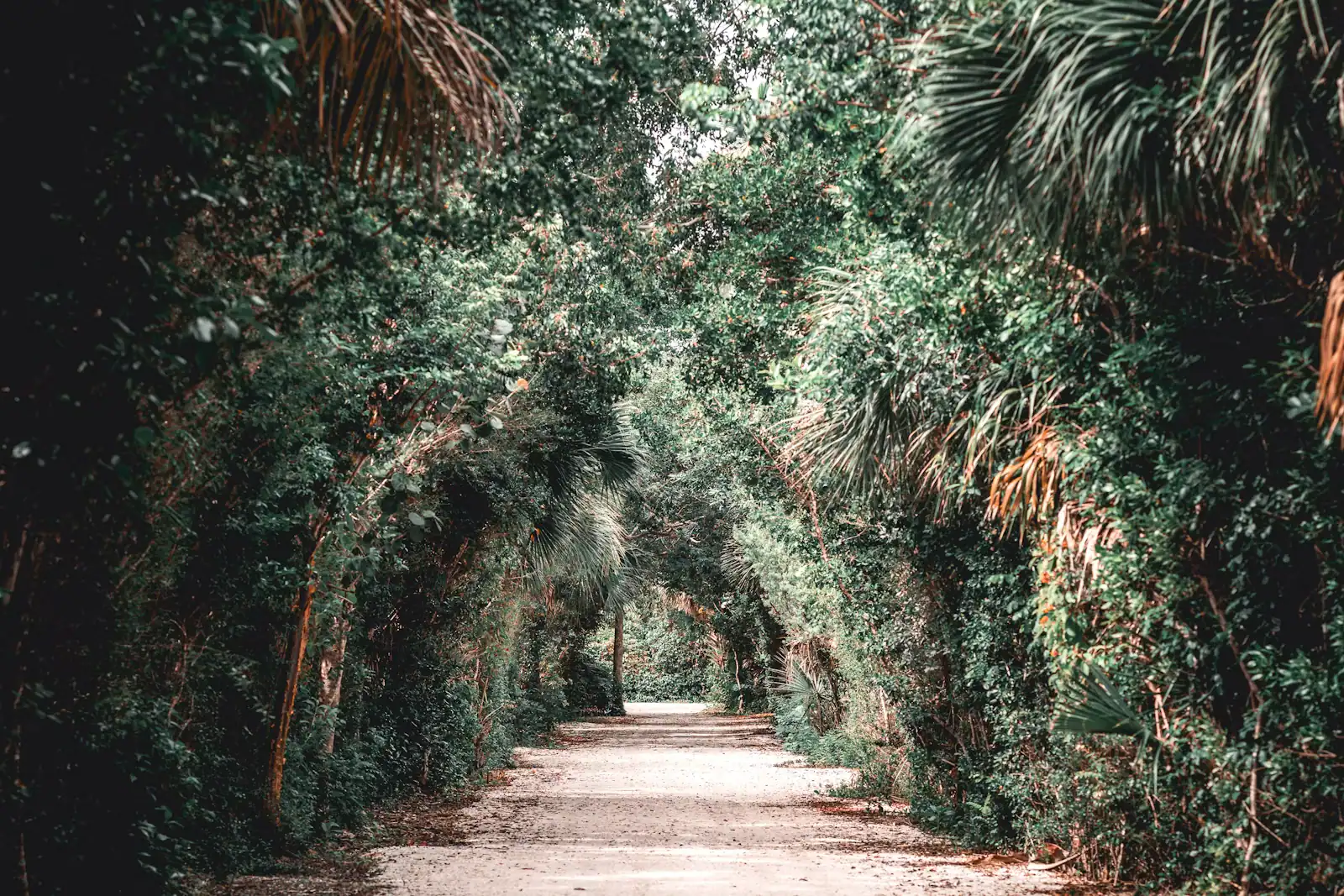
In the 1970s Sanibel had a choice that every growing coastal town faces, and it made the unusual one. Rather than widen its roads to carry more cars, the newly incorporated city started building a separated path for bicycles and pedestrians alongside them.
Fifty years on, that network runs to more than twenty-five miles of paved, separated shared-use path, from Lighthouse Beach Park at the eastern tip to the Blind Pass Bridge at the western end, with spurs into every beach park, the wildlife refuge, the museums and the plazas on Periwinkle Way. Another eight miles or so of natural-surface trail threads the interior preserves.
It is flat. There is no climb on this island worth the word. And because every city beach lot charges by the hour around the clock, the bicycle is not just pleasant here — it is the cheapest and least irritating way to reach the sand.
The rides, by distance
| Route | Distance | Roughly | What it is |
|---|---|---|---|
| Periwinkle Way loop | 5–6 miles | 45 min | The shops, the historical village, Tarpon Bay Road and back. Flat, busy, good for a first ride |
| Lighthouse to Tarpon Bay Beach | 8 miles return | 1 hr | East end to mid-island along the beach side, with a swim in the middle |
| The refuge run | 10–12 miles return | 2 hr plus the drive | Out San-Cap to the refuge gate, four miles of Wildlife Drive at bicycle pace, and home |
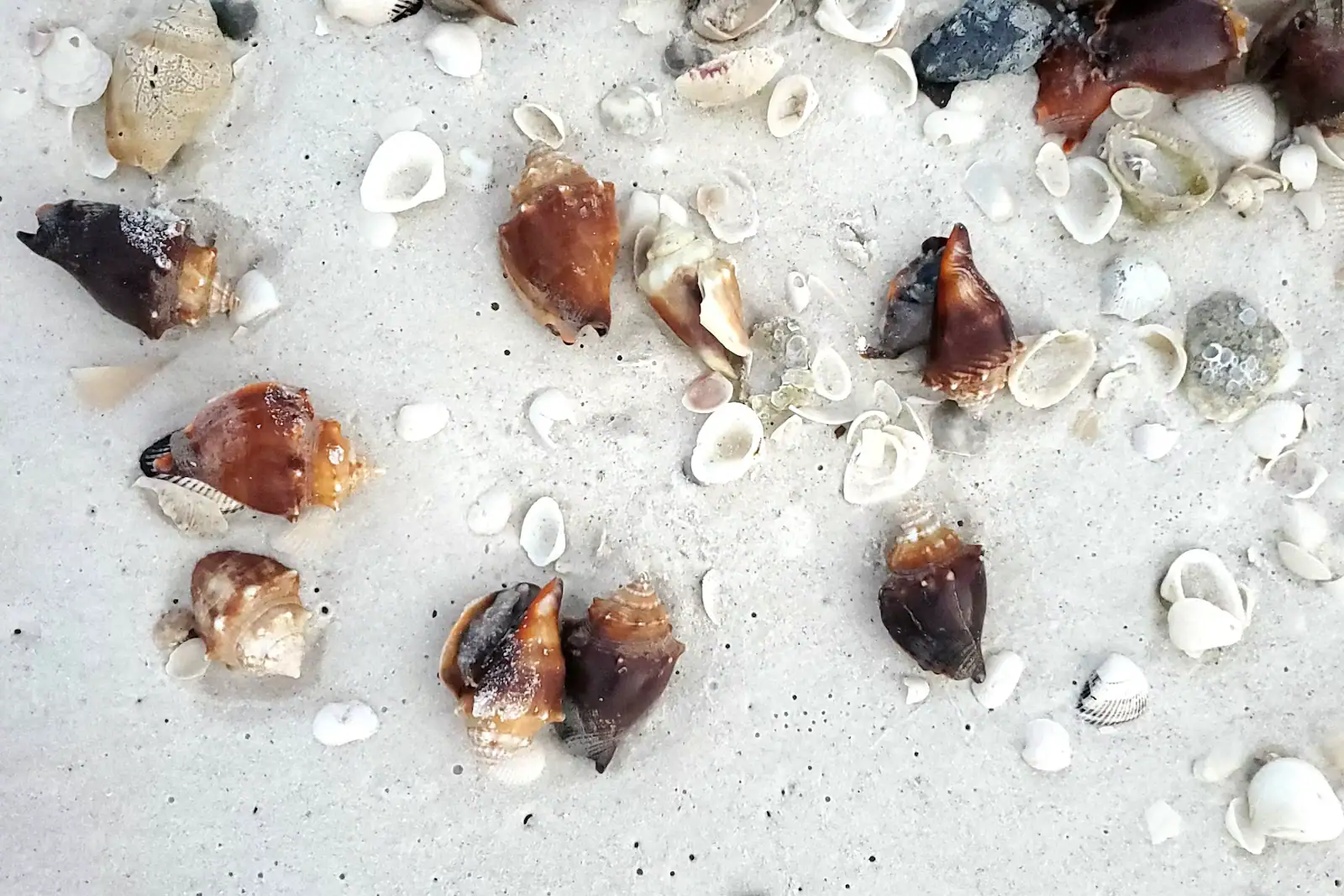
| Bowman's Beach and back | 12–16 miles return | 2 hr | Mid-island to the best shelling beach. The footbridge crossing at the end is part of the charm |
| End to end, Lighthouse to Blind Pass | 24–26 miles return | 3–4 hr | The full island. Do it with the wind in mind rather than the clock |
| Sanibel to Captiva village | 28–32 miles return | Half a day | Over Blind Pass and up Captiva Drive. The last stretch is on-road with a narrow shoulder |
Distances vary by a mile or two depending which spurs and beach accesses you count. Treat them as planning figures.
The ride everybody wants to do
Lighthouse Beach Park to the Blind Pass Bridge is the full length of the path, about twelve to thirteen miles one way, and it is the ride that makes sense of the island. You pass the plazas, the slough, the refuge entrance, the turn for Bowman's, and finally the pass where the water runs hard between the two islands.
Two pieces of advice. Ride west in the morning and east in the afternoon if the sea breeze is doing what it usually does, because a headwind on a heavy cruiser at mile eleven is a long eleven miles. And carry more water than you think — there is shade in places and none at all in others, and the path has no fountains along most of its length.
If you want to continue to Captiva village, the path ends at the bridge. Captiva Drive beyond it is a public road with a narrow shoulder, moderate traffic and no separated facility. It is perfectly rideable by a confident adult and it is not the place for a nine-year-old on a rented cruiser.
Renting, honestly
Rent by the week. It is far better value than the daily rate, and nearly every shop on the island will deliver bicycles to a house or condominium and collect them at the end of the stay, which removes the only awkward part of the process.
Ask for a basket or a rack if you plan to carry shells, towels or groceries, and ask about lights if there is any chance of riding after dark — which on Sanibel means any chance of riding after dinner.
Child seats, trailers, tag-alongs and adult tricycles are all widely available. Beach cruisers are the default and are the right tool: upright, heavy, single-speed or three-speed, and entirely adequate on ground this flat.
E-bikes: the rules are stricter than you expect
This is the thing rental shops explain inconsistently, so it is worth being precise.
- Only Class 1 e-bikes are permitted on the shared-use path. Class 1 means pedal-assist only, with no throttle, and assistance that cuts out at 20 mph.
- Class 2 throttle-operated bikes are not permitted on the path.
- Riders must be at least 16.
- The path carries a default speed limit of 15 mph.
- Within fifty feet of a pedestrian, that drops to 10 mph.
These are not decorative. The city put path rangers out in 2025 because the network had become busier than it was designed for, and the friction is almost entirely between fast riders and people walking, birdwatching or pushing a stroller.
If a rental shop cannot tell you which class a bike is, that is a shop to walk out of.
The hazard is not what you think
Nobody gets hurt on this path because of speed or terrain. The risk is the crossings.
The path runs parallel to the road and crosses driveways, side streets and resort entrances constantly, sometimes several per hundred yards. A driver pulling out is looking down the road for a car, at car height, at car speed. They are frequently not looking at the path at all, and on this island a great many of them are looking sideways for a bird.
Slow at every driveway. Make eye contact before you cross in front of a waiting vehicle. Assume you have not been seen.
The second thing: it is a shared-use path, not a cycleway. Walkers, dog leads across the full width, joggers, children on scooters and photographers standing still with binoculars up are all legitimate users with as much right to be there as you. Call out before you pass, pass wide and slow, and accept that some of the path's traffic is going to be moving at two miles an hour.
What you see from a bicycle that you miss from a car
The slough. The island's freshwater spine runs the length of Sanibel, the path crosses it repeatedly, and there is usually an alligator visible from one of the crossings — motionless, half-submerged, entirely uninterested. Keep moving, keep back from the bank, and never stop to feed anything.
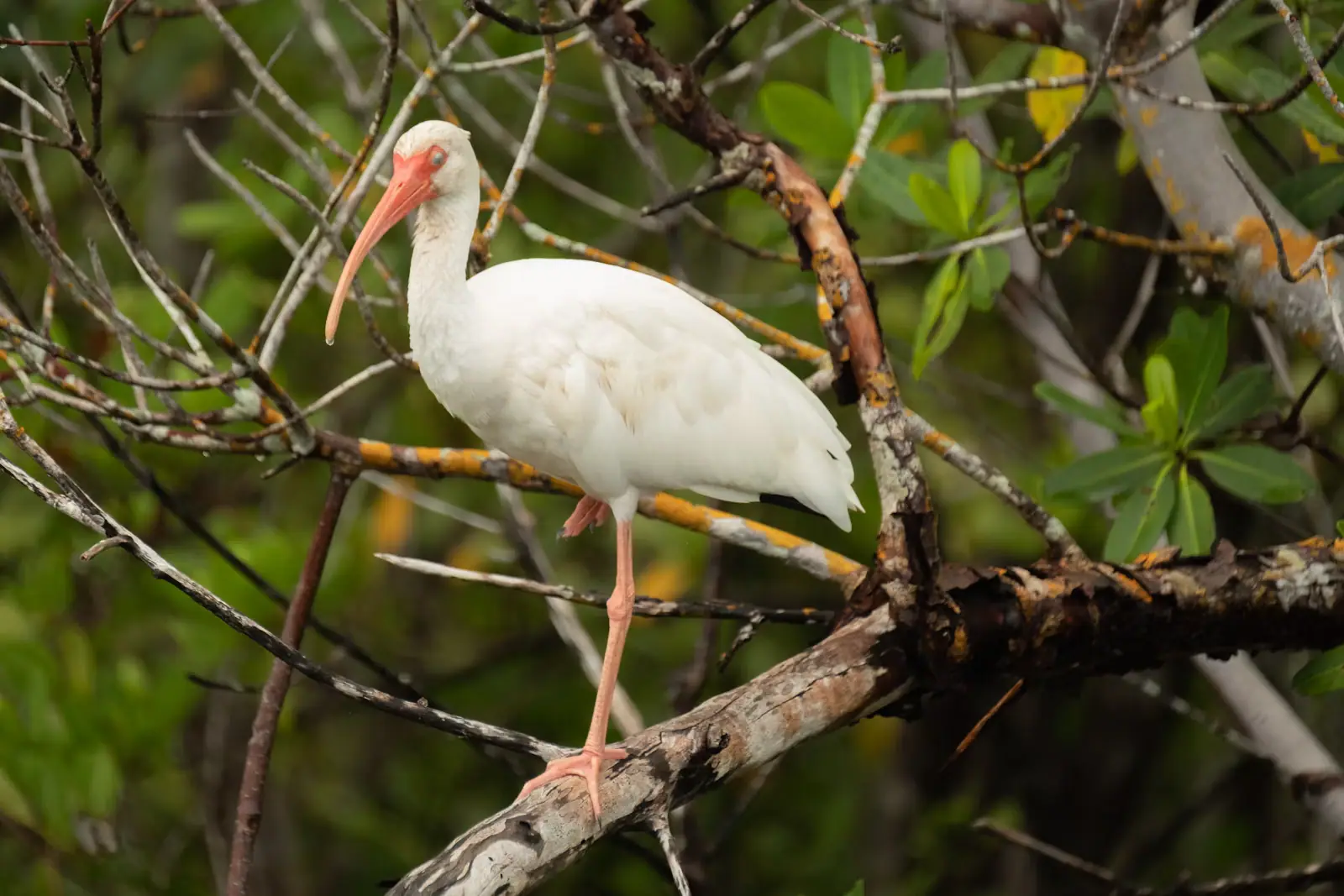
Gopher tortoises on the verges, which are a protected species and which a car passes at 35 mph without ever noticing. Ospreys on the poles. Ibis working a lawn. Night herons in the mangrove at the Blind Pass end.
That is the actual argument for the bicycle here, beyond the money and the parking. The island moves at a speed, and the speed is about ten miles an hour.
Riding with children
Sanibel is one of the better places in Florida to put a child on a bicycle, because the path is separated, flat and continuous, and because the destinations are close together.
A realistic range for a seven- to nine-year-old on a rented cruiser is four to six miles in total, with a beach or an ice cream in the middle. Ten-year-olds and up can generally manage the Bowman's Beach run.
Ride in single file with an adult at the back, not the front, so nobody drops off unnoticed. Stop before every driveway crossing until you are confident the children are doing it automatically.
Helmets are required by Florida law for riders under 16 and are a good idea for everybody. Rental shops supply them; check the fit rather than accepting the first one handed over.
Do not take children on the on-road section beyond the Blind Pass Bridge toward Captiva village. The path ends at the bridge and the shoulder beyond it is narrow.
Timing matters more than distance in summer. Ride before ten. The afternoon thunderstorm is a fixture rather than a risk, and a flat open path with no shelter is a poor place to meet one.
Path etiquette and the rules that are enforced
Keep right, pass left, and say so before you do it. "On your left" said early is worth more than a bell said late.
Ride single file where the path narrows, which it does around bridges and some beach accesses.
Lights after dark are a legal requirement and a practical necessity. Sanibel has almost no street lighting, partly by design and partly because of sea turtle nesting, and an unlit rider on an unlit path is genuinely invisible.
Do not ride on the beach. Soft sand ruins bearings, and during turtle season the beach is nesting habitat with marked nests on it.
Lock the bike, even here. Rental bicycles are the most commonly reported theft on the island and most of them are unlocked ones outside a restaurant.
Yield to pedestrians in every situation without exception. The path's speed limits exist because the network is shared with walkers, and the rangers introduced in 2025 are there because that stopped happening on its own.
Last updated
Opening hours, ordinances and prices move with the season. We re-check this guide rather than rewrite it, and the date above is the last time someone did. How we research and correct.