Skip to content
Menu

We earn a commission if you book through this link. You pay the same price.

Search

Nature & Wildlife

Biking Sanibel: The Shared Use Path

Last updated

Sanibel's Shared Use Path runs over 26 separated miles with no traffic lights to cross. Where to rent, what it costs, and why a bike beats a car here.

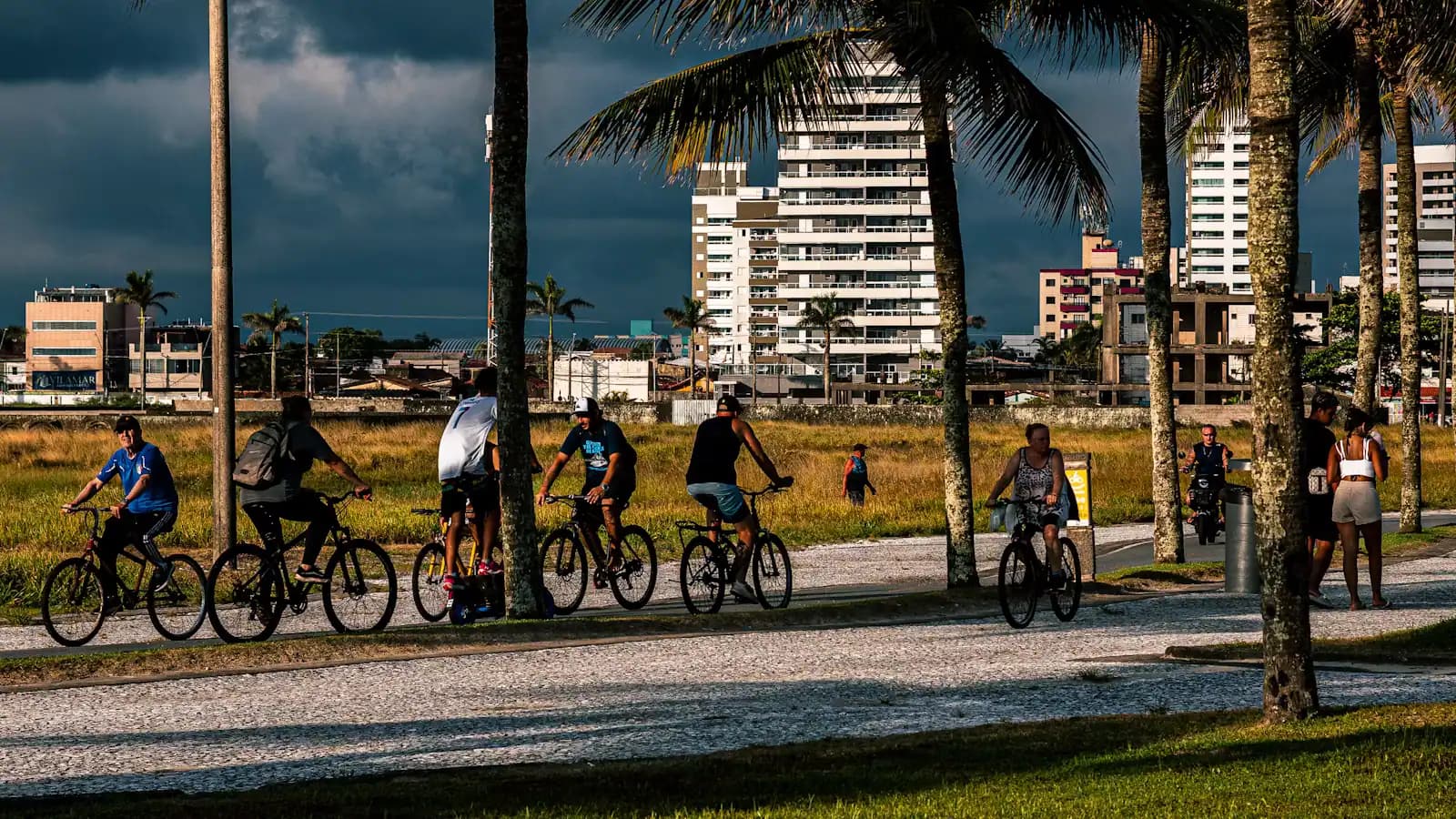
Cyclists riding along a paved path separated from the road, with palm trees on both sidesUnsplash

Almost everyone arrives here in a car, because the causeway is the only way on and there is no other option. Almost everyone then spends the week wishing they had got out of it sooner. Sanibel is one of the few American resort islands where the bicycle is genuinely the better vehicle, and the reasons are structural rather than sentimental.

Start with the ground. Nothing on this island stands more than a few feet above sea level, so there is no hill anywhere on the network — not a rise, not a bridge approach worth naming until you reach Blind Pass. Then add the roads. There is no traffic signal on Sanibel. Not one. Junctions are four-way stops, traffic moves at posted speeds that would embarrass a mainland arterial, and the path itself is separated from the carriageway rather than painted onto its edge. The City of Sanibel puts the network at more than 26 miles, running from Lighthouse Beach Park at the eastern point all the way west to the Blind Pass bridge.

The financial argument is blunter. Parking at every beach park on the island is metered and paid by the hour, and on a February Saturday the lot at Bowman's Beach fills early enough that the question becomes academic. Bike racks are free and they are never full. The same asymmetry applies at the wildlife refuge, where a car pays a ten-dollar entrance fee to drive the four-mile Wildlife Drive and a cyclist pays a dollar. Ride for a week and the rental has paid for itself twice over in parking and gate fees alone.

What the path is not is a wilderness trail. It runs beside roads for most of its length, through residential lanes, past shopping plazas on Periwinkle Way, along the edge of the refuge and out to the western beaches. You will share it with walkers, runners, dog walkers, people towing beach carts and a great many riders who have not been on a bicycle since childhood. Speed is not the point and the path is not designed for it.

One honest caveat before you plan a route. Hurricane Ian in September 2022 tore up long stretches of pavement, stripped the vegetation that shaded much of the network and knocked out a great deal of the Australian pine and sea grape canopy. Repairs have been made in stages over several seasons, and the island looks brighter and more exposed than the photographs in older guidebooks. Check the city's current path notices before you set out on a long ride, and expect sand across the pavement near the beach accesses after any blow from the west.
Our picks

The ones we would book

  • Editor's Pick

    Best bike hire with delivery to your door

    Why we chose it

    The arrangement that makes this island work: bicycles dropped at your rental house on arrival day and collected at the end, so you never strap a cruiser to a car. Ask for a basket and a rear rack when you book. The weekly rate is usually close to the price of three or four single days, which is the whole argument for not hiring by the day.

  • Best Value

    Cheapest way to spend a week on two wheels

    Why we chose it

    A standard single-speed cruiser, taken by the week, with no electric assistance you do not need on an island with no hills. The saving is not only the rental price. A week of riding avoids metered parking at every beach park and reduces the refuge gate fee from ten dollars a car to a dollar a rider.

  • Best for Families

    Best set-up for riding with children

    Why we chose it

    Small-wheel bikes, trailers and child seats, hired together so the whole family is on compatible equipment. Stock is genuinely limited in February and March, so reserve rather than turn up. Stick to the separated path, keep to the Sanibel side of Blind Pass, and treat Periwinkle Way at midday as a walking-pace stretch.

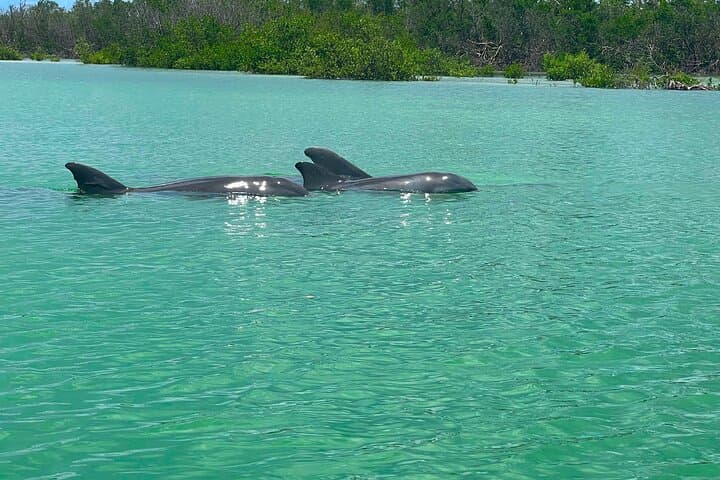
    The dolphins can be so curious!

    Involves Animals

    Dolphin and Manatee Adventure Tour of Fort Myers (opens in a new tab)

    Best for FamiliesFree cancellationInstant confirmation
    3K reviews

    Come join us for a once in a lifetime experience that is great for all skill levels. There are only a few places on earth to see the West…

    2 hours

    Prices checked

    from $76.68
  • Small Group

    Best guided ride for a first day on the island

    Why we chose it

    Two to three hours with someone who can explain why the island runs east to west, where the path connects and which beach suits the tide that afternoon. Worth it on day one precisely because it saves you the day two of working it out yourself. Ask whether the route includes the refuge, as the gate fee is usually separate.

    Southwest Florida Sunset Sail

    Wildlife Watching

    Southwest Florida Sunset Sail (opens in a new tab)

    Small GroupFree cancellationInstant confirmation
    514 reviews

    SWFL sunsets are the best, and there is no better place to watch them than from the deck of our 36ft. Sailing Catamaran, "Copacetic". The…

    2 hours

    Prices checked

    from $70
  • Accessible

    Best electric bike for longer island distances

    Why we chose it

    Class One pedal-assist machines are the only electric bikes permitted on the Shared Use Path, and they change the arithmetic of a Lighthouse-to-Blind-Pass run for anyone who would find twenty-odd miles hard work. Confirm the class before you ride onto the network. Expect roughly double the price of a standard cruiser.

What the network actually covers

Think of the path as one long east-west spine with short spurs hanging off it.

The spine begins at Lighthouse Beach Park, where the 1884 iron lighthouse stands at the island's eastern point, and runs west along Periwinkle Way through the commercial middle of the island. Periwinkle is where the shops, the bike hire desks, the grocery and most of the food are, and it is the busiest stretch of the whole network. Past the Tarpon Bay Road junction the path splits its personality: one arm continues west along Sanibel-Captiva Road toward the refuge and the western beaches, the other drops south down Tarpon Bay Road to the Gulf.

The western end finishes at the Blind Pass bridge, which is where Sanibel stops and Captiva begins. That is a real terminus, not a soft one, and it matters for planning — see the section below.

The spurs are what make it useful rather than merely scenic. There are connections to Bowman's Beach, to Gulfside City Park, to Tarpon Bay Beach, to the Bailey Tract, and to the refuge entrance on Sanibel-Captiva Road. Most riders never do the full length in one go. A far more typical day is four or five miles out to a beach, a few hours on the sand, and four or five miles back with the wind behind you.

The city publishes a Bike or Hike Sanibel brochure with a map, and the bike hire shops hand it out free. Take one. The path is well signed but the junctions are not always obvious from the saddle.

Riding Wildlife Drive, and why it is better on two wheels

The four-mile Wildlife Drive through the J.N. "Ding" Darling National Wildlife Refuge is one-way, unpaved, slow and open to bicycles as well as cars. It is the single best argument for renting a bike on this island.

A car pays a ten-dollar entrance fee. A cyclist or a walker pays a dollar. That is not the main reason to ride it, though. The main reason is that you can stop anywhere. In a car you are committed to the pull-outs, and on a busy morning in February the pull-outs are full of people with tripods. On a bike you simply stop, and you do it quietly, which is the difference between watching a roseate spoonbill work a mudflat and watching it leave.

Two hard rules govern the visit. The refuge, the Wildlife Drive, the Visitor and Education Center and the Indigo Trail are all closed every Friday. Not reduced hours — closed. And the drive's opening hours shift by month, opening at seven in the morning and closing anywhere from late afternoon in midwinter to eight in the evening at the height of summer. All visitors have to be off refuge land within half an hour of legal sunset.

The tide matters more than the hour. Wading birds feed on falling and low water when the mudflats are exposed, and a high tide can empty the impoundments of anything worth photographing. Check a tide table for San Carlos Bay before you decide what time to ride in.

Renting a bike, and what it costs

What it costs

You do not need to bring a bicycle. Rental is a mature, competitive business here and several operators will deliver to your rental house or hotel and collect at the end of the stay, which removes the only genuinely awkward part of the arrangement.

Treat these as bands rather than quotes, and confirm the current rate when you book:

  • Standard beach cruiser, single day: commonly in the twenty to thirty dollar range.
  • Weekly cruiser rental with delivery: usually the better deal by a wide margin, often landing somewhere near the price of three or four single days.
  • Electric bike: roughly double a standard cruiser, sometimes more in high season.
  • Guided island bike tour: priced per person and typically two to three hours.

What to ask for rather than accept by default: a basket or a rear rack, because you will be carrying towels, water and whatever you pick up on the beach; a lock, even though theft is rare; and a child seat or trailer if you need one, as stock is limited in February and March.

Helmets are worth taking whether or not you are required to wear one. Florida law mandates them for riders under sixteen. The path surface varies, sand drifts across it near the beach accesses, and the most common crash here is a slow, stupid one on loose grit rather than anything involving a car.

The rules, and why the island is so dark at night

Local tips

Sanibel's cycling rules are short, and one of them surprises visitors.

Class One e-bikes only. The city permits pedal-assist machines that require you to pedal for the motor to engage, cap out around twenty miles per hour of assistance and have no throttle. Throttle-operated e-bikes, motorised scooters and anything else with a motor are not allowed on the Shared Use Path. If you are hiring an electric bike, confirm it is Class One before you ride it onto the network.

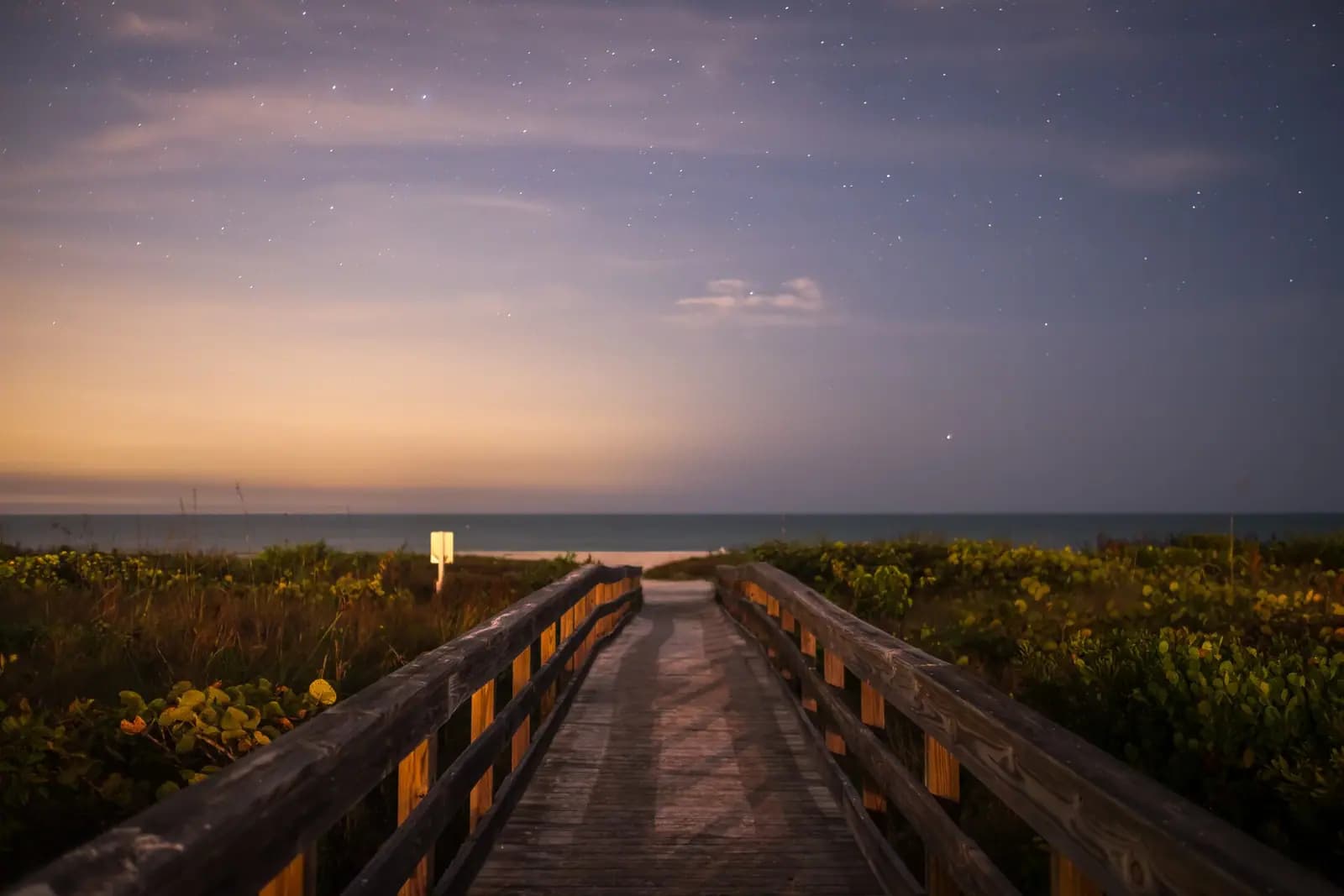
Lights are not optional after dark, and dark here means dark. Sanibel has a lighting ordinance built around nesting sea turtles, which come ashore on these beaches through the warmer months. Street lighting is minimal by design, beachfront properties shield their exterior lights, and long stretches of the path have no illumination whatsoever. A rider without a front light on Sanibel-Captiva Road at nine in the evening is genuinely invisible. Take lights, or plan to be home before sunset.

Give way to people on foot. It is a shared use path, not a cycle track, and that is the legal as well as the social position. Call out when you pass. Expect people to step sideways without looking.

Watch the junctions. Where the path crosses a side road, drivers turning in are looking for cars, not for a cyclist arriving at fifteen miles an hour from behind a hedge. Slow down at every crossing and make eye contact.

When to ride, and what the seasons do to it

When to go

Early morning is the answer for most of the year, and in summer it is the only answer.

From June through September the island is hot and humid by nine in the morning, and thunderstorms build through the afternoon with enough regularity to plan around. Ride at first light, be back before eleven, and treat the middle of the day as time for the water or the air conditioning. Carry more water than you think you need; there is no reliable drinking water along most of the network.

Winter is the island's high season and the cycling is close to perfect. December through March brings dry air, daytime temperatures that make a long ride pleasant rather than punishing, and the best bird activity of the year in the refuge. It also brings the crowds. Periwinkle Way in the third week of February is slow going, the bike racks at Bowman's Beach fill up, and the rental shops run out of the good machines.

Wind is the variable nobody plans for. There are no hills to work against, so the only resistance on this island is the breeze, and a steady onshore wind turns a flat westward ride into an unexpectedly long one. The standard fix is to ride out into the wind and home with it.

One seasonal note specific to this coast: no-see-ums are worst at dawn and dusk in the warmer months, and the path runs through mangrove and wetland for long stretches. Repellent goes in the basket.

The path since Hurricane Ian

Hurricane Ian came ashore in Southwest Florida on 28 September 2022 as a Category 4 storm. It severed the Sanibel Causeway, destroyed or damaged a very large share of the buildings on Sanibel and Captiva, and killed people on these islands. The Shared Use Path was a small part of a very large loss, but it was hit hard: sections of pavement were lifted, undermined or buried, and the vegetation that shaded the network was stripped.

Repairs have been carried out in stages across several seasons, and the network is usable again along its length. What has not come back at the same speed is the canopy. Long stretches that were tunnels of Australian pine and sea grape are now open sky. The island is brighter than it was, the riding is hotter in the middle of the day, and a route that older guidebooks describe as shaded may not be.

Practically, that changes two things about how you plan. Sun protection matters more than it used to on a midday ride. And after any storm from the west, expect sand and debris across the pavement near the beach accesses until the crews clear it.

Check the City of Sanibel's current notices before a long ride rather than assuming a printed map from a few years ago still reflects the ground. Where a section is closed for work, it is signed, and the detour is short.

Book it

Everything else we track

Some links below go to Viator, our booking partner. We earn a commission on bookings made through them — at no extra cost to you, and with no influence on what we recommend.

Sharing, or having it to yourselves

Most of what is bookable here sells two ways, and the cheaper one is not always the cheaper one. A shared departure is priced per person; a private booking is priced for the party, so the arithmetic flips somewhere around four to six people — and it is the only version where you pick the time. Check the party size each listing actually covers before you decide.

  • Book a seat

    A shared departure, priced per person. The cheapest way to do this for one or two people.

    Sunset Cruise Fort Myers Beach

    Private and Luxury

    Sunset Cruise Fort Myers Beach (opens in a new tab)

    Free cancellationInstant confirmation
    23 reviews

    Join us for a scenic 90 minute cruise at sunset that blends comfort, adventure, and the wonders of nature. Book your spot today and…

    1–2 hours

    Prices checked

    from $47.92
  • Book the whole thing

    Priced for the party rather than the seat, and you choose the departure time.

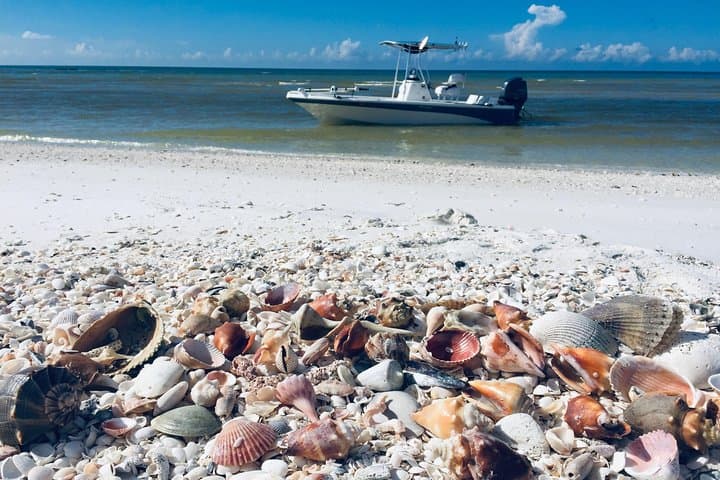
    Shelling Tours - Fort Myers Beach / Naples

    Short term availability

    Shelling Tours - Fort Myers Beach / Naples (opens in a new tab)

    Free cancellationPrivate tour
    80 reviews

    On this trip, Guests will be exploring the local Islands around Fort Myers and Naples area. The Islands are well known for their excellent…

    2 hours

    Prices checked

    from $350

Where the path stops: Blind Pass and the ride to Captiva

Before you book

The separated path ends at the Blind Pass bridge. Everything north of that point is Captiva, and Captiva Drive is a shared road with no separated bicycle facility for most of its length.

This catches people out constantly. The ride from mid-Sanibel out to Blind Pass is flat, protected and pleasant. Cross the bridge and you are on a narrow two-lane road with little shoulder, mature vegetation tight to the edge, blind bends, delivery vans, resort shuttles and holiday traffic. Confident adult riders do it every day and it is perfectly legal. It is not a ride for children, for anyone nervous in traffic, or for a group strung out over a hundred yards.

If you want to spend a day on Captiva without driving, there are two sane approaches. Ride to Blind Pass, lock the bikes at Turner Beach and walk into the village — it is a long walk, so know what you are taking on. Or drive to Captiva and take bicycles with you if your vehicle can carry them, using them for the short hops around Andy Rosse Lane and the village rather than for the length of Captiva Drive.

The bridge itself is worth a stop in either case. Blind Pass is a genuine tidal cut, the current through it runs hard on a moving tide, and the shelling on the Turner Beach side is among the best on either island for exactly that reason.

On the ground

Where to go

Every place below has its own page — hours, parking, what it costs and what to expect when you get there.

  • A roseate spoonbill with pink wings spread standing in shallow water

    Nature preserve

    J.N. "Ding" Darling National Wildlife Refuge

    Around 5,200 acres of mangrove estuary named after a newspaper cartoonist, covering a large share of the island. Closed one day a week.

    1.5–5 hoursWildlife Drive costs $10 per vehicle, or $1 per cyclist and pedestrian over 15. The Bailey Tract is free.

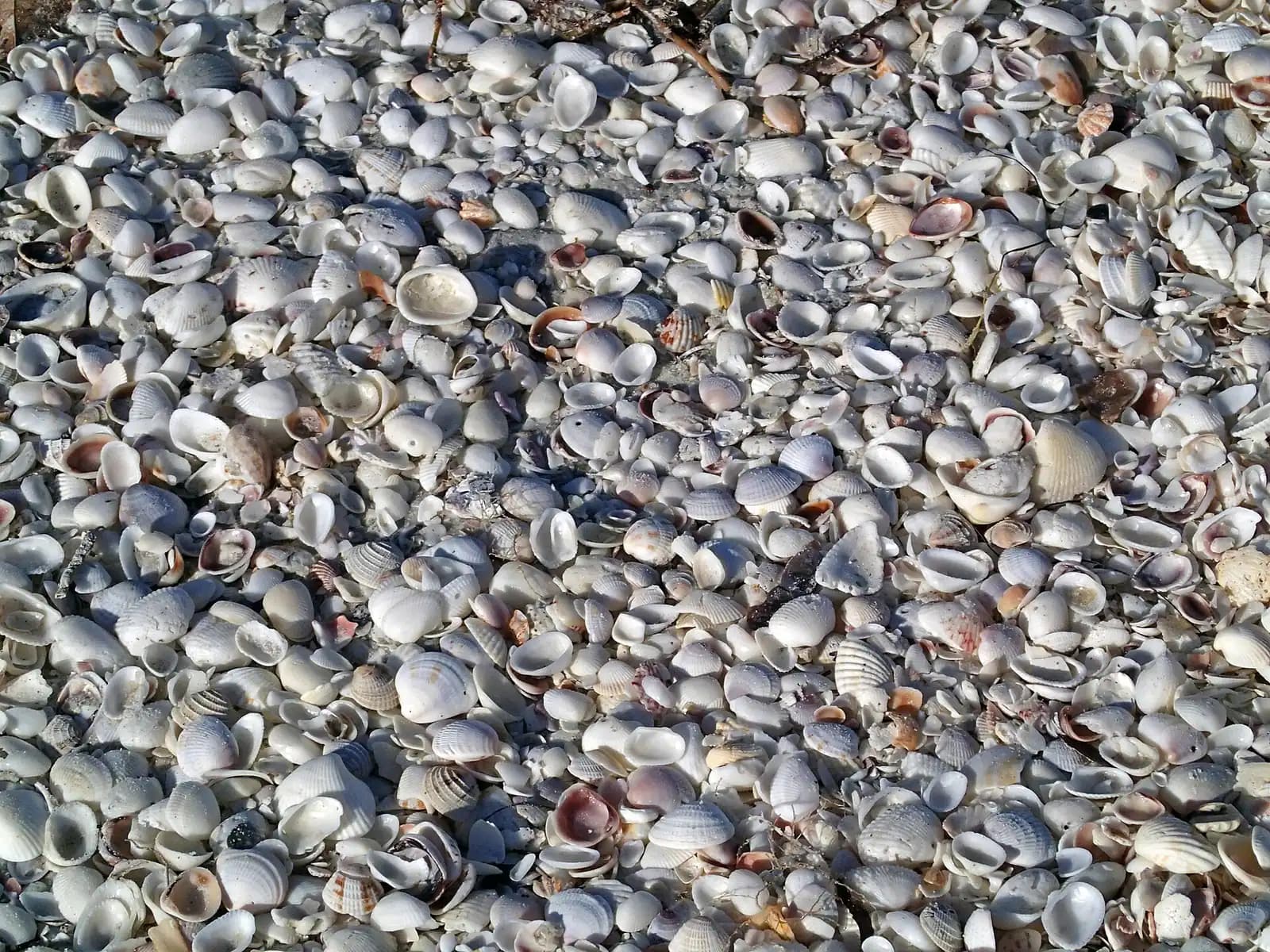
  • A scatter of small shells and pebbles part-buried in damp grey sand

    Beach

    Bowman's Beach Park

    Free

    The island's largest lot, and a quarter-mile walk over a bayou footbridge before you reach sand. The walk is what keeps it empty.

    2–6 hoursFree to enter. Parking is $5.00 per hour, enforced 24 hours a day.

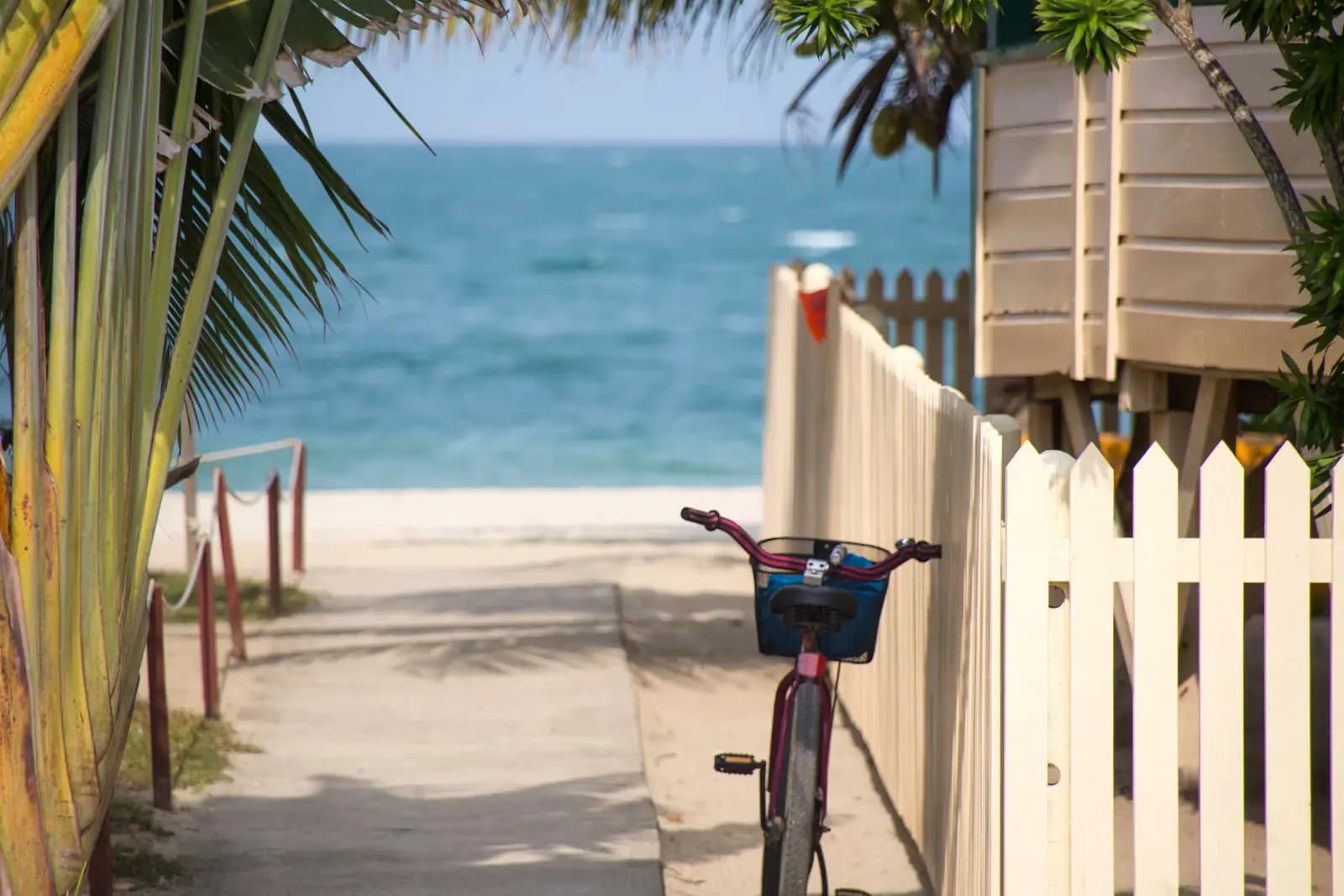
  • A beach cruiser bicycle leaning against a white picket fence at the head of a sandy beach access path

    Trail

    Sanibel Shared Use Path

    Free

    Twenty-five-plus miles of separated paved path from the lighthouse to Blind Pass, on an island with no traffic signal to stop you.

    1–5 hoursFree to use. Bicycle hire and refuge entry are separate costs.

  • A tight flock of white pelicans standing together in shallow water

    Wildlife

    Wildlife Drive

    Four miles, one way, through mangrove and tidal flat. Closed every Friday, and worth far more on a falling tide than a full one.

    1–3 hours$10 per vehicle, $1 per cyclist or pedestrian over 15, free for ages 15 and under.

  • An angler casting a line from a rocky shoreline into moving water at dusk

    Water feature

    Blind Pass

    Free

    The narrow gap between Sanibel and Captiva, where tidal current does the sorting — and where the swimming that looks inviting is not.

    1–3 hoursFree to visit. Parking on either side is a paid City of Sanibel session by the hour.

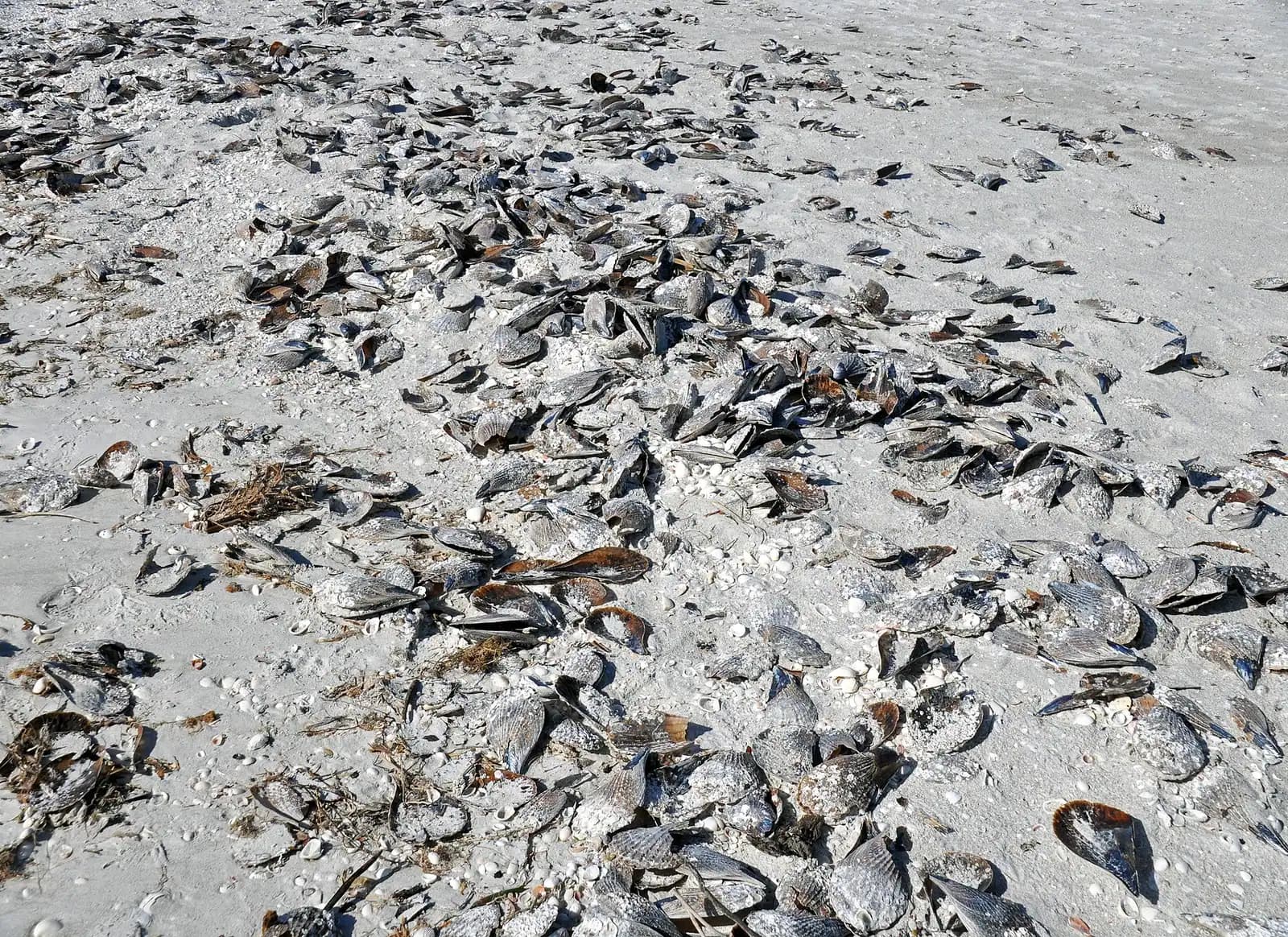
  • A dense bed of small pale seashells heaped together on wet sand

    Beach

    Lighthouse Beach Park

    Free

    The island's east point, where the Gulf beach and San Carlos Bay meet — and the biggest beach lot on Sanibel at 162 spaces.

    1.5–5 hoursBeach access is free. Parking is $5.00 per hour, enforced 24 hours a day.

  • Dense low wetland vegetation spreading out towards a distant treeline

    Nature preserve

    SCCF Nature Center and Erick Lindblad Preserve

    Free

    The foundation that has shaped this island since 1967 — with trails still partly closed and a public front door that has moved.

    1–2.5 hoursTrails are free and open sunrise to sunset. Parking at the trailheads is free.

  • A bicycle leaning against a pale fence beside palm foliage on a sunny day

    Shopping

    Periwinkle Way

    Free

    Sanibel's main street and the birthplace of its bike path network. No traffic lights, no chain fast food, shops set back behind planting.

    1–4 hoursFree. The plaza car parks along the street are free to customers.

  • Dense green woodland with light breaking through the upper branches

    Trail

    Shipley Trail

    Free

    A shaded interior trail from a 1890s homestead and native-plant nursery to the boardwalk where the city's Pond Apple Trail begins.

    0.5–2 hoursFree. Parking at the preserve is free too.

  • A muddy tidal creek winding through low marsh grass on a grey, misty morning

    Trail

    Pond Apple Trail

    Free

    The island's wettest public trail, named for a tree that grows standing in water — and the closest walk to the causeway toll plaza.

    0.5–1.5 hoursFree, with no gate, no ticket and no staff.

Straight answers

Questions people actually ask

How long is the Sanibel bike path?

The City of Sanibel describes the Shared Use Path as more than 26 miles of separated paths, running from Lighthouse Beach Park at the eastern point west to the Blind Pass bridge, with spurs to the beach parks, the wildlife refuge and the Bailey Tract. Very few riders do the full length in one outing. A typical day is a four or five mile run to a beach and back, which is an hour of easy riding on completely flat ground.

Do you need a car on Sanibel Island?

You need one to get here, because the causeway is the only road on and there is no public transport across it. Once you have arrived, many visitors leave the car parked for most of the week. The island is flat, has no traffic lights, and has a separated path network reaching the beaches, the shops on Periwinkle Way and the wildlife refuge. Bike racks are free where beach parking is metered by the hour.

Can you bike through Ding Darling refuge?

Yes. The four-mile Wildlife Drive is open to cyclists and pedestrians as well as cars, and it is considerably better on a bike because you can stop anywhere rather than only at the pull-outs. Entry is one dollar per person on foot or bicycle against ten dollars per vehicle. The whole refuge, including Wildlife Drive and the Visitor and Education Center, is closed every Friday, and hours shift by month.

Are electric bikes allowed on the Sanibel bike path?

Only Class One machines. Those are pedal-assist bicycles that require you to pedal for the motor to help, are limited to about twenty miles per hour of assistance and have no throttle. Throttle-operated e-bikes, motorised scooters and other powered vehicles are not permitted on the Shared Use Path. If you are hiring an electric bike on the island, confirm it is Class One before you take it onto the network.

Can you bike from Sanibel to Captiva?

You can ride to the Blind Pass bridge, which is where the separated path ends. Beyond it, Captiva Drive is a narrow two-lane road with little shoulder, blind bends and holiday traffic. Confident adults ride it; it is not suitable for children or for anyone uneasy in traffic. A common compromise is to ride out to Turner Beach at Blind Pass, lock up there, and drive to Captiva separately for the village.

How much does it cost to rent a bike on Sanibel?

A standard beach cruiser usually falls somewhere in the twenty to thirty dollar range for a single day, with weekly rates working out far cheaper per day and often including delivery to your accommodation. Electric bikes run roughly double. Guided island tours are priced per person for two to three hours. Rates move with the season, so confirm before you book, and reserve child seats and trailers well ahead in winter.

Is the Sanibel bike path safe for children?

On the Sanibel side, yes, with normal supervision. The path is separated from the roadway, the island is flat and traffic moves slowly with no signals to negotiate. The real hazards are side-road crossings, where turning drivers are looking for cars rather than bikes, and loose sand drifting across the pavement near beach accesses. Keep children off Captiva Drive north of Blind Pass, which is a shared road.

Is the Sanibel bike path open after Hurricane Ian?

Yes. Ian in September 2022 damaged long stretches of the network and stripped much of the vegetation that shaded it, and repairs were carried out in stages over several seasons. The path is rideable along its length now, but it is noticeably more exposed to the sun than older photographs suggest. Check the City of Sanibel's current notices before a long ride, and expect sand across the pavement after storms.