Private and Luxury
Sunset Cruise Fort Myers Beach (opens in a new tab)
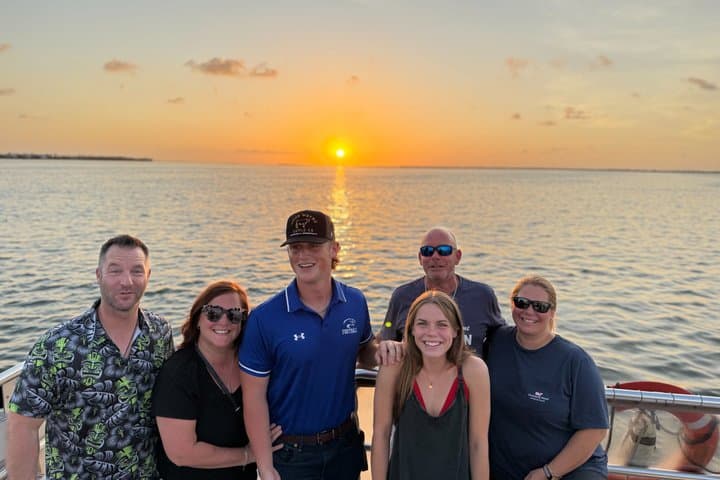
Join us for a scenic 90 minute cruise at sunset that blends comfort, adventure, and the wonders of nature. Book your spot today and…
1–2 hours
Prices checked
Wildlife
Last updated
Four miles, one way, through mangrove and tidal flat. Closed every Friday, and worth far more on a falling tide than a full one.
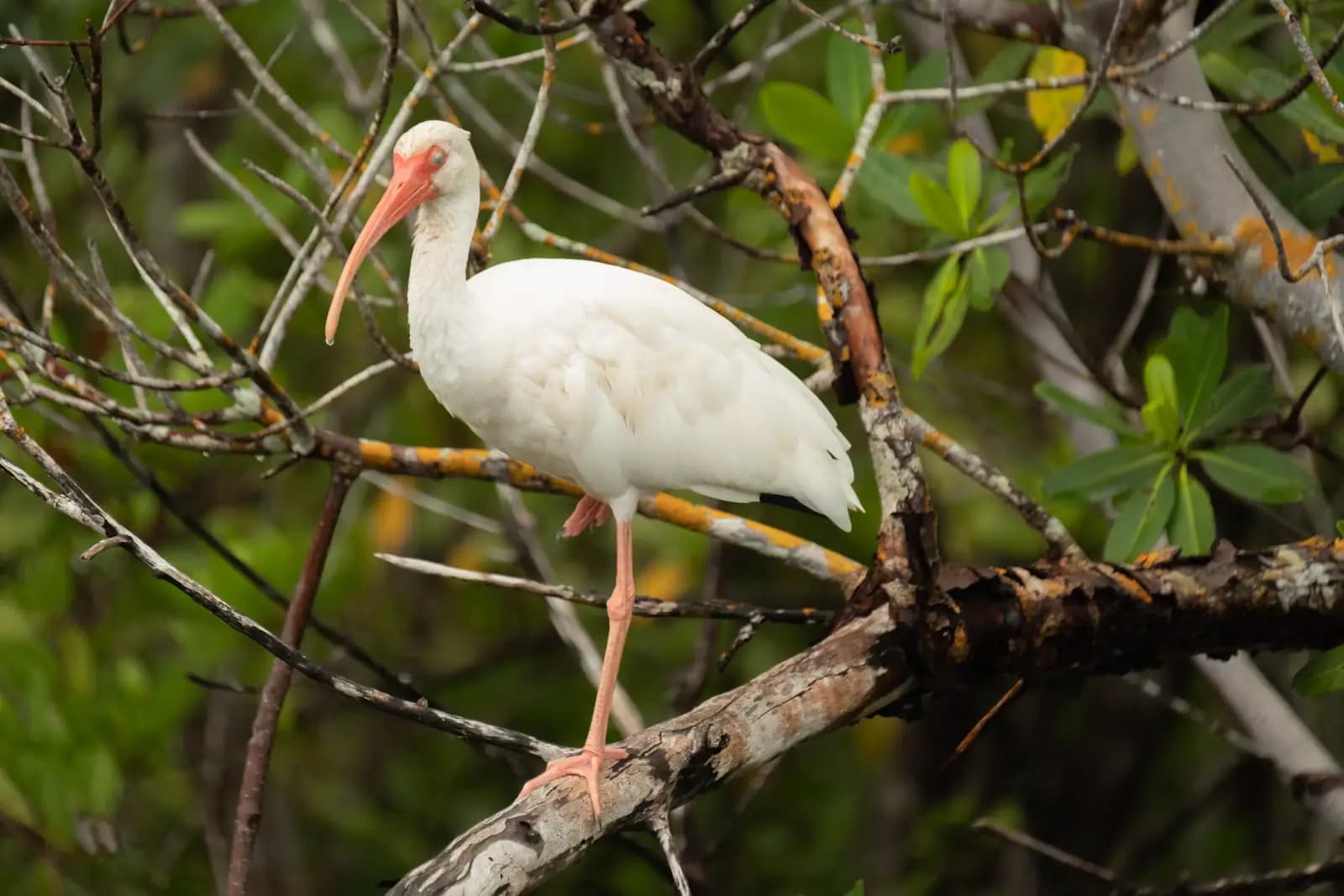
Photo: Lisa BiasilloCC BY 4.0
Closed every Friday, year-round, along with the Indigo Trail. The Visitor & Education Center at the entrance has been closed for Hurricane Ian recovery construction; confirm current facilities with the refuge before visiting.
Wildlife Drive is the spine of the Ding Darling refuge: a four-mile one-way road running north-west through mangrove forest and across a chain of tidal impoundments, with the loop back to the Visitor & Education Center making the whole circuit about eight miles. It is the most-visited feature on Sanibel and the most commonly mistimed.
The road is unpaved, flat, slow and narrow. Traffic moves at walking pace by design. The point is not the drive but the stopping: pull-outs and small lots along the route let you get out at the impoundments, which is where the birds are and where a car window stops being enough. There is an observation tower overlooking the main feeding area, reached by stairs.
The economics are worth knowing before you turn in. It is $10 for a vehicle, $1 for a cyclist or pedestrian over fifteen, and free for anyone fifteen and under. That is a tenfold difference for the same experience, on a completely flat four-mile road, on an island where almost everyone has access to a bike. Cyclists also stop where they like, hear what they are looking at, and do not spend the morning behind a rental car that has stopped in the lane.
Two operational facts that decide whether a visit works. The drive is closed every Friday and on federal holidays. And the tide matters more than the hour: at low water the impoundment mud is exposed and the birds are concentrated on it, while at high water the same route can look like an empty road through trees.
The entrance and fee booth are off Sanibel-Captiva Road, roughly four miles north-west of the Periwinkle Way junction, at the same point as the Visitor & Education Center. Allow fifteen to twenty minutes from the causeway.
Cyclists can ride in along the island's shared-use path, which runs beside Sanibel-Captiva Road the whole way, and then pay the $1 rate at the booth. This is the cheapest and, for most people, the best way to do the drive.
For the tram, check in with Tarpon Bay Explorers at 900 Tarpon Bay Road rather than at the refuge entrance — it is a different address on a different road, and turning up at the wrong one is a common and expensive mistake.
Remember that the drive is one-way for its full four miles. There is no exit partway.
The fee. $10 per vehicle. $1 per cyclist or pedestrian aged over 15. Free for ages 15 and under. Federal recreation passes are accepted and are sold at the fee booth and at Tarpon Bay Explorers, so if you hold one, bring it.
The hours. The drive opens at 7am. Closing time moves through the year with sunset, and the standing rule is that you must be off the drive by roughly half an hour after legal sunset. In midsummer that is a long day; in December it is not. The posted time at the booth is the one that counts.
The Friday closure. Closed every Friday, all year, along with the Indigo Trail, plus federal holidays. There is no summer exception and no winter exception. The refuge gives wildlife one day a week without traffic.
One-way. Once you are past the booth you are committed to the full four miles. There is no turning back and no shortcut out, so make sure everyone has used a restroom and that you are not starting the drive twenty minutes before closing.
This is the single thing that separates a memorable trip round the drive from a disappointing one, and most visitors never hear it.
The impoundments either side of the road are shallow, and the birds that people come to see — spoonbills, ibis, herons, egrets, plovers, willets, whimbrels — feed by probing exposed mud and shallow water. When the tide is low, that mud is a feeding table and the birds gather on it, sometimes in hundreds, within easy range of a pull-out. When the tide is high, the table is submerged, the birds disperse into the mangroves, and you drive four miles past trees.
Aim for the two hours either side of low water. Combine that with the first two hours after opening at 7am, or the last two before closing, and you have the best conditions the refuge offers.
Season is the multiplier. December through March brings the migratory birds down and is when roseate spoonbills and white pelicans are most reliable. A low tide at half past seven on a February morning is as good as this place gets, and it is a completely different experience from the same road at noon in August.

By bike. The best option for most people who can ride. It costs $1 instead of $10, the four miles are dead flat, you can stop anywhere without blocking anyone, and you hear the place. Bring water and a hat; there is very little shade on the impoundment sections. Rentals are available on the island, including at Tarpon Bay Explorers.
By car. The right call if you have limited mobility, small children, heavy camera gear, or if the weather is against you. The trade-off is that you are in a slow single-file queue and the good pull-outs fill. Turn the engine off when you stop — everyone else is trying to hear.
By tram. Tarpon Bay Explorers, the refuge's licensed concessionaire, runs guided tram tours along the drive with a naturalist. This is the choice if you want to be told what you are looking at rather than working it out, and it is the most efficient way to see the drive if you only have one shot at it. Reservations are recommended and the schedule varies by season.
On foot. Possible but long and exposed. The Indigo Trail is the better walk.
A narrow one-way road with several hundred people and a lot of nervous wildlife on it only functions because of a short list of conventions.
Binoculars change this place more than any other piece of equipment. A phone camera will do nothing with a spoonbill three hundred yards out.
Operators run these trips past Wildlife Drive, or stop there as part of a longer route. We list what the booking data supports — not everything that mentions the name.
Some links below go to Viator, our booking partner. We earn a commission on bookings made through them — at no extra cost to you, and with no influence on what we recommend.

Private and Luxury
Join us for a scenic 90 minute cruise at sunset that blends comfort, adventure, and the wonders of nature. Book your spot today and…
1–2 hours
Prices checked

Involves Animals
Come join us for a once in a lifetime experience that is great for all skill levels. There are only a few places on earth to see the West…
2 hours
Prices checked

Wildlife Watching
SWFL sunsets are the best, and there is no better place to watch them than from the deck of our 36ft. Sailing Catamaran, "Copacetic". The…
2 hours
Prices checked

Short term availability
This eco kayak tour offers an unmatched blend of adventure, wildlife, and top-tier equipment. Unlike standard tours with Perception Tribe…
2 hours
Prices checked

Likely to Sell Out
Join us for a Fort Myers Beach sunset cruise and enjoy a relaxing evening on the water with stunning views of the Gulf and Sanibel…
1–2 hours
Prices checked

Short term availability
On this trip, Guests will be exploring the local Islands around Fort Myers and Naples area. The Islands are well known for their excellent…
2 hours
Prices checked

Bus Tours
Experience the road to Hana in ultimate comfort in a private luxury SUV for groups of up to 5 or a transit van for groups of up to 12. We…
Full day
Prices checked

Short term availability
Enjoy speeding over the waters of Fort Myers Beach with a fun Sea-Doo rental! We offer the fastest and most stable water craft for you to…
1 hour
Prices checked
Straight-line distances, so allow more on the road — the island is long and has one main parkway.

Nature preserve
Around 5,200 acres of mangrove estuary named after a newspaper cartoonist, covering a large share of the island. Closed one day a week.
1.5–5 hoursWildlife Drive costs $10 per vehicle, or $1 per cyclist and pedestrian over 15. The Bailey Tract is free.250 ft away

Wildlife
The refuge's licensed concession and the only way onto the water inside Ding Darling. Kayaks, trams, pontoons and bikes.
1.5–4 hoursPaid tours and rentals, priced per activity. Parking is free.1.8 mi away

Nature preserve
The foundation that has shaped this island since 1967 — with trails still partly closed and a public front door that has moved.
1–2.5 hoursTrails are free and open sunrise to sunset. Parking at the trailheads is free.1 mi away

Museum
The only museum in the country devoted to shells and the animals that make them — and now an accredited aquarium as well.
1.5–3 hoursAdults $25, seniors and veterans $20, youth and students $15, children 5–11 $10, under 5 free.1.3 mi away
Where this place fits into a day, and the pages that plan one.

Guide hub
Sanibel lies east to west. Nearly every other barrier island on Florida's Gulf coast lies north to south, running parallel with the mainland, and…

Things to do
Start with three facts, because between them they decide whether your visit is any good. The J.N. "Ding" Darling National Wildlife Refuge is closed…

Guide hub
Most destinations have wildlife somewhere near the edges. Sanibel organised itself around it. When the causeway opened in 1963 and Lee County's plan…

Things to do
Sanibel packs four separate bird habitats into twelve miles, which is why it holds up as a birding destination rather than a pleasant place to see…

Things to do
Almost everyone arrives here in a car, because the causeway is the only way on and there is no other option. Almost everyone then spends the week…

Guide
Temperature is the least useful thing to plan around here. What changes month to month is the tide line, the refuge and the price.
9 min readRosa Villanueva

Guide
Four miles of one-way road through 6,400 acres of mangrove. It is closed on Fridays, and the tide decides whether you see anything.
8 min readCaleb Nystrom

Guide
More than 245 species have been recorded at the refuge alone. The trick is not where to stand — it is when, and the answer is a falling tide.
7 min readCaleb Nystrom
Allow ninety minutes to two hours if you want to get anything out of it. The road itself is four miles one-way, with the return to the Visitor Center making about eight miles in total, and it is driven at walking pace. People who treat it as a twenty-minute drive-through see very little. Budget time to stop at the impoundment pull-outs, walk a boardwalk spur or two, and climb the observation tower. On a bike, plan for two hours or more.
Yes, every Friday of the year, and on federal holidays. The Indigo Trail closes with it. The refuge does this deliberately to give wildlife one undisturbed day a week, and there are no seasonal exceptions. If a Friday is your only available day, go to the Bailey Tract on Tarpon Bay Road instead — it is a detached hundred-acre part of the same refuge, it is open daily sunrise to sunset, and it is free.
Yes, and it is the best way to do it for most people. Cyclists pay $1 rather than the $10 vehicle fee, the four miles are completely flat, and you can stop wherever you like without holding up a queue of cars. A separated path follows Sanibel-Captiva Road right to the gate, so a car never has to come into it. Bring water and a hat: the impoundment sections have almost no shade.
Two hours either side of low tide. The birds feed on exposed mudflats in the impoundments, so a low tide concentrates them within range of the pull-outs and a high tide scatters them into the mangroves. Combine low water with the first couple of hours after the 7am opening, in the December to March window when migratory species are present, and you have the best the refuge offers. Bring binoculars — a phone camera will not reach.
No. The road is one-way for its full four miles with no exit partway and no turning point, so once you are past the fee booth you are committed. Use a restroom before you start, make sure you have water, and do not begin the drive close to the posted closing time — visitors must be off the road by roughly half an hour after legal sunset, and that time moves through the year with the season.