Skip to content
Menu

We earn a commission if you book through this link. You pay the same price.

Search

Wildlife

Tarpon Bay Explorers

Last updated

The refuge's licensed concession and the only way onto the water inside Ding Darling. Kayaks, trams, pontoons and bikes.

Photo: Donald Hobern from Copenhagen, DenmarkCC BY 2.0

Closed at the moment

Touch tank exploration has been unavailable since Hurricane Ian. Stand-up paddleboard tours have been suspended at times while board rentals continued. The business also closes for a short period in mid-to-late September.

Tarpon Bay Explorers operates at 900 Tarpon Bay Road under contract to the US Fish and Wildlife Service, as the licensed concession to the J.N. "Ding" Darling National Wildlife Refuge. That status is the whole point of the business: this is the sanctioned way to get onto the water inside a federal refuge, and twelve per cent of what you spend here goes back to the Service.

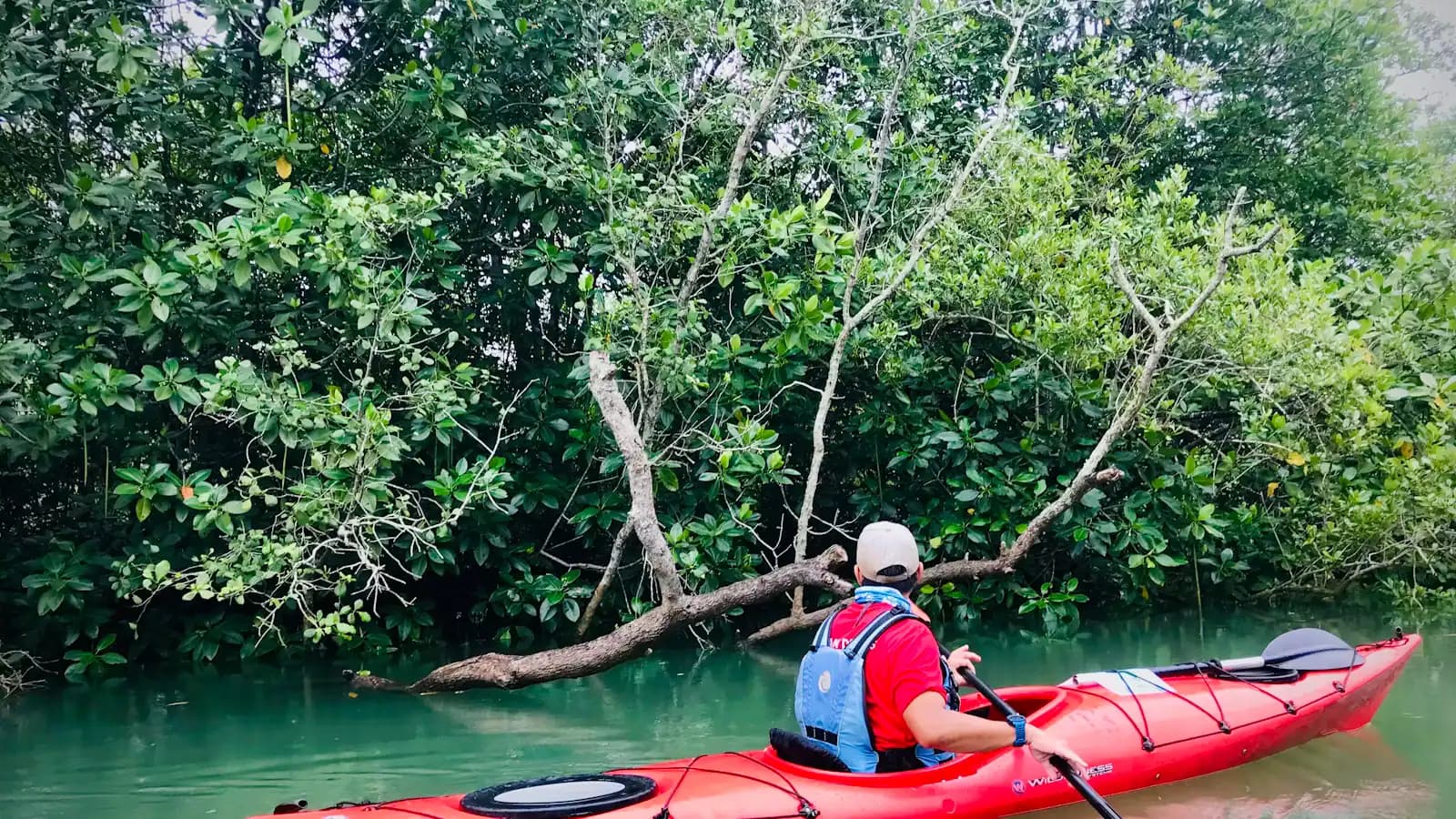
Tarpon Bay itself is the shallow interior bay on the north side of Sanibel, enclosed by mangrove. It is a nursery — for fish, for wading birds, for the rays and small sharks that make people yelp in a foot of water — and it is shallow enough almost everywhere that a kayak is the right vehicle and a motorboat is not. The operation reflects that: guided kayak trails through mangrove tunnels, a low-tide paddle built specifically around the bay's shallowness, a sunset rookery trip to where the birds come in to roost, and unguided kayak, canoe, paddleboard and pontoon hire for people who would rather work it out themselves.

The other half of the business is on land. The tram tour along Wildlife Drive is the guided version of the refuge's four-mile road, with a naturalist doing the explaining, and if you only get one run at the drive it wastes the least of it. Bikes are hired here too, which matters because cycling the drive costs a fraction of driving it.

Two current caveats. The touch tanks have been unavailable since Hurricane Ian. And the business closes for a short period each September, so confirm your dates if you are travelling in early autumn.

Getting there and parking

Tarpon Bay Road runs north from Periwinkle Way across the middle of the island. Follow it to the far end; 900 is at the top, on Tarpon Bay itself. From the causeway allow twelve to fifteen minutes.

This is also where tram tours check in, and it is not the refuge entrance. The refuge entrance and fee booth are on Sanibel-Captiva Road, several minutes away by car. Confusing the two is the most common logistical mistake visitors make here.

The island's shared-use path runs along Tarpon Bay Road, so cycling in is easy from anywhere on the eastern half of the island — and since bikes are hired here, plenty of people arrive on foot from nearby accommodation and leave on two wheels.

Parking is on site and free, which is not the case at any beach on this island.

Kayaks, guided and not

The bay does not really work from a boat with an engine, which is why this place is built around paddling.

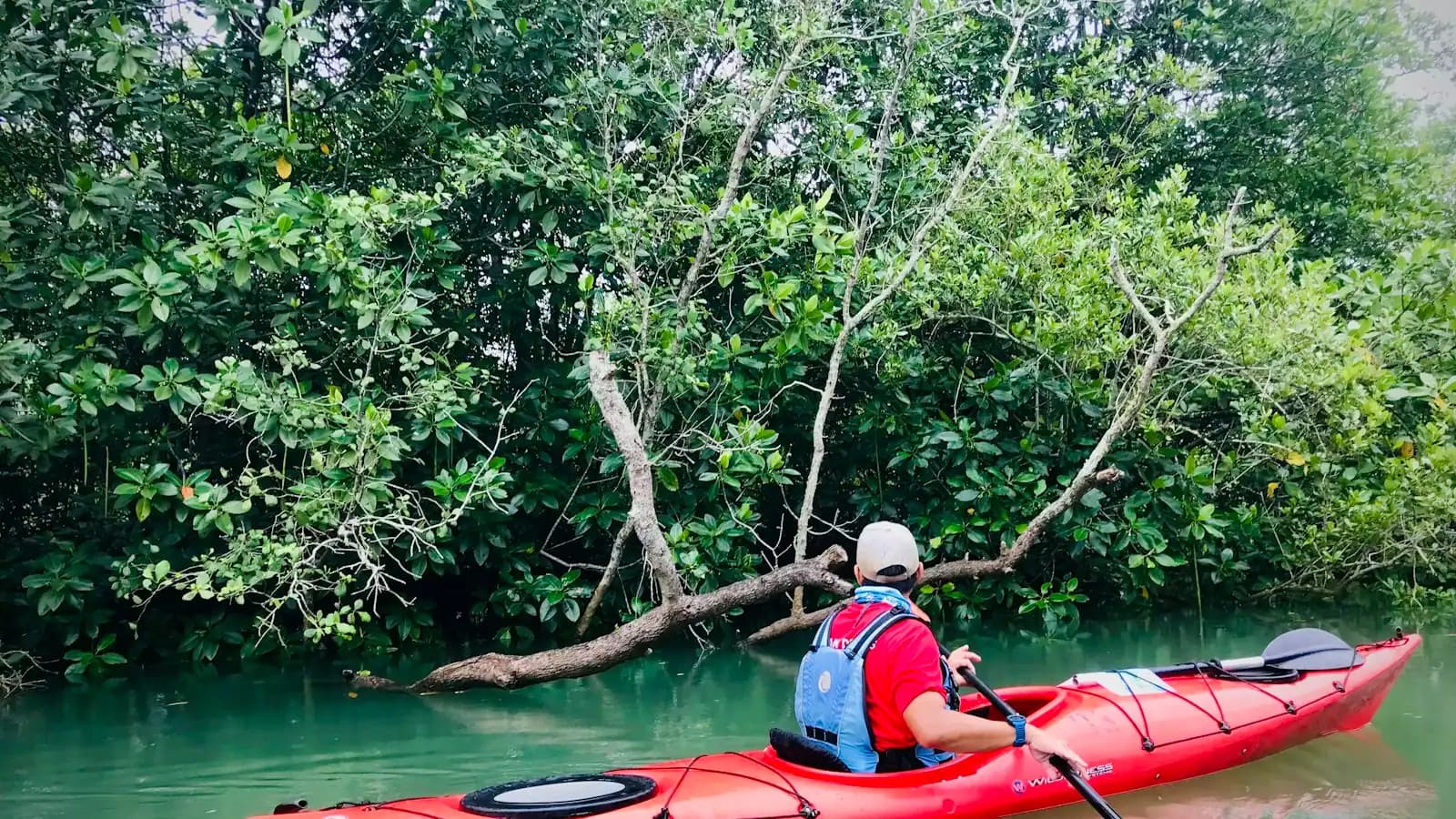
Guided trips are the better introduction if you have not paddled a mangrove system before. The kayak trail tour takes you into the mangrove tunnels, which are genuinely tunnels — arched roots and canopy closing over the channel — and a guide will find things you would paddle straight past. The low-tide tour exists because Tarpon Bay is famously shallow, and at low water the flats become a readable book of rays, crabs and wading birds. The sunset rookery paddle goes to where birds come in to roost, which is a different spectacle from watching them feed.

Unguided hire covers kayaks, canoes, fishing kayaks and stand-up paddleboards, with rentals generally running from 8am to 4pm and boards until mid-afternoon. Take a chart, note the wind, and remember that a shallow bay with a breeze against you on the way home is harder work than it looked on the way out.

Pontoon hire is available for those who want to cover more water. Fishing equipment and charters run from the same dock.

Reservations are recommended for guided trips and strongly recommended in the winter season.

The tram tour along Wildlife Drive

The refuge's four-mile Wildlife Drive can be done by car for $10, by bike for $1, or in a tram with a naturalist talking.

The tram is the right choice in three situations: if mobility makes the bike impossible and you want more than a windscreen view; if you have one morning and want maximum return on it; or if you want to understand what you are looking at rather than photograph it and look it up later. A good naturalist on this route will pick out a reddish egret's feeding dance, spot an otter, and explain why the impoundment on your left is drained and the one on your right is not.

Two practical points that catch people out.

  • Check-in is at 900 Tarpon Bay Road, not at the refuge entrance on Sanibel-Captiva Road. These are different roads several minutes apart, and arriving at the wrong one has cost plenty of visitors their booking.
  • The drive is closed on Fridays, so the tram does not run on Fridays either.

Reservations are recommended and the schedule varies by season, so check the current calendar rather than turning up.

What is running and what is not

Worth knowing before you build a day around a specific activity, because the position has shifted repeatedly since 2022.

  • Touch tank exploration is unavailable. The touch tanks were damaged by Hurricane Ian and have not returned. If a child is coming specifically for that, it is not currently on offer.
  • Stand-up paddleboard tours have been suspended at times while board rentals continued. Check which is running.
  • A short annual closure falls in mid-to-late September. If you are travelling then, confirm dates directly.
  • The Nature and Sealife Cruise has returned after a period out of service.
  • Free deck talks run without charge and are an easy addition to a rental.
  • The gift and nature shop generally keeps longer hours than the rental desk, opening earlier and closing later.

The pattern here is the pattern across these islands: most things are back, a few specific things are not, and the only reliable source is the operator's own current page. This one publishes a tour and cruise schedule and a rates page, and both are worth a look the week before you travel.

What lives in Tarpon Bay

A shallow, mangrove-enclosed bay on a barrier island is a nursery, and that is what gives paddling here its character. You are moving through the shallow end of an ecosystem rather than across the top of one.

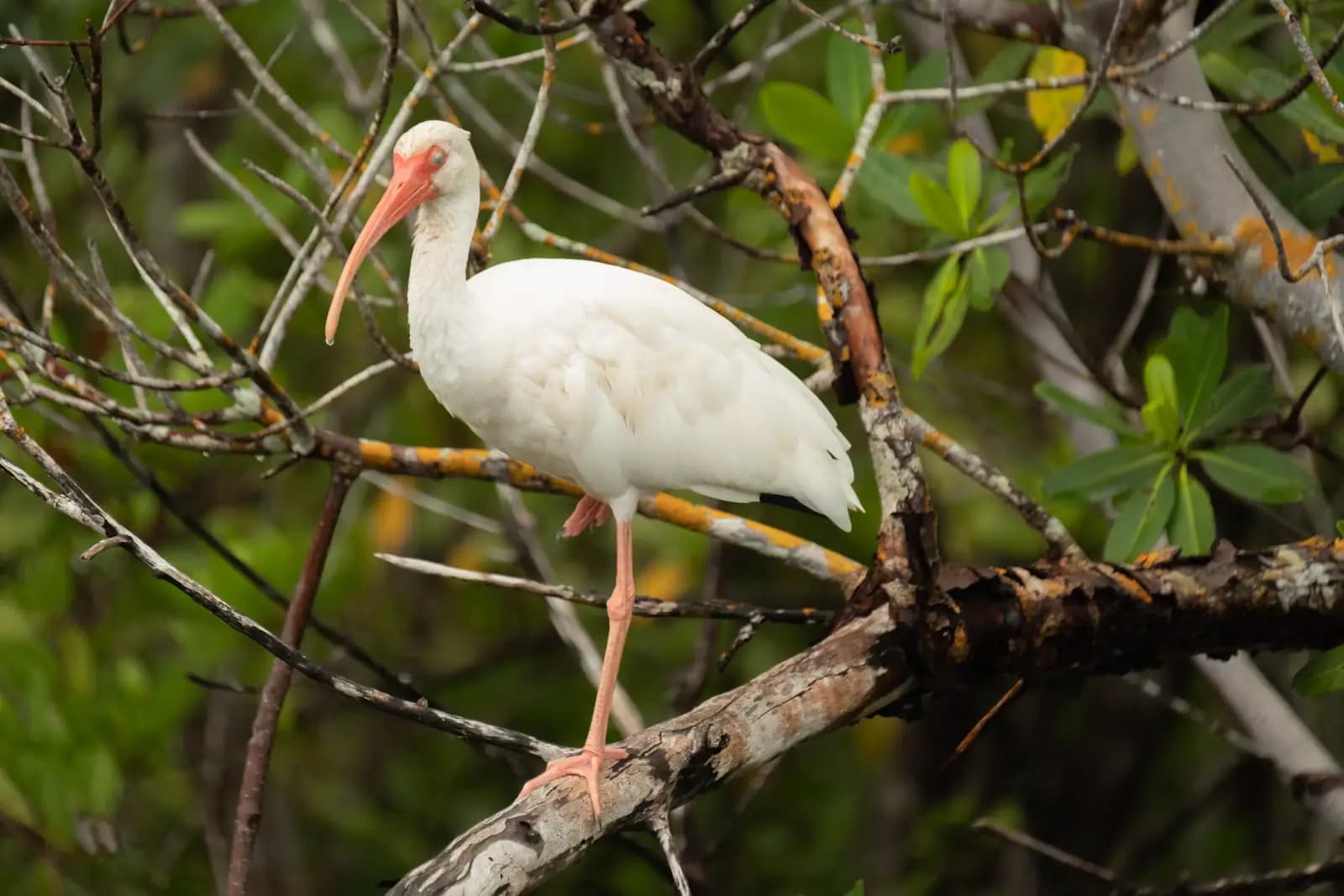
Expect rays gliding out from under the bow in inches of water, small sharks doing the same, mullet jumping, and crabs working the mangrove roots. Wading birds — herons, egrets, ibis, occasionally spoonbills — feed the edges. Ospreys nest around the bay and fish it. Dolphins push in on a rising tide and manatees turn up, particularly in the cooler months when they move towards warmer inshore water.

Timing follows the same rule as everything else on this island. A low tide exposes the flats and concentrates the feeding; a high tide spreads everything out and floods the mangrove edges. The low-tide kayak tour exists precisely because the operator knows this.

For light and for calm water, early morning is best. Wind builds through the day here as it does everywhere on this coast, and a headwind in a kayak on a shallow bay is a long afternoon. Afternoon storms in summer are a real consideration and trips are cancelled for lightning rather than rain.

Tours that visit Tarpon Bay Explorers

Operators run these trips past Tarpon Bay Explorers, or stop there as part of a longer route. We list what the booking data supports — not everything that mentions the name.

Some links below go to Viator, our booking partner. We earn a commission on bookings made through them — at no extra cost to you, and with no influence on what we recommend.

Shared departurespriced per seat, best value for one or two

  • Sunset Cruise Fort Myers Beach

    Private and Luxury

    Sunset Cruise Fort Myers Beach (opens in a new tab)

    Free cancellationInstant confirmation
    23 reviews

    Join us for a scenic 90 minute cruise at sunset that blends comfort, adventure, and the wonders of nature. Book your spot today and…

    1–2 hours

    Prices checked

    from $47.92
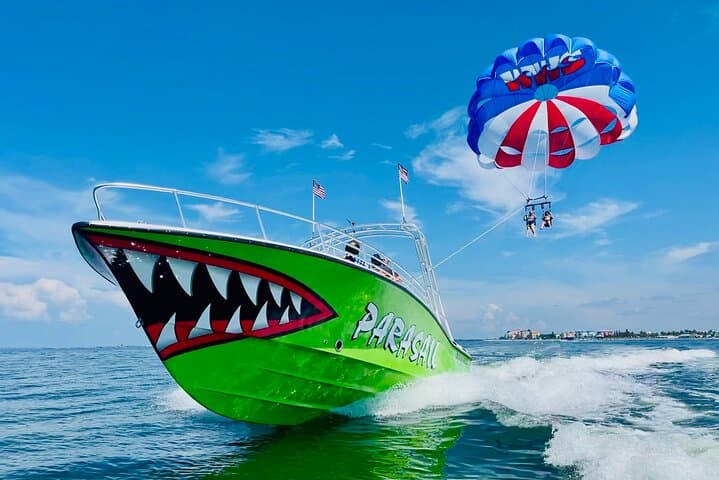
  • Fort Myers Beach #1 Parasailing Experience

    Extreme Sports

    Fort Myers Beach #1 Parasailing Experience (opens in a new tab)

    Free cancellationInstant confirmation
    15 reviews

    Take off and enjoy the highest Fort Myers Beach parasailing flights that Wind and Water Sports has to offer! All while being captivated by…

    1 hour

    Prices checked

    from $110
  • Southwest Florida Sunset Sail

    Wildlife Watching

    Southwest Florida Sunset Sail (opens in a new tab)

    Free cancellationInstant confirmation
    514 reviews

    SWFL sunsets are the best, and there is no better place to watch them than from the deck of our 36ft. Sailing Catamaran, "Copacetic". The…

    2 hours

    Prices checked

    from $70

Private and small-group optionsoften cheaper per head for a family or a group of six

Near Tarpon Bay Explorers

Straight-line distances, so allow more on the road — the island is long and has one main parkway.

  • A roseate spoonbill with pink wings spread standing in shallow water

    Nature preserve

    J.N. "Ding" Darling National Wildlife Refuge

    Around 5,200 acres of mangrove estuary named after a newspaper cartoonist, covering a large share of the island. Closed one day a week.

    1.5–5 hoursWildlife Drive costs $10 per vehicle, or $1 per cyclist and pedestrian over 15. The Bailey Tract is free.1.8 mi away

  • A tight flock of white pelicans standing together in shallow water

    Wildlife

    Wildlife Drive

    Four miles, one way, through mangrove and tidal flat. Closed every Friday, and worth far more on a falling tide than a full one.

    1–3 hours$10 per vehicle, $1 per cyclist or pedestrian over 15, free for ages 15 and under.1.8 mi away

  • Clear shallow water over a rippled pale sand bottom seen from directly above

    Beach

    Tarpon Bay Road Beach Park

    Free

    Under an acre of Gulf access in the middle of the island, with the car park a quarter-mile back up the road.

    1–4 hoursFree to enter. Parking is $5.00 per hour at the lot a quarter-mile north.1.3 mi away

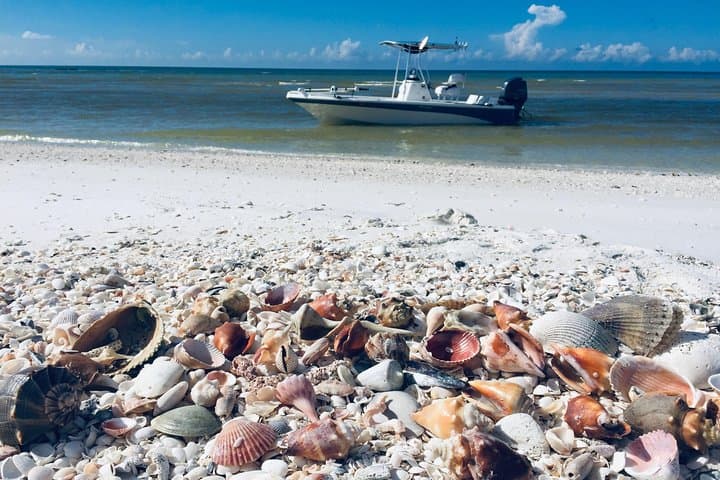
  • A close-packed group of patterned seashells in warm browns and creams

    Museum

    Bailey-Matthews National Shell Museum & Aquarium

    The only museum in the country devoted to shells and the animals that make them — and now an accredited aquarium as well.

    1.5–3 hoursAdults $25, seniors and veterans $20, youth and students $15, children 5–11 $10, under 5 free.0.7 mi away

Tarpon Bay Explorers: common questions

Where do you check in for the Ding Darling tram tour?

At Tarpon Bay Explorers, 900 Tarpon Bay Road — not at the refuge entrance on Sanibel-Captiva Road. They are different roads several minutes apart and turning up at the wrong one is the most common mistake visitors make here. The tram follows Wildlife Drive's schedule, which means it does not run on Fridays when the drive is closed, and timings change by season. Reservations are recommended, especially between December and April.

Can you kayak in Ding Darling refuge?

Yes, and Tarpon Bay Explorers is the licensed concession that makes it possible — it operates under contract to the US Fish and Wildlife Service, with twelve per cent of what you spend going back to the Service. Options run from guided kayak trail tours through the mangrove tunnels and a low-tide paddle built around the bay's shallowness, to unguided kayak, canoe and paddleboard hire, generally available from 8am to 4pm.

Are the touch tanks at Tarpon Bay Explorers open?

No. The touch tanks were damaged by Hurricane Ian and touch tank exploration has been unavailable since. If a child is coming specifically for that, it is worth knowing before you arrive. The touch pools at the Bailey-Matthews National Shell Museum a few minutes away are open and are the closest equivalent on the island. Free deck talks still run here, and the nature shop keeps longer hours than the rental desk.

What wildlife will you see kayaking Tarpon Bay?

It is a shallow mangrove-enclosed nursery bay, so expect rays and small sharks moving out from under the boat in inches of water, mullet jumping, crabs on the mangrove roots and wading birds working the edges — herons, egrets, ibis and sometimes spoonbills. Ospreys nest around the bay. Dolphins come in on a rising tide and manatees turn up, more often in the cooler months. A low tide concentrates everything onto the exposed flats.

Do you need to book Tarpon Bay Explorers in advance?

For guided trips and the tram tour, yes — reservations are recommended and effectively necessary between December and April, when the island is at its busiest. Unguided kayak, canoe and paddleboard rentals are more flexible, though the same season applies. The operator also closes for a short period each year in mid-to-late September, so confirm your dates directly if you are travelling in early autumn.