Skip to content
Menu

We earn a commission if you book through this link. You pay the same price.

Search

Museum

Bailey-Matthews National Shell Museum & Aquarium

Last updated

The only museum in the country devoted to shells and the animals that make them — and now an accredited aquarium as well.

Photo: James St. JohnCC BY 2.0

Closed at the moment

The Giant Pacific Octopus and California two-spot octopus exhibits are closed while the museum awaits new animals.

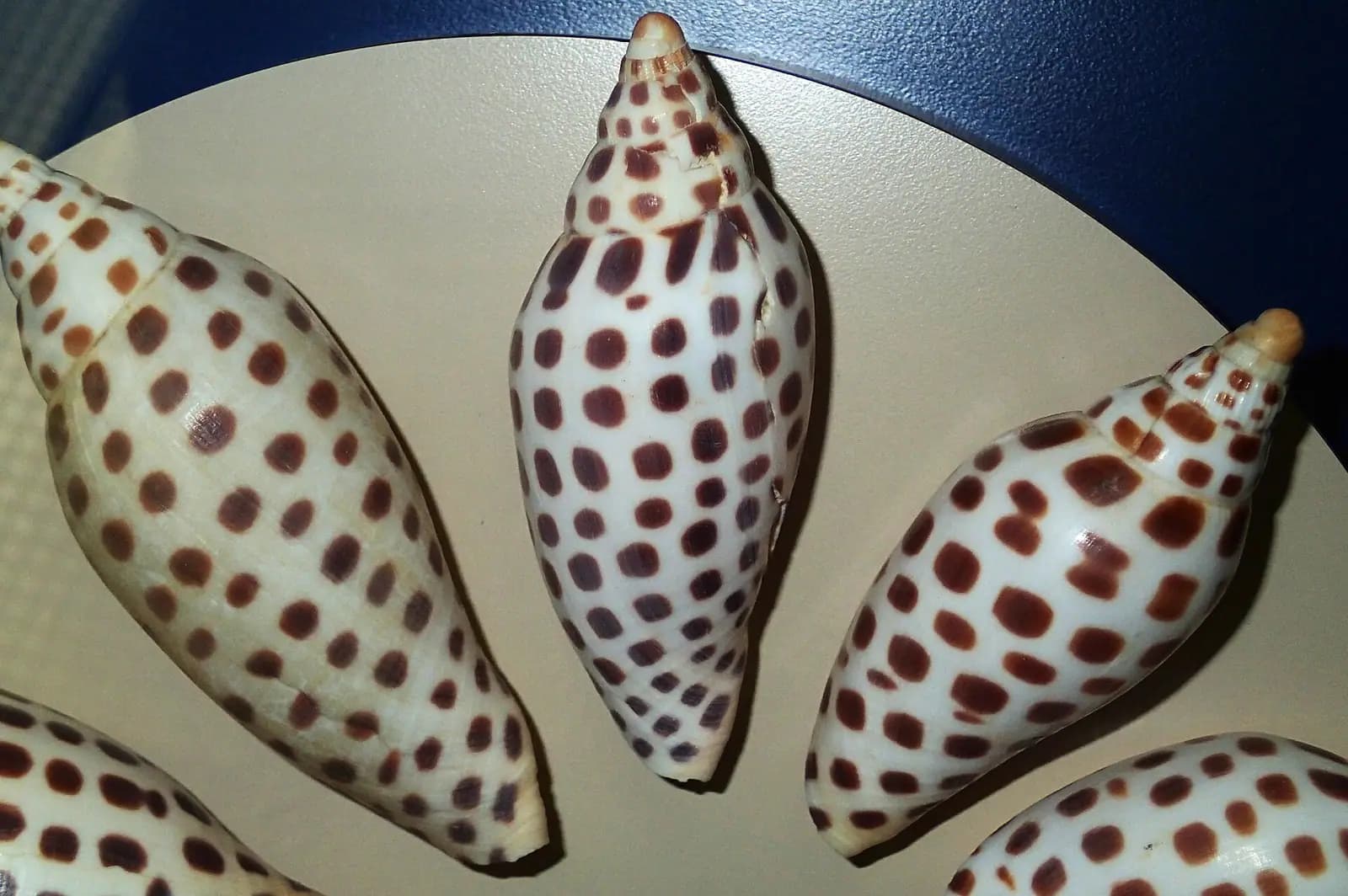
There is one museum in the United States given over entirely to shells and molluscs, and it is on Sanibel, which makes complete sense once you understand why the island collects shells in the first place: an exceptionally broad continental shelf off south-west Florida, the local set of currents, and an island that runs east to west instead of north to south and therefore sits broadside to what the Gulf is carrying.

It is two museums under one roof. The Great Hall of Shells is the original: an octagonal gallery with thirty-foot ceilings, drawing on a scientific collection that now runs to nearly 600,000 specimens. The Living Gallery of Aquariums is the newer half, with roughly sixty species of molluscs and other marine animals in tanks that range from Pacific coral reef to south-west Florida red mangrove, plus two large touch pools. The institution took accreditation from the Association of Zoos and Aquariums in 2022 and its full name now carries "& Aquarium" for good reason.

The founding story is unusually specific. A 1984 bequest from a local collector, Charlene McMurphy, seeded the idea. The malacologist R. Tucker Abbott came on board as adviser and then founding director, and recruited his friend Raymond Burr — the actor, and a serious shell collector — to raise the profile and the money. In 1989 three brothers, Francis, Samuel and John Bailey, deeded eight acres on Sanibel-Captiva Road in memory of their parents, Frank P. Bailey and Annie Mead Matthews, whose names the museum carries. It opened in 1995.

Hurricane Ian did serious damage in 2022, and the rebuild took three years. The Great Hall reopened in two phases, in May and October 2025, and the museum treats the second of those as the end of its reconstruction.
Getting there and parking

On Sanibel-Captiva Road, roughly in the middle of the island, a couple of minutes north-west of the Tarpon Bay Road junction. From the causeway allow twelve to fifteen minutes.

Parking on site is free — genuinely unusual on an island where every beach lot charges $5.00 an hour — and there is enough of it that it rarely becomes the problem.

The island's shared-use path runs along Sanibel-Captiva Road past the entrance, which makes this an easy stop to fold into a day on a bike between the refuge and the west-end beaches. It is also the obvious rainy-day destination, and on Sanibel a rainy day means everyone has the same idea at the same time, so arrive at opening rather than at eleven.

What the rebuild changed

If you visited before September 2022, the Great Hall is not the room you remember. Ian caused significant damage, and rather than restoring the old displays the museum used the reconstruction to redesign and reinstall the whole gallery.

The first phase reopened in May 2025 with the central exhibits: highlights from the collection organised around global biodiversity, shape and colour, and time and evolution, with focused displays on cones, cowries, volutes, murexes, scallops and carrier shells.

The second phase, around the periphery of the hall, reopened in October 2025. That is where the local material sits — south-west Florida shells, world record specimens, Florida land snails, Florida fossil shells, the use of shells by the Calusa people, shells in human history and culture, and a section on conservation. The museum marked that opening as the completion of its post-Ian rebuilding.

One current gap worth knowing: the Giant Pacific Octopus and California two-spot octopus exhibits have been closed while the museum waits for new animals. Octopuses are short-lived and this is routine rather than storm-related, but if a child is coming specifically for the octopus, check first.

Admission, hours and what is included

Published admission at the time of writing:

TicketPrice
Adult$25
Senior 65+, veteran, educator, first responder$20
Youth 12–17, student$15
Child 5–11$10
Under 5, member, active militaryFree

Opening is Monday to Saturday, 10am to 5pm, with Sundays closed for part of the year — the museum publishes the exact Sunday arrangement season by season, and it changes, so check before building a Sunday around it. It also closes on Thanksgiving, Christmas Eve, Christmas Day and New Year's Day.

Admission includes the daily gallery talks, which are the best part of the ticket and which most visitors walk past. Keeper Chats run in the Living Gallery, with aquarists talking about the animals in their care, and there are scheduled talks in the Great Hall of Shells as well. Times are posted daily and have shifted, so look at the board when you arrive rather than planning around a figure you read elsewhere.

Parking is free, which on Sanibel is worth noting. Annual memberships start around $50 and include free self-guided entry.

How to spend two hours here

Two hours is the right budget. Ninety minutes is tight; a full morning is too much unless you are a collector.

  • Start with the Living Gallery if you have children, and time your arrival to a Keeper Chat. The touch pools — warm-water and cold-water, with species including lightning whelk, horse conch, red abalone and California sea hare — are what children remember.
  • Then the Great Hall, working the periphery first. The south-west Florida section is the one that will change how you look at the beach that afternoon, because it identifies exactly what you have been picking up.
  • Find the Calusa material. The people who lived on these islands before Europeans built with shell, ate from it and made tools from it, and the mounds are still on the landscape.
  • The Bloomberg Connects app carries a free audio guide to both galleries, usable on your own phone.
  • The store does not require a ticket, so a companion who is not interested can wait in it rather than in the car.

Come here early in the trip rather than late. Everything you learn is immediately usable on the beach, and doing it the other way round is a small waste.

The rule the museum exists to explain

Taking a live shell on Sanibel is illegal, and the museum is the best place on the island to understand why that is a conservation rule rather than a tidy-minded one.

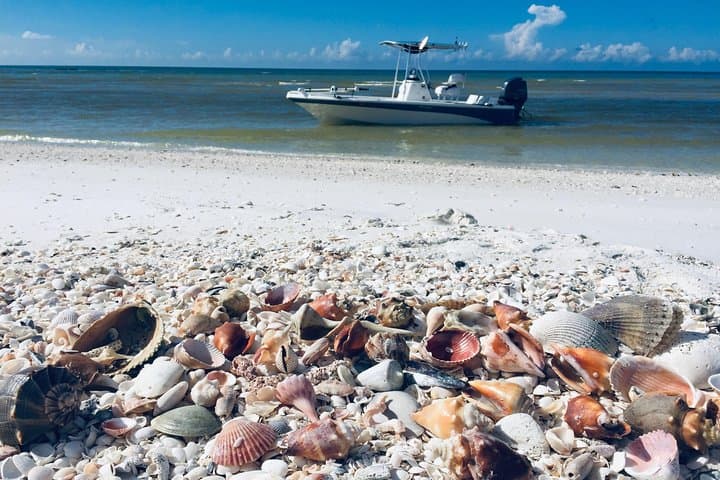
A shell is not a found object. It is a structure secreted by a living animal over its lifetime, and the animal is usually still in residence. Removing an occupied shell kills the mollusc, and the beach's supply of empty shells comes entirely from molluscs living long enough to die of other causes.

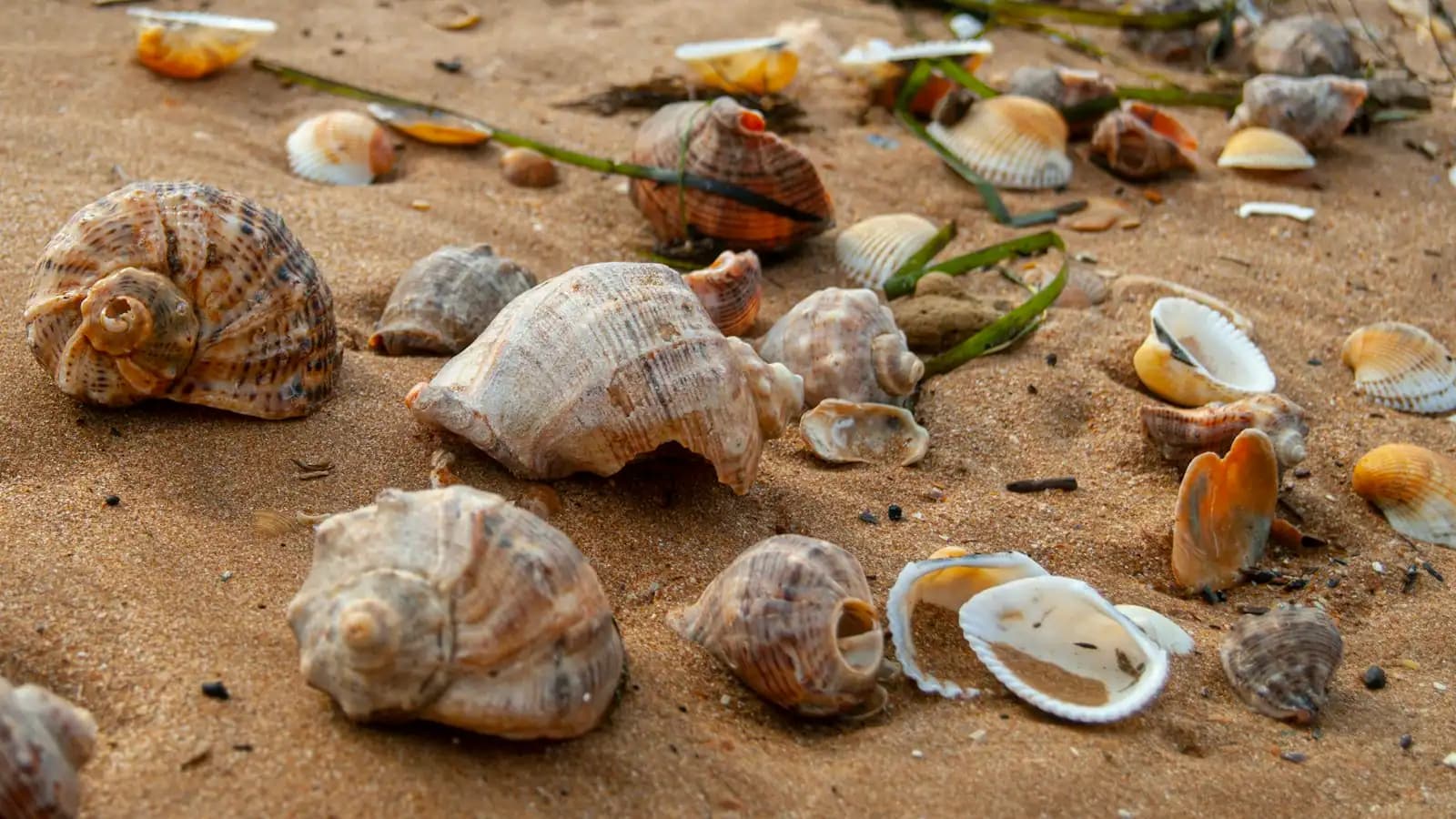
The prohibition covers sand dollars, sea stars and conchs as well as the obvious spirals. The field test: a live sand dollar is brown or purple with fine spines that move; a dead one is bleached white and smooth. A live gastropod has visible soft tissue at the aperture and will often right itself and start burrowing if you set it down in wet sand.

The museum's own conservation displays make the longer argument, and the aquarium makes it viscerally — it is much harder to pocket a live lightning whelk on a Tuesday afternoon after watching one move across a touch pool on Tuesday morning.

If you are not sure, put it back in the water. Nothing on this beach is rare enough to be worth the doubt.

Tours that visit Shell Museum

Operators run these trips past Shell Museum, or stop there as part of a longer route. We list what the booking data supports — not everything that mentions the name.

Some links below go to Viator, our booking partner. We earn a commission on bookings made through them — at no extra cost to you, and with no influence on what we recommend.

Shared departurespriced per seat, best value for one or two

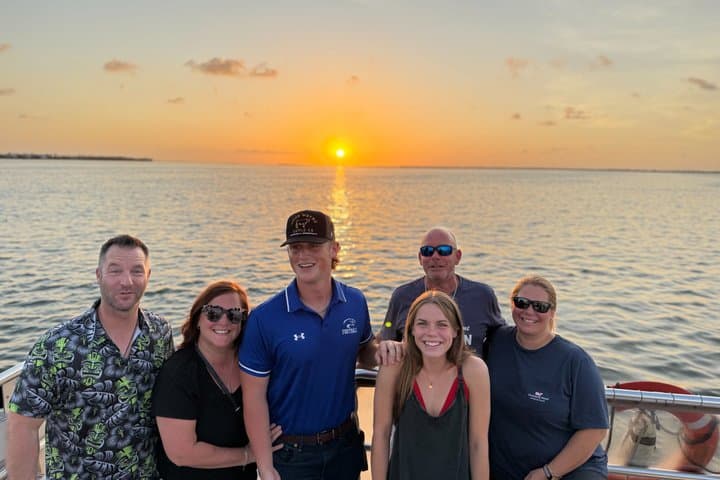
  • Sunset Cruise Fort Myers Beach

    Private and Luxury

    Sunset Cruise Fort Myers Beach (opens in a new tab)

    Free cancellationInstant confirmation
    23 reviews

    Join us for a scenic 90 minute cruise at sunset that blends comfort, adventure, and the wonders of nature. Book your spot today and…

    1–2 hours

    Prices checked

    from $47.92
  • Southwest Florida Sunset Sail

    Wildlife Watching

    Southwest Florida Sunset Sail (opens in a new tab)

    Free cancellationInstant confirmation
    514 reviews

    SWFL sunsets are the best, and there is no better place to watch them than from the deck of our 36ft. Sailing Catamaran, "Copacetic". The…

    2 hours

    Prices checked

    from $70

Private and small-group optionsoften cheaper per head for a family or a group of six

Near Shell Museum

Straight-line distances, so allow more on the road — the island is long and has one main parkway.

  • Dense low wetland vegetation spreading out towards a distant treeline

    Nature preserve

    SCCF Nature Center and Erick Lindblad Preserve

    Free

    The foundation that has shaped this island since 1967 — with trails still partly closed and a public front door that has moved.

    1–2.5 hoursTrails are free and open sunrise to sunset. Parking at the trailheads is free.0.3 mi away

  • Clear shallow water over a rippled pale sand bottom seen from directly above

    Beach

    Tarpon Bay Road Beach Park

    Free

    Under an acre of Gulf access in the middle of the island, with the car park a quarter-mile back up the road.

    1–4 hoursFree to enter. Parking is $5.00 per hour at the lot a quarter-mile north.1.3 mi away

  • A sandy path running beneath an arch of overhanging coastal trees

    Beach

    Gulfside City Park (Algiers Beach)

    Free

    Locals call it Algiers. A shaded pavilion, a gently shelving shore, and only 46 spaces to fight over.

    2–6 hoursNo entry charge. The 46-space lot costs $5.00 an hour, charged around the clock.1.9 mi away

  • Mangrove prop roots arching over shallow clear water in a narrow channel

    Wildlife

    Tarpon Bay Explorers

    The refuge's licensed concession and the only way onto the water inside Ding Darling. Kayaks, trams, pontoons and bikes.

    1.5–4 hoursPaid tours and rentals, priced per activity. Parking is free.0.7 mi away

Shell Museum: common questions

How much does the Sanibel shell museum cost?

Adults $25, seniors aged 65 and over, veterans, educators and first responders $20, youth aged 12 to 17 and students $15, children 5 to 11 $10, and free for under-fives, members and active military. Parking is free, which is unusual on an island where every beach lot charges by the hour. Admission includes the daily gallery talks and Keeper Chats in the aquarium. Prices do change, so confirm before you travel.

Is the Bailey-Matthews Shell Museum open after Hurricane Ian?

Yes, and the rebuild is finished. Ian caused significant damage in 2022, and rather than restoring the old displays the museum redesigned the Great Hall of Shells entirely. The first phase reopened in May 2025 and the second, around the periphery of the hall, in October 2025 — the museum treats that as the completion of its reconstruction. If you visited before 2022, the gallery is genuinely different from the one you remember.
Does the shell museum have an aquarium?

Yes. The Living Gallery of Aquariums holds roughly sixty species of molluscs and other marine animals in tanks ranging from Pacific coral reef to south-west Florida red mangrove, plus two large touch pools with warm-water and cold-water species including lightning whelk, horse conch and red abalone. The institution was accredited by the Association of Zoos and Aquariums in 2022. The octopus exhibits are currently closed while new animals are sourced.

How long do you need at the shell museum?

About two hours. Ninety minutes is tight if you want both galleries and a talk; a full morning is more than most visitors need unless they collect seriously. With children, start in the Living Gallery and time your arrival to a Keeper Chat, then move to the Great Hall. Go early in your trip rather than late — the south-west Florida section identifies exactly what you have been picking up on the beach, and it is more useful before than after.

Is the shell museum good for a rainy day on Sanibel?

It is the island's main indoor attraction and the obvious wet-weather choice, which is also the catch: on a rainy morning in February every visitor on Sanibel has the same idea at roughly the same time. Arrive at the 10am opening rather than at eleven. The museum store is adjacent to the lobby and does not require an admission ticket, which helps if one of your party would rather not look at shells for two hours.