On this page
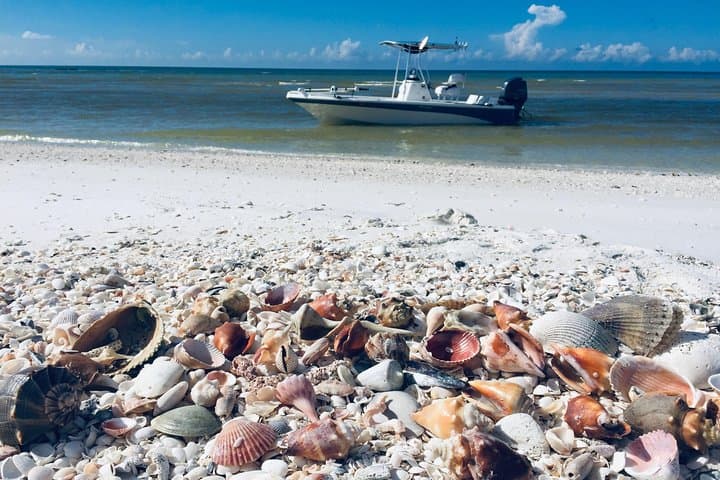
Sanibel is a twelve-mile island lying on its side. Almost every other barrier island between Tampa Bay and the Ten Thousand Islands runs north to south. This one runs east to west, across the mouth of San Carlos Bay, with its beaches facing south into open Gulf and a shallow shelf sloping away from them for miles.
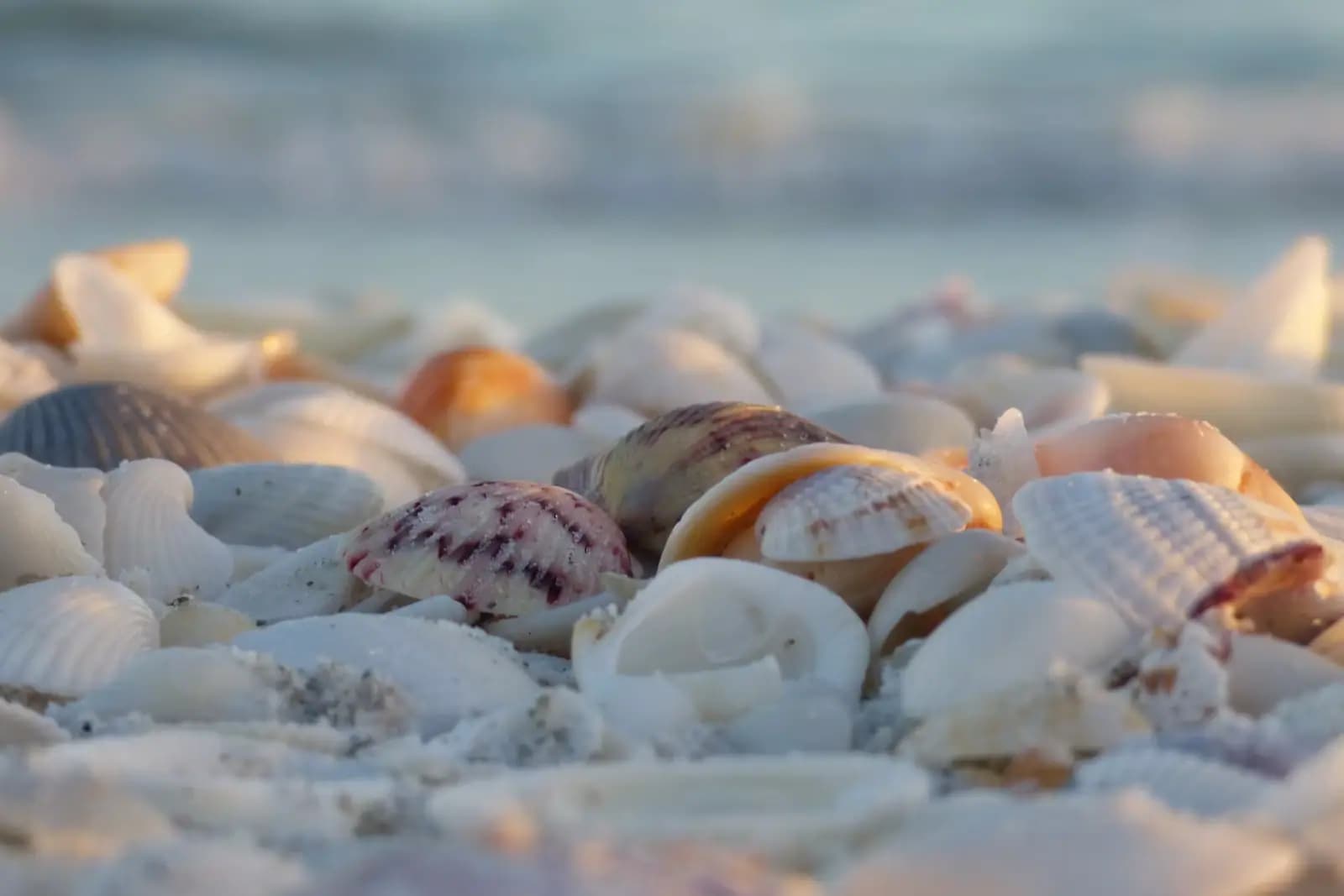
That one accident of geometry is responsible for the shells, and the shells are responsible for nearly everything else about the place: the bicycles, the conservation rules, the absence of a single traffic signal, and the fact that the island's characteristic posture has a local name. You will adopt it within an hour of arriving — bent at the waist, hands in the wrack line, shuffling sideways. The Sanibel Stoop.
Getting here
There is one road on. The Sanibel Causeway carries Summerlin Road southwest from Punta Rassa across San Carlos Bay in three spans, with two man-made islands between them. The toll is collected in one direction only, travelling to the islands, and leaving costs nothing. At the time of writing it runs around six dollars with a transponder and around nine billed by plate. Lee County sets that figure and has revised it before, so treat the number as a size rather than a price.
Southwest Florida International (RSW) is the airport to book: roughly twenty-five road miles out, about forty-five minutes when the causeway approach is behaving. Punta Gorda (PGD) sits fifty-five miles north and is worth pricing when the low-cost fare gap is wide, though the rental inventory there thins out early in season.
The pinch point on arrival is the last two miles of Summerlin before the toll plaza. It stacks on winter Saturday mornings and again in the half-hour after a good sunset, when the whole island leaves at once.
The road map, which takes thirty seconds to learn
Periwinkle Way runs west from the lighthouse end through the commercial heart of the island. Sanibel-Captiva Road — San-Cap, to everyone here — branches northwest from it near Tarpon Bay Road and runs past the refuge entrance and Bowman's Beach to the Blind Pass Bridge, where Captiva begins. Gulf Drive runs along the beach side in three disconnected pieces that do not join up. That is essentially the whole network.
There are no traffic signals anywhere on Sanibel. This is a founding decision rather than an oversight, and the practical effect is that traffic moves slowly and continuously and then stacks at four or five four-way stops in February.
Five things that catch first-timers out
| The thing | What actually happens |
|---|---|
| Wildlife Drive is closed every Friday | The refuge's four-mile drive, the Visitor & Education Center and the Indigo Trail all shut one day a week. People arrive on a Friday, find a locked gate and lose the morning |
| Every beach lot is metered | All seven City of Sanibel beach parks charge the same hourly rate, currently five dollars, enforced around the clock rather than only in daylight |
| The pay stations are gone | Ian wrecked them and they were not replaced. Payment runs through the city's mobile system, so you need a charged phone and a signal before you walk to the sand |
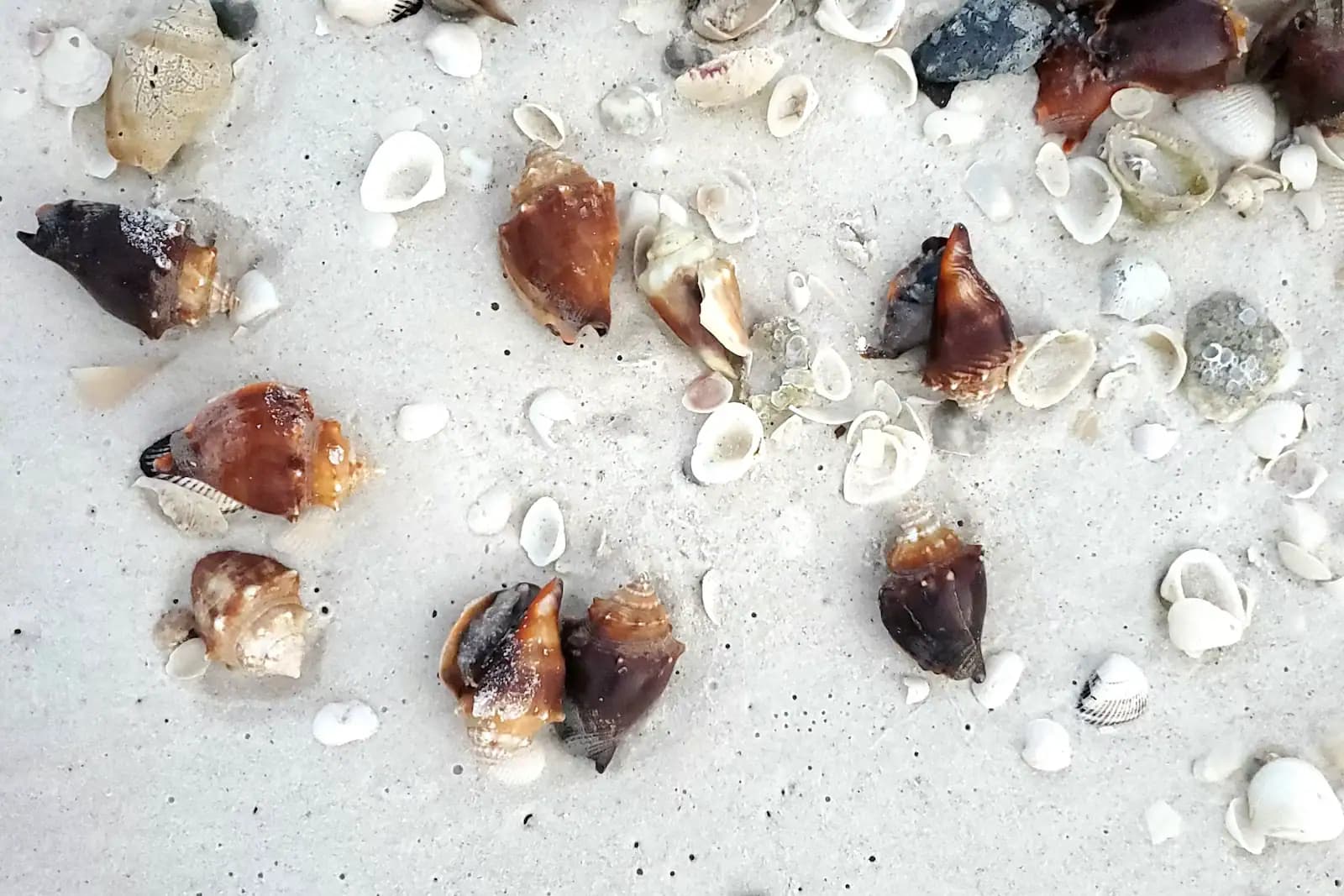
| Live shells are illegal | Not discouraged. Illegal, since 1 January 1995, and it covers sand dollars, sea stars and sea urchins as well as whelks and conchs |
| The island is genuinely dark | Almost no street lighting, by design and because of turtle nesting. Riding a bike back from dinner without a light is a bad plan |
One useful quirk of the parking system: a paid session transfers between city beach parks while the time you bought is still running. A morning at Bowman's and a midday move to Blind Pass is one session, not two.
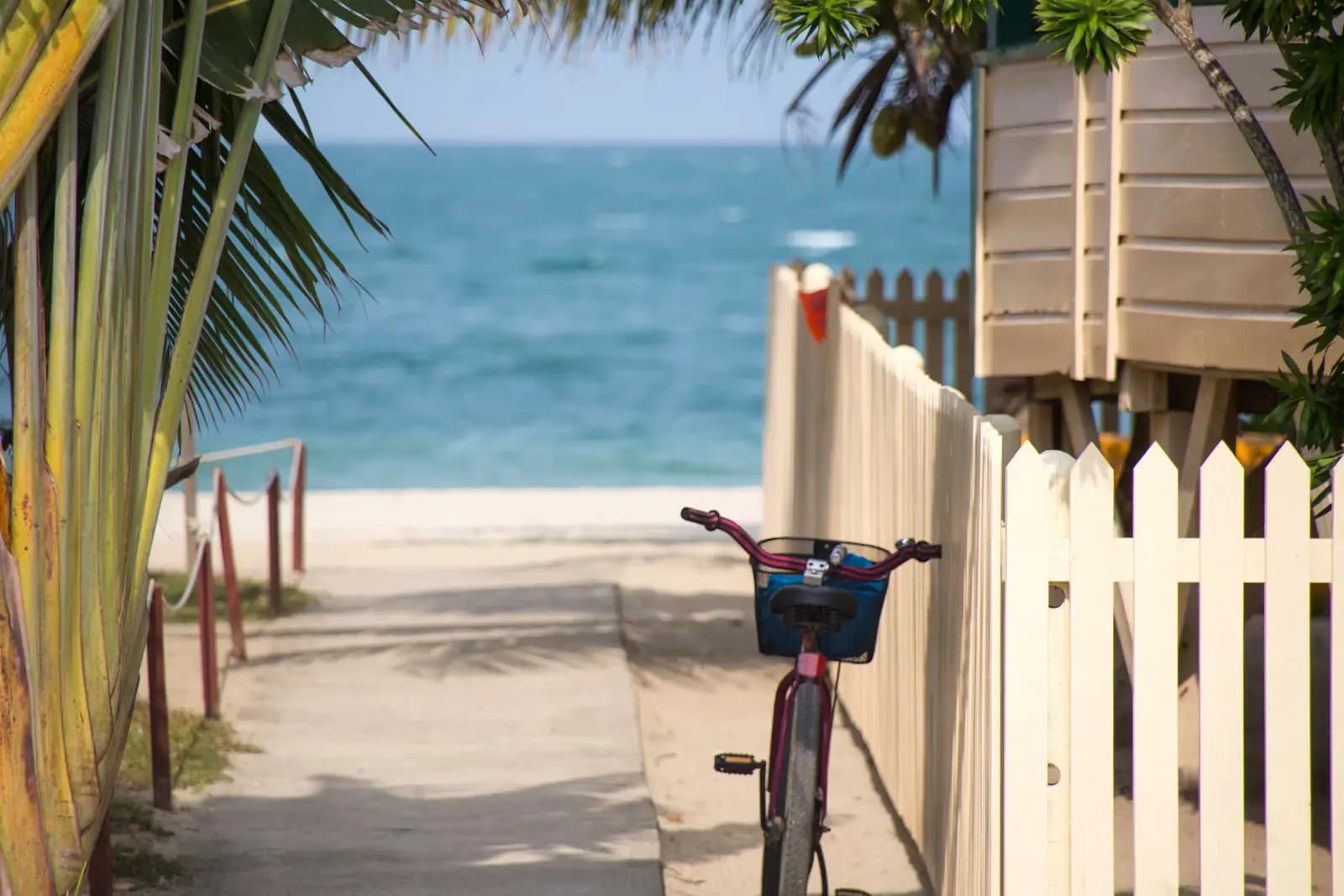
Rent a bicycle. Genuinely.
More than twenty-five miles of separated, paved shared-use path run the length of the island, from Lighthouse Beach Park in the east to the Blind Pass Bridge in the west, with spurs into every beach park, the refuge and the Periwinkle Way plazas. Another eight miles or so of natural-surface trail runs through the preserves.
Rather than widen its roads, Sanibel built this. It is flat, it is separated from traffic, and it dissolves the single friction that ruins most people's first Sanibel day, which is the hunt for a parking space that costs money by the hour.
Rent by the week rather than the day — it is far better value, and most shops will deliver to a house or condominium and collect at the end. If you want an electric bike, ask which class it is before you pay. Only Class 1 pedal-assist machines are permitted on the path, riders must be at least sixteen, the default limit is 15 mph, and within fifty feet of a pedestrian it drops to 10. The city put path rangers out in 2025 because the network got busier than it was built for.
The real hazard on the path is not speed. It is the driveway and side-road crossings, which come constantly, and drivers who are looking sideways for a bird rather than forwards for a bicycle.
The shelling rule, stated plainly
Taking a live shell on Sanibel is against the law. That means any shell with the animal still in it, and it explicitly includes sand dollars, sea stars and sea urchins. The city petitioned the state for a complete ban in 1993; it was approved in October 1994 and took effect on 1 January 1995, and a Lee County-wide prohibition followed in 2002. A first offence carries a fine of up to $500 and up to sixty days in jail.
The test takes two seconds. Turn the shell over. If there is a body in the opening, or a hard trapdoor sealing it, it is alive. Put it back in the water rather than on the dry sand. A sand dollar that is brown or grey and faintly furry is alive; a white, smooth, rigid one is not.
Nobody here regards this as pedantry. It is the rule the island is most serious about, and it is why there are still shells to find.
What a first full day looks like
Check the tide chart before you do anything else. On Sanibel the best morning of your week is the one with a low tide near sunrise, and everything else should bend around it.
Start on the sand an hour before low water at Bowman's or Blind Pass. Work the strip the water has just uncovered rather than the dry wrack. By eight the serious collectors have gone home. Ride the path east for coffee, go to the refuge on a falling tide in the afternoon when the birds are feeding on exposed flats, and be back on a west-facing stretch of beach before sunset.
What Sanibel is not
There is no nightlife to speak of. No high-rise anything — building heights are capped at three storeys. National restaurant chains are effectively barred by ordinance, with a couple of grandfathered exceptions that predate the rules. There is no boardwalk, no pier arcade and no theme park within an hour.
There is also, still, visible damage. Hurricane Ian came ashore here on 28 September 2022 as a Category 4 and destroyed or wrecked a large share of the buildings on these islands. Most beaches, parks and businesses are trading again and the causeway was permanently rebuilt by the middle of 2025, but some resort sites remain bare ground and the tree canopy has not grown back. Check that a specific place is open before you drive to it.
What to bring that you would not think of
A head torch or a bike light. The island is dark and both the path and the beach accesses are unlit.
Shoes you can wade in. The city still warns that storm debris remains buried on the beaches and in the shallows, and the honest advice is to keep something on your feet in the water.
A mesh bag rather than a bucket. Wet sand in a bucket weighs a surprising amount by the second mile, and a mesh bag lets you rinse as you go.
Strong insect repellent, carried on you rather than left in the car. The no-see-ums that come off the mangrove and the freshwater slough at dawn and dusk are worse than the mosquitoes and are not much deterred by the mild stuff.
A phone with charge and a payment method loaded before you leave the rental. Every beach lot is app-paid now.
Binoculars, even if you do not think of yourself as a birder. Wildlife Drive is four miles of roseate spoonbills, ibis, herons, ospreys and alligators, and the difference between a pleasant drive and a memorable one is about eight magnifications.
The small costs that add up
Sanibel is not a cheap island, and the costs that surprise people are the small recurring ones rather than the accommodation.
Beach parking at five dollars an hour, every lot, all day, is real money across a week if you drive to the sand daily. The bicycle is partly a budget decision.
The refuge charges a vehicle fee for Wildlife Drive and a much smaller walk-in or cycle-in rate. If you are on a bike, you pay the small one, and Wildlife Drive is better at ten miles an hour anyway.
Alison Hagerup Beach Park at the north end of Captiva is not a city lot. It belongs to the Captiva Erosion Prevention District, takes payment through a different app and is substantially dearer, with an all-day rate rather than a simple hourly one. Budget for it separately or ride there.
Groceries changed after 2022. Bailey's General Store was destroyed and has been rebuilding; a smaller market opened in 2025 further west on Sanibel-Captiva Road. Check what is actually trading before you plan one big shop, and consider doing it on the mainland on the way in.
All of these figures are set by the city, the county or the district and have all moved since 2022. Check the posted rate rather than any number online, this page included.
Last updated
Opening hours, ordinances and prices move with the season. We re-check this guide rather than rewrite it, and the date above is the last time someone did. How we research and correct.