On this page
Run your finger along a map of Florida's Gulf coast and count the barrier islands. Anna Maria, Longboat, Lido, Siesta, Casey, Manasota, Gasparilla, Cayo Costa, Captiva — all of them lie roughly north to south, presenting a narrow shoulder to the sea.
Then you reach Sanibel, which lies across the mouth of San Carlos Bay on an east–west axis with twelve miles of beach facing south into open Gulf.
That is the entire explanation. Currents moving shell material along this coast meet a shoreline turned broadside to them, over a shelf so shallow that it slows the water and makes it drop what it is carrying. The island works like a scoop, and the commonly cited figure is that more than 250 species come ashore on it. It is the reason a bent-double posture here has a name — the Sanibel Stoop, and its northern cousin, the Captiva Crouch.
Before anything else: the law
Taking a live shell on Sanibel is illegal. Not discouraged. Illegal.
The city petitioned Florida's Marine Fisheries Commission in the late 1980s and got a two-per-species daily cap. That was not enough, so in 1993 it petitioned again for a complete prohibition out to the city limit, half a mile offshore. It was approved in October 1994 and took effect on 1 January 1995. A Lee County-wide ban followed in 2002, and the rule now sits in state regulation. A first offence carries a fine of up to $500 and up to sixty days in jail.
The ban is broader than people assume. It covers sand dollars, sea stars and sea urchins as well as the obvious whelks and conchs.
Telling a live one from an empty one
| What you are holding | Alive | Empty |
|---|---|---|
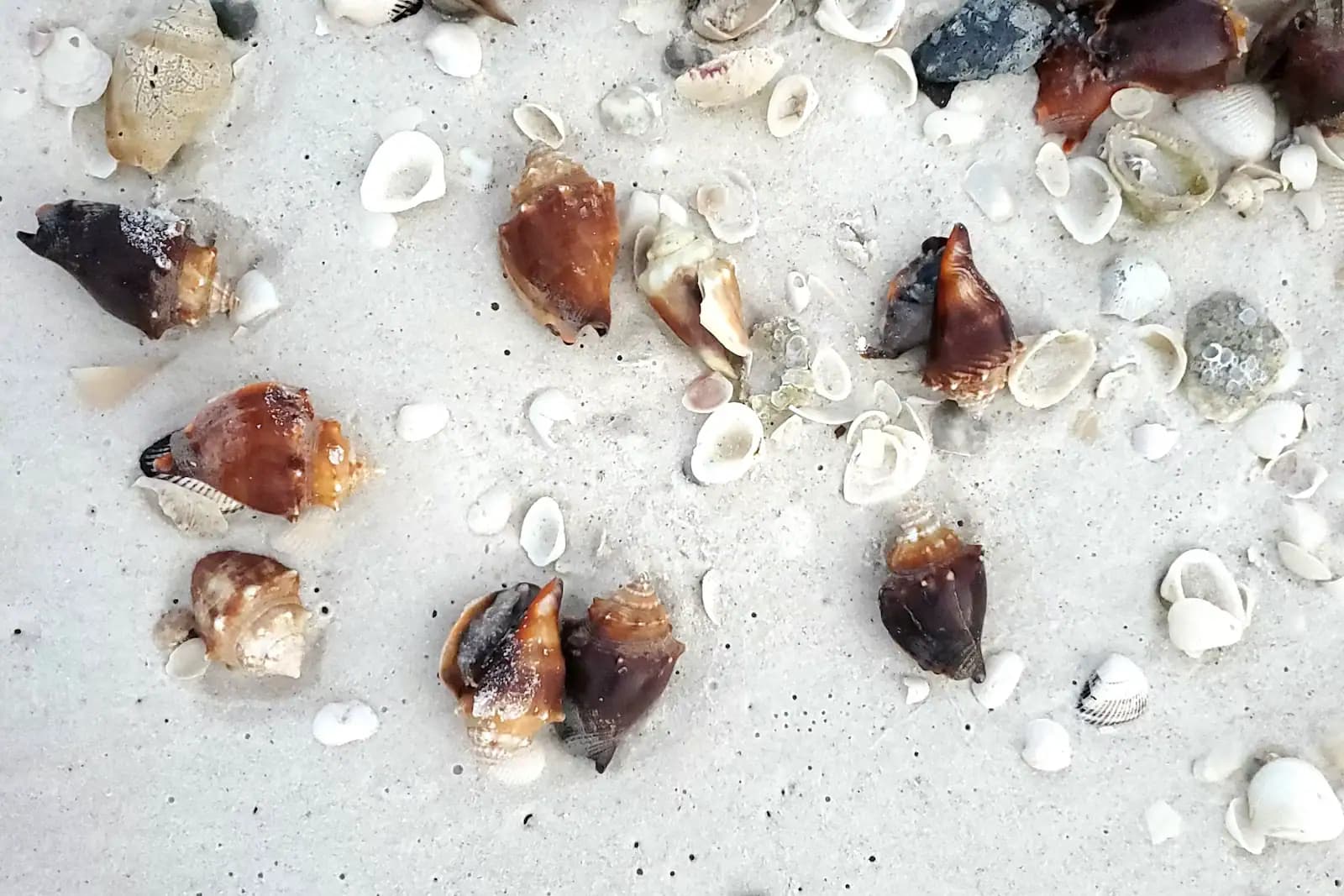
| A snail shell — whelk, conch, tulip, olive | A soft body visible in the opening, or a hard horny trapdoor sealing it | You can see clean through to the inner whorls |
| A sand dollar | Brown, grey or purplish, with a velvety nap of moving spines | Bleached white, smooth, rigid, often with the five-petal pattern worn clear |
| A sea star | Firm, coloured, arms that flex slowly when lifted | It will not be a sea star. They do not leave a hard shell behind |
| A bivalve — scallop, cockle, venus clam | Both halves still hinged and closed, or closing when handled | A single loose valve, or a pair gaping open and empty |
If you are not sure, put it back in the water rather than on the dry sand. A living animal returned to dry sand will die there, which converts an honest mistake into a dead animal.
Nobody on this island treats the rule as fussiness. It is precisely why there is still anything to find.
The four conditions that make a good shelling morning
Shelling on Sanibel is not luck. It is four variables, and when all four line up the beach is transformed.
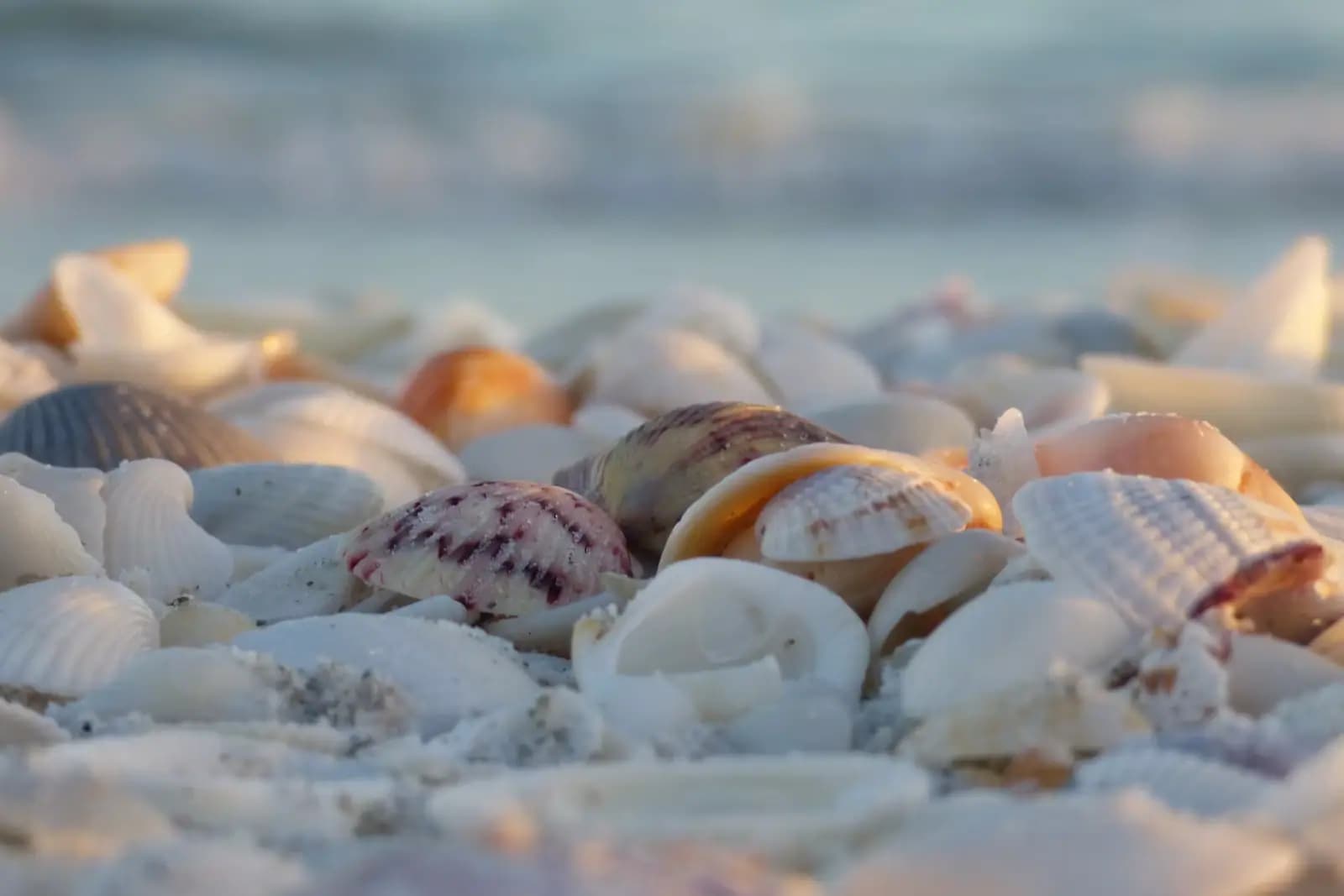
- Low tide. Arrive an hour before the bottom of the tide and work the strip the water has just left. That band is where the Gulf sorted the material and then walked away from it.
- A spring tide. The lowest lows of the month fall around the new and full moon, exposing flats that an ordinary tide never uncovers.
- Wind from the west or northwest. Because the beaches face south and southwest, a wind on that quarter pushes material straight up the slope rather than dragging it along the shore.
- A winter cold front. From roughly December to March, fronts cross the Gulf every week or so. The morning after one has blown through is the best shelling on this coast, and the locals are on the sand for it in the dark.
Two of those four are on a published calendar. Check a tide chart the night you arrive and plan your whole week around the mornings with a low tide near sunrise. The other two you watch the forecast for.
A summer trip is not a write-off. A hard afternoon thunderstorm does a smaller version of the same thing, and the following dawn is worth an early alarm.
Which beach catches what
The island is not uniform. Different stretches sit at different angles to the prevailing push, and the material sorts accordingly.
| Beach | What it tends to hold | Practical notes |
|---|---|---|
| Bowman's Beach | The broadest range on the island, and the best big-shell odds. Whelks, conchs, tulips, olives | Parking sits back from the sand across a footbridge, so allow ten minutes each way. Fewer people at dawn than the numbers suggest |
| Blind Pass Beach | Heavy, coarse material driven through the pass by the tidal current. Whelk fragments, large conchs, augers | The current in the pass itself is strong and this is not a swimming spot |
| Turner Beach, Captiva | The other side of the same pass, with the same coarse sorting | A City of Sanibel lot, and the last of the island beach parks to reopen after Ian, in April 2025 |
| Lighthouse Beach Park | Smaller shells, coquinas, jingles and fine material, plus whatever comes round the point | The eastern tip, where the Gulf meets the bay. Wading birds work the same flats you do |
| Gulfside City Park | Quiet, shaded parking, ordinary but reliable mid-island shelling | Locals still call it Algiers. Forty-six marked spaces on a 27.5-acre park, which tells you how early to arrive |
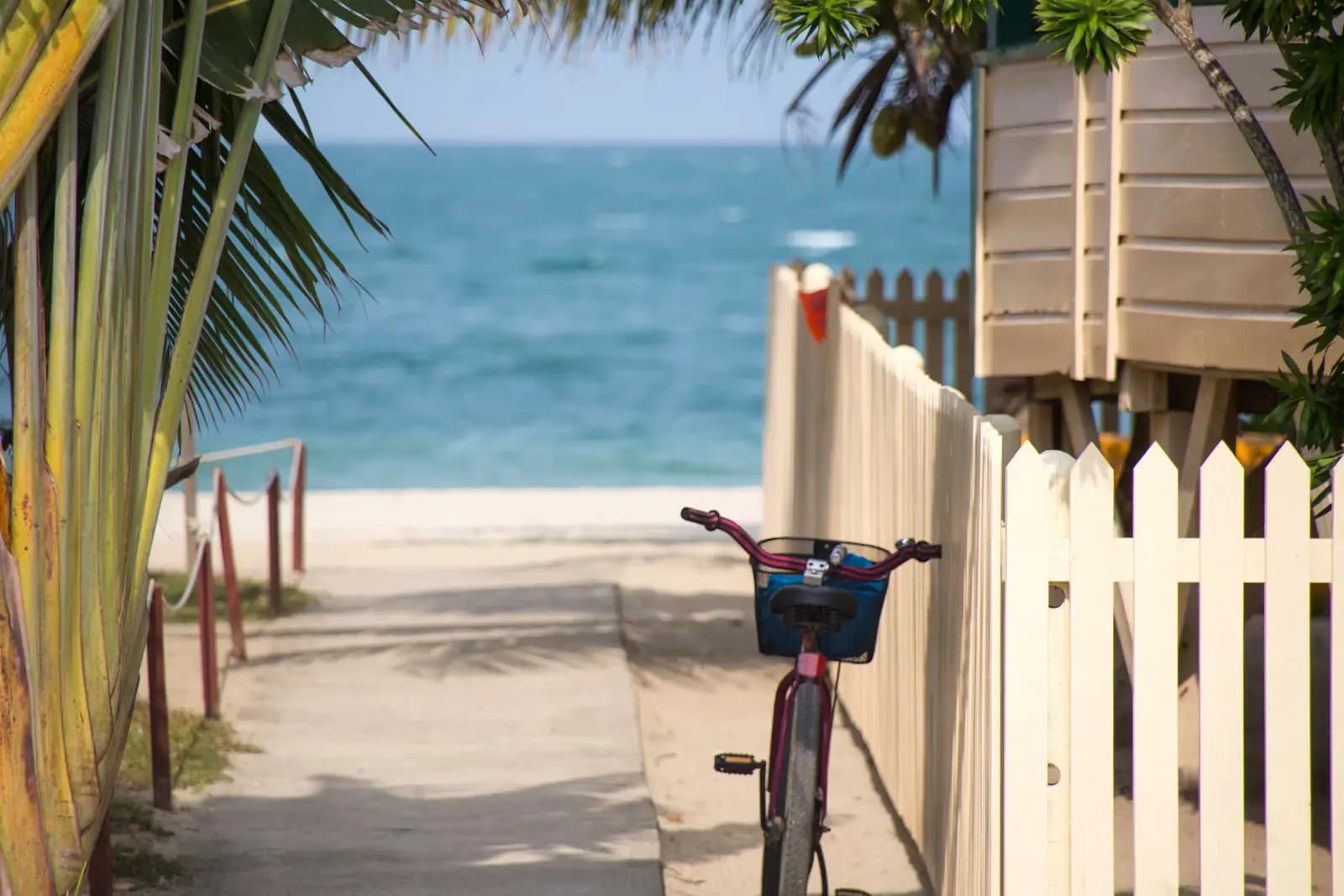
| Tarpon Bay Beach | Mid-island, gently sloping, good for a slow low-tide walk | The easiest access to reach by bicycle from the middle of the island |
| Cayo Costa and the outer islands | The best shelling in the region, because almost nobody walks it between tides | Boat only, from Captiva or Sanibel marina. A half-day trip and worth it |
The pattern worth internalising: the passes concentrate heavy material, the open Gulf beaches spread it, and the islands with no road on them keep it.
What you are likely to find
| Shell | How to recognise it | How often |
|---|---|---|
| Florida fighting conch | Heavy, orange-brown, flared lip, roughly the size of a fist | The island's signature find. Common |
| Lightning whelk | Opening on the left — almost uniquely among Gulf gastropods — with brown zigzag streaks on a pale ground | Common as juveniles, uncommon large |
| Lettered olive | Glossy, cylindrical, cream with fine brown scribble | Common |
| Alphabet cone | Cone-shaped, white with orange-brown blocks in broken rows | Regular, and a favourite |
| Kitten's paw | Small, ribbed, fan-shaped bivalve with a pinched hinge | Common, easy to overlook |
| Calico scallop | Small scallop mottled in maroon, rose and white; no two alike | Very common |
| Coquina | Tiny bivalve in every colour combination, still burrowing in the swash | Everywhere. Almost always alive — leave them |
| Shark eye and baby's ear | Smooth, flattened moon snails; one glossy grey, one white and ear-shaped | Regular |
| Banded and true tulip | Spindle-shaped, banded or streaked, tapering at both ends | Regular |
| Apple murex, lace murex | Knobbed and frilled, often worn | Regular |
| Angel wing | Long, brittle, pure white, ribbed like a feather | Uncommon whole. A genuinely good find |
| Scotch bonnet, paper fig | Bonnet ribbed and squat; fig thin, pale and pear-shaped | Uncommon |
| Horse conch | Florida's state shell and the largest gastropod in American waters; bright orange animal in life | Usually juveniles or worn adults |
| Junonia | Cream, spotted in chocolate-brown squares, deep-water and rarely washed in whole | The one people photograph their hands holding |
Nobody finds a junonia on schedule. A whole one is a story, not an itinerary item, and the shell museum will happily confirm what you have.
Technique, tools and what to do afterwards
Work the water's edge, ankle-deep, on the falling tide — not the dry wrack at the top of the beach, which is where everyone else is and where the material has already been picked over twice. A long-handled scoop saves your back; read the posted signs at the access first, because what you may dig with here has been regulated before.
Carry a mesh bag rather than a bucket. Wet sand is heavy by the second mile and a mesh bag rinses as you walk.
Take what you will actually use. A bucket of shells abandoned in a rental kitchen at the end of the week is material removed from a beach for nothing.
To clean what you keep: soak in fresh water for a day or two, brush the calcium off with an old toothbrush, and let them dry in shade. Some collectors dip briefly in a weak bleach solution; it brightens a shell and also strips the periostracum, the natural skin, which serious collectors would rather keep. Baby oil makes a dull shell glossy and is not permanent.
If you cannot name something, the Bailey-Matthews National Shell Museum & Aquarium is the only museum in the United States devoted to shells and the animals that build them. Its aquarium gallery reopened in March 2024 and the expanded hall of shells in late May 2025, and seeing a living lightning whelk plough across a tank changes how you look at the empty one in your bag.
The etiquette nobody prints on a sign
Do not pick up a shell and drop it further along the beach to come back for. Somebody else will take it, and you will have moved it out of the sorted band for nothing.
Do not turn over a live shell to photograph it and leave it upside down. A conch can right itself; a sand dollar on dry sand cannot.
Give the birds room. The same low tide that gives you a hundred yards of fresh material gives feeding shorebirds their only window, and a person walking through a flock costs them more energy than they can spare. Walk around, not through.
Keep out of posted areas. Shorebird nesting is roped off in spring and summer on some stretches, and the birds abandon nests when people cross the line.
Level what you dug. Sand back in the hole before you walk away, and the castle walls knocked flat — between mid-April and the end of October there are hatchlings crossing that beach in the dark, and a foot-deep pit is a trap to something two inches long.
And if you take a bag home, put it in checked luggage. Rinsed, dried shells travel fine; a damp bag of coquinas in a carry-on announces itself by the second connection.
Is a shelling charter worth it?
On Sanibel, walking is the baseline and it is genuinely good. That is the opposite of most of this coast, where the beach in front of your accommodation has been combed before breakfast and the material is out on keys with no roads.
So a charter here is an upgrade rather than a rescue. What you are buying is access to the islands nobody walks between tides — Cayo Costa above all, plus the sandbars and spoil islands in Pine Island Sound. Those beaches accumulate for days at a time instead of hours, and the difference in what is lying there is obvious within five minutes of stepping off the bow.
You are also buying local judgement. Which pass scoured on the last front, which bar is holding material this week and which one was stripped — that knowledge changes month to month and no website carries it.
Ask three questions before you book: how many people are on the boat, how long you actually get on the sand, and whether the trip is timed to the tide. A four-hour trip that lands you at high water is a boat ride.
Half-day trips are the norm across this market and the median price sits near seventy dollars, with private charters well above that. Boats run from Captiva and from Sanibel's own marina, they are seasonal, and they cancel for weather.
Last updated
Opening hours, ordinances and prices move with the season. We re-check this guide rather than rewrite it, and the date above is the last time someone did. How we research and correct.