Skip to content
Menu

We earn a commission if you book through this link. You pay the same price.

Search

Plan your trip

The Best Time to Visit Sanibel Island

Last updated

Best time to visit Sanibel Island: shelling, birding, heat, no-see-ums and hurricane season run on different calendars. Month by month, without spin.

A white ibis standing in shallow water beside Wildlife Drive in the Ding Darling refuge on Sanibel

Most destinations have one calendar. Sanibel has five, and they do not agree with each other. Shelling peaks in the cool months when winter fronts blow in from the west. Birding peaks in roughly the same window but for different reasons, and adds a separate spring migration spike. Heat and humidity climb from April and do not release until late October. Biting insects follow the wet season and the still air, which is a different curve again. And hurricane risk runs on the Atlantic season, dated from the first of June to the end of November, with the statistical peak in the two weeks either side of mid-September.

Lay those five on top of each other and there is no month that wins on all of them. What there is, is a clear best compromise and a clear worst one.

The best compromise is late October through early December. The heat has genuinely broken, the water is still warm enough to swim in without thinking about it, the insects have eased, the storm season is running out, the winter birds are arriving, and the season crowds and season prices have not yet turned up. If you have flexibility, take this window.

The second-best is January through March, and it is the one to choose if shelling is the actual reason you are coming. This is when the cold fronts arrive, and a front that pushes a day of wind and sea in from the west is what loads a Sanibel beach. It is also the finest weather of the year, the peak of the birding, the busiest the island gets, and the most expensive.

April into early May is the other good window: dry, warm, water in the high seventies, prices falling after Easter, insects not yet serious.

The worst single stretch is August into mid-September, and the reason is not really the heat. It is that everything else stacks in the same fortnight: peak storm probability, the thickest insect load, the wettest afternoons, and the flattest, calmest Gulf, which is the condition that produces the thinnest wrack lines of the year. It is also the cheapest and emptiest the island ever is, which for some visitors is the whole argument.

One point that applies in every month. Sanibel's day is governed by the tide, not the season. A poorly timed week in February with high water every morning will produce worse shelling than a well-timed week in July. Check the tide tables before you pick your dates, not after.

Our picks

The ones we would book

  • Editor's Pick

    Best trip in the winter season

    Why we chose it

    From December to March the water is flat, the light is clean and the birds are at their peak, so the trip to book is one that gets you out into the estuary early. Morning departures are calmest. Take a layer: a cold front can knock fifteen degrees off the temperature and the wind across open water has real teeth in January.

  • Best Value

    Best value in the shoulder months

    Why we chose it

    Late October to early December and the weeks after Easter are when prices drop without the weather turning against you. The same half-day trips that sell out in February have availability, and the median booking around $70 buys more boat than it does in season. Book mornings, when the water is flattest.

  • Best for Families

    Best summer booking with children

    Why we chose it

    In July and August the only sensible slot is the first departure of the day, before the heat and before the storm cell builds over the mainland. Short, shaded and on sheltered bay water. Choose free cancellation over a discount; afternoon trips are called off regularly between June and September.

  • Top Rated

    Best trip when a front has just passed

    Why we chose it

    The day after a winter front is the best shelling of the year and the best day to be on a boat heading for an untouched beach. The wind usually drops behind the front, the water clears and the wrack line has been reloaded. Watch the forecast for a westerly blow and book the morning after it.

  • Small Group

    Best trip in migration season

    Why we chose it

    April puts songbirds through the island's interior and shifts the birding away from the mudflats, so a small-group guided outing with someone who knows where the woodland pockets are is worth more than a big boat. Eight people rather than thirty also means the group can stand still long enough to hear something.

    Up close encounter with a friendly Manatee.

    Private and Luxury

    Guided Kayak Eco Tour - Bunche Beach (opens in a new tab)

    Small GroupFree cancellationInstant confirmation
    244 reviews

    Paddle through mangrove tunnels, explore shallow bays, and cruise along the beach, all while taking in the wide variety of wildlife that…

    2–3 hours

    Prices checked

    from $69.95

The shelling calendar, and why it runs on wind

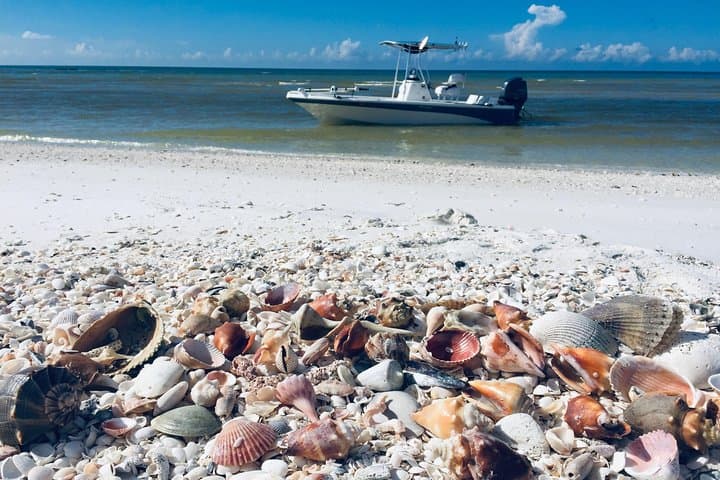
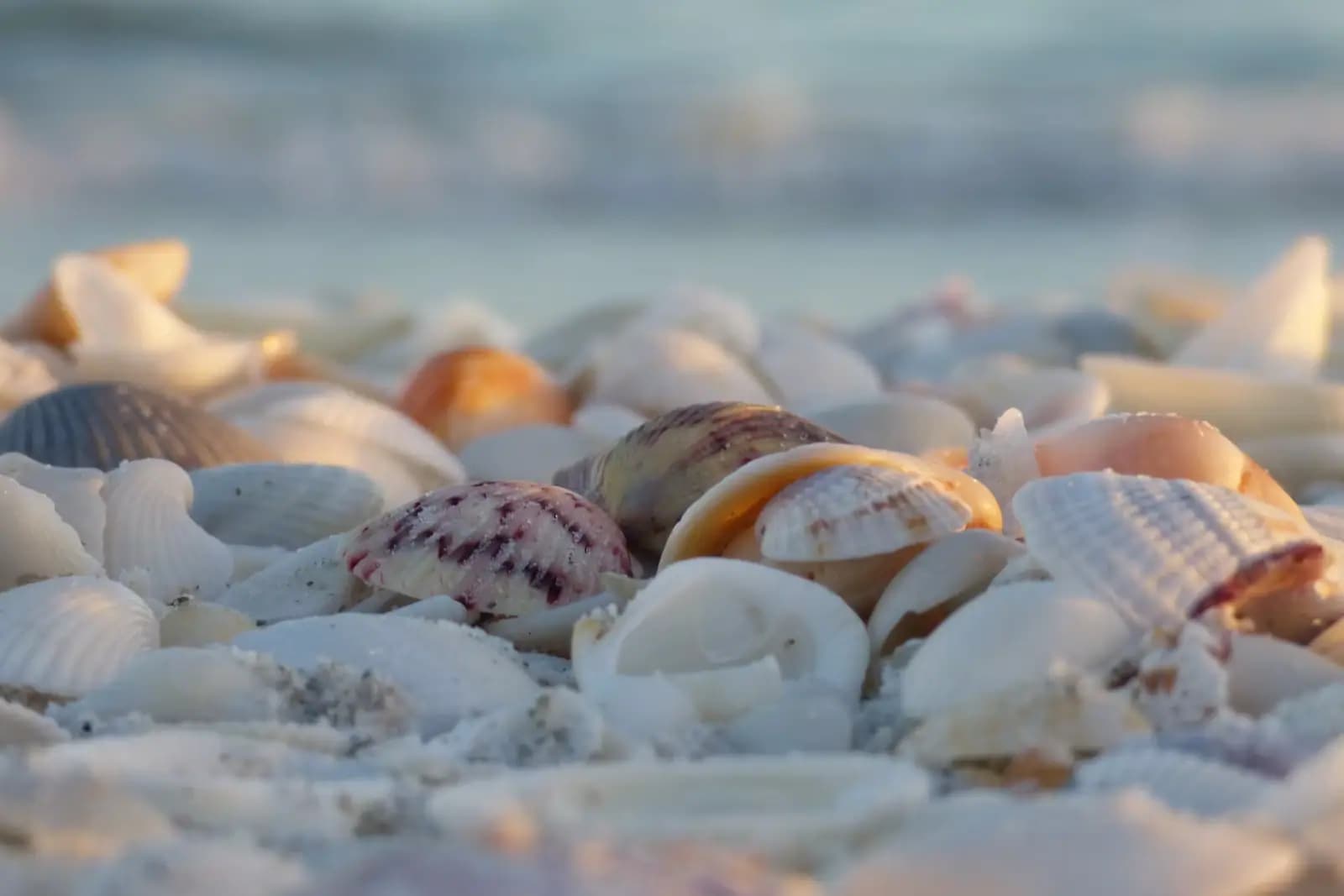
Sanibel collects shell because of its geometry. The island lies east to west while almost every other barrier island on this coast lies north to south, and it sits at the end of a shallow Gulf plateau. Swell rolling in from the west arrives head on, dragging along the bottom for miles before it breaks, and unloads what it is carrying onto the sand rather than sliding it along the shore.

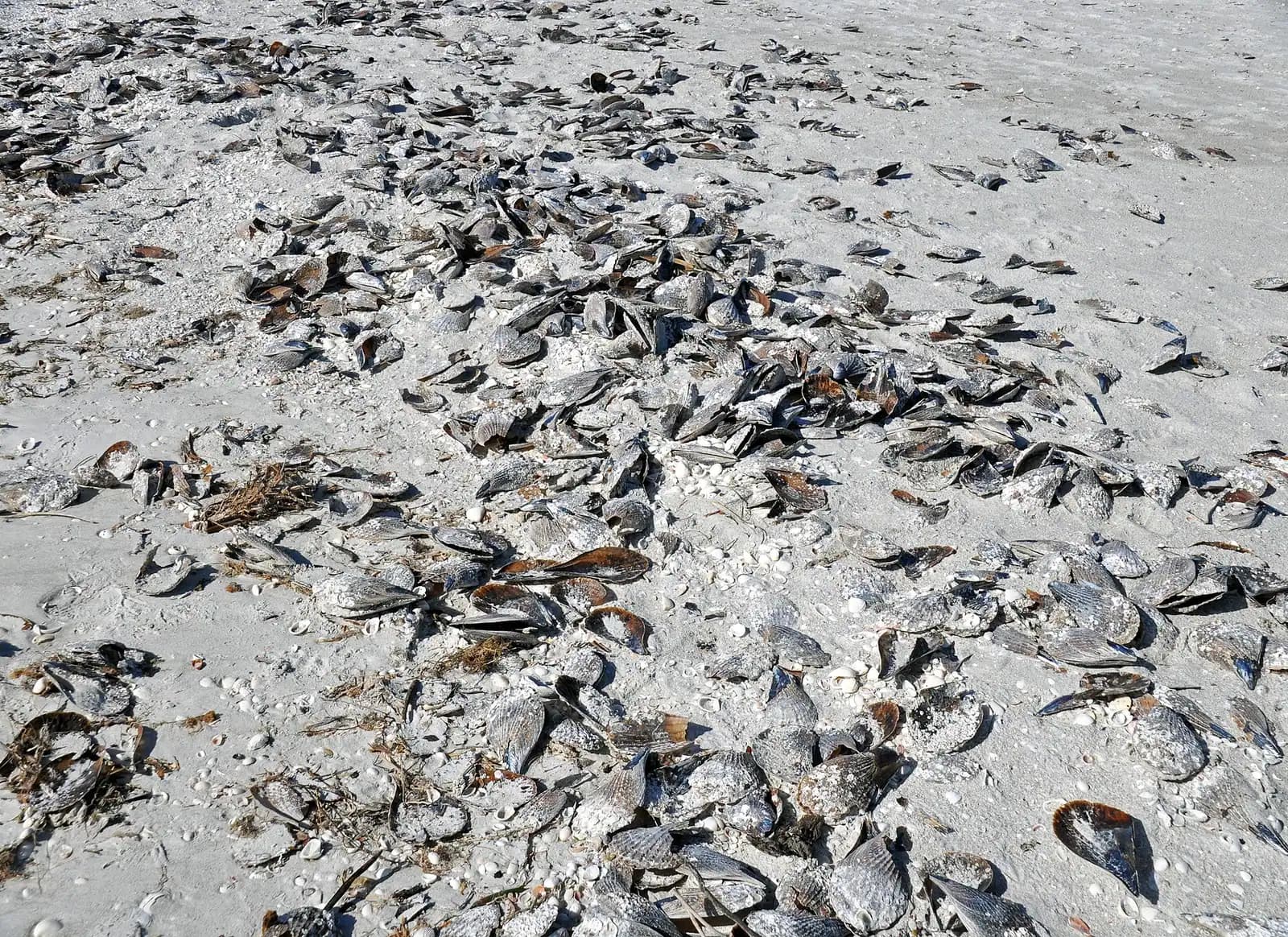
That means the season is really a wind season. The best shelling of the year follows a cold front that has pushed a day or two of wind and sea in from the west or north-west, which is a November-to-March phenomenon. The morning after one of those fronts, on a low tide, before anyone else is up, is when people find the shells they frame.

Three further conditions stack on top of it:

  • Low tide, and the lower the better. Spring tides around the full and new moon have the widest range and expose the most.
  • First light, because the overnight wrack line has not yet been walked.
  • The less accessible beaches. Bowman's has a footbridge and a few hundred metres of path between the car park and the sand, and the wrack line reflects that. Blind Pass collects because the tidal current through the pass sorts material there.

Summer is the weak season for exactly the opposite reason: long flat calms, gentle onshore breezes and very little energy moving material. You will still find shells. You will not find the beach ridged a foot deep in them.

Whatever the month, the law does not change. Taking a live shell is illegal on Sanibel, including sand dollars, sea stars, urchins and conchs.

The birding calendar

More than 245 bird species have been recorded in the J.N. "Ding" Darling National Wildlife Refuge, which occupies roughly 5,200 acres along the bay side of the island and forms part of the largest undeveloped mangrove ecosystem in the United States. The calendar inside it has three distinct phases.

November to March is the main event. Wintering shorebirds and waterfowl arrive in numbers, the impoundments hold water at managed levels, and roseate spoonbills, reddish egrets, white pelicans, ducks and large mixed flocks of waders are all reliable. The light is low and clean, the humidity is down and the biting insects are not a factor. This is the season the refuge is famous for.

April brings passerine migration. Warblers and other songbirds move through the island's interior woodland, which is a completely different kind of birding from the mudflat spectacle — quieter, harder, and better on the inland trails than on Wildlife Drive.

Summer is thin for variety and good for behaviour. Fewer species, but resident wading birds are nesting and you can watch a rookery at work. The trade-off is heat, afternoon storms and the worst of the insects on any interior trail.

Whatever the month, the tide matters more than the date. Go on a falling tide, when receding water strands fish in shrinking pools and the birds concentrate. On a full high tide the flats are covered and the same drive can look empty. And remember Wildlife Drive is closed every Friday of the year; the free Bailey Tract is the Friday alternative.

Picking your month, by what you actually want

When to go

If shelling is the reason you are coming: January or February, and pick the week for the tides rather than the flights. Watch the forecast in the days beforehand and hope for a front with westerly wind behind it.

If birding is the reason: December through March for numbers and variety, April if you want migration and quieter trails.

If you want the best all-round weather with the fewest compromises: late October to early December. Warm water, dry days, insects easing, prices still off-peak.

If you are tied to school holidays: spring break is the easiest of them — warm, dry, water swimmable, insects manageable. Summer is survivable if you accept the early-and-late rhythm. Christmas and New Year are lovely and expensive and the island is full.

If price is the binding constraint: August and September, with genuinely low rates and an empty island, provided you insure properly and accept the storm risk, the heat and the insects.

If you are travelling with someone who overheats, or with very young children: avoid June to September entirely. This is not a preference. The combination of heat, humidity and midday sun is punishing here.

Whatever you choose, book accommodation earlier than feels necessary. The 1974 height ordinance means there are no large hotels on Sanibel and the supply of rooms is genuinely limited, which is why winter weeks go months ahead.

Book it

Everything else we track

Some links below go to Viator, our booking partner. We earn a commission on bookings made through them — at no extra cost to you, and with no influence on what we recommend.

Sharing, or having it to yourselves

Most of what is bookable here sells two ways, and the cheaper one is not always the cheaper one. A shared departure is priced per person; a private booking is priced for the party, so the arithmetic flips somewhere around four to six people — and it is the only version where you pick the time. Check the party size each listing actually covers before you decide.

  • Book a seat

    A shared departure, priced per person. The cheapest way to do this for one or two people.

  • Book the whole thing

    Priced for the party rather than the seat, and you choose the departure time.

    Shelling Tours - Fort Myers Beach / Naples

    Short term availability

    Shelling Tours - Fort Myers Beach / Naples (opens in a new tab)

    Free cancellationPrivate tour
    80 reviews

    On this trip, Guests will be exploring the local Islands around Fort Myers and Naples area. The Islands are well known for their excellent…

    2 hours

    Prices checked

    from $350

The five calendars, side by side

How they compare

MonthShellingBirdingHeat and rainBiting insectsCrowds
JanuaryExcellent after frontsPeak: waders and waterfowlMild, dry, occasional cold snapMinimalVery high
FebruaryExcellentPeakMild and dry, the year's bestMinimalHighest
MarchVery goodVery good, winter birds still inWarming, still dryRisingVery high
AprilGoodSpring migration inlandWarm, dry, water warmingNoticeable by late monthFalling after Easter
MayFairNesting beginsHot, humidity buildingSerious near mangrovesLow
JuneFair to poorWaders nestingHot, wet, storms most afternoonsHeavyLow
JulyPoor, long calm spellsThinHottest and wettestHeavyLow, family bump
AugustPoorThinAs July, storm risk climbingHeaviestLowest
SeptemberPoor to fairAutumn shorebird passagePeak hurricane probabilityHeavyLowest
OctoberImprovingGood, winter birds arriveCooling, drying from mid-monthEasingStill quiet
NovemberGood, first frontsVery goodWarm days, cool nights, dryLightBuilding late in the month
DecemberVery goodVery goodMild and dryLightHigh from mid-month

Two caveats. Shelling is a wind-and-tide lottery inside any month, so a February week can still disappoint if the air stays still. And "crowds" here means a full lot at Bowman's by nine, not a full beach.

Heat, humidity and the afternoon storm

Before you book

From roughly June to September this is a hot, wet subtropical island and the afternoon is not usable in the way visitors expect.

Highs sit in the low nineties Fahrenheit with dew points to match, which is the number that actually matters — high humidity is why the shade does not help much and why the evening stays warm. The Gulf reaches the mid eighties and swimming stops being cooling.

The rain is convective and predictable. Heat builds through the morning, cloud goes up over the mainland or offshore, and a storm arrives in the early afternoon, hard and loud, for an hour or two. Then it clears. This is not a washed-out day; it is a rearranged one. The visitors who enjoy Sanibel in summer do the beach and the refuge between six and eleven, stay indoors through the middle, and come back out at four.

Lightning deserves its own warning. Florida records more lightning strikes than any other US state and a flat open beach beside water is the worst place to be under a storm. If you hear thunder, leave the sand for a building or a hard-topped vehicle and wait thirty minutes after the last rumble.

Winter has its own surprise. A front arriving between December and March can knock the temperature down by ten degrees or more overnight and leave a raw wind coming off the water for a day. Visitors who packed nothing but shorts are caught out by this most Januaries. Bring one warm layer whatever month you choose.

No-see-ums and mosquitoes: the calendar nobody mentions

Before you book

This is the factor most likely to change how you feel about a summer visit, and it is routinely left out of seasonal guides.

No-see-ums are biting midges, roughly a millimetre long, and they are the island's genuine nuisance. They are worst at dawn and dusk, worst in still air, worst near mangrove and standing water, and worst from late spring through autumn. Two specifics matter. They are small enough to pass straight through conventional window and porch screens, which is why island houses are built with fine mesh and why you should check what your rental has. And the bite is delayed — you often do not feel it happening and discover the result hours later.

Mosquitoes follow the wet season, building from May and peaking in the late summer, and they are heaviest on the interior trails and anywhere near the refuge impoundments after rain. Lee County runs an active mosquito control programme, which is why the island is liveable at all in August, but a still evening after a wet afternoon will still find you.

What actually works:

  • Be off the interior trails and away from mangroves at sunrise and sunset in the wet season, or accept that you will be bitten.
  • Cover up. Long sleeves and long trousers beat any repellent for midges.
  • A breeze is the best defence there is. The Gulf beach in an onshore wind is usually fine when the interior is not.
  • Repellent with DEET or picaridin works on mosquitoes and works less well on no-see-ums than people hope.

From December to March none of this applies, which is one more reason the winter compromise is the easy recommendation.

Hurricane season, and what Ian changed

Before you book

The Atlantic season is dated from the first of June to the end of November, and the statistical peak for this coast falls in the two weeks either side of mid-September. Most of any given season passes without incident here. That is the accurate framing, and it is also not the whole story on this particular island.

Hurricane Ian came ashore on 28 September 2022 as a Category 4. It severed the Sanibel Causeway, wrecked or badly damaged much of the built fabric of both islands, and cost lives here. Permanent repairs to the causeway finished in 2024. The recovery behind it has taken years and has not been even: public land came back first, buildings on individual timelines, and some businesses never reopened.

What that means practically for anyone booking between June and November:

  • Buy travel insurance that covers named storms, and buy it before a system is named. Once a storm has a name, coverage for it closes.
  • Check the accommodation cancellation terms for storm events specifically, not just the general policy.
  • The causeway is the only road off the island and it closes ahead of conditions, not during them. Evacuation orders here are issued early for that reason, and they are not advisory in spirit.
  • Follow Lee County emergency guidance rather than a forecast app, and act on the first order rather than the second.

Two other seasonal wildcards. Red tide, a bloom of the alga Karenia brevis, occurs irregularly on this coast, can put dead fish on the beach and irritate eyes and throats onshore, and cannot be forecast months ahead; state monitoring reports it beach by beach. And sea turtle nesting runs from May into October, which is why the island's lighting rules exist.

On the ground

Where to go

Every place below has its own page — hours, parking, what it costs and what to expect when you get there.

  • A roseate spoonbill with pink wings spread standing in shallow water

    Nature preserve

    J.N. "Ding" Darling National Wildlife Refuge

    Around 5,200 acres of mangrove estuary named after a newspaper cartoonist, covering a large share of the island. Closed one day a week.

    1.5–5 hoursWildlife Drive costs $10 per vehicle, or $1 per cyclist and pedestrian over 15. The Bailey Tract is free.

  • A scatter of small shells and pebbles part-buried in damp grey sand

    Beach

    Bowman's Beach Park

    Free

    The island's largest lot, and a quarter-mile walk over a bayou footbridge before you reach sand. The walk is what keeps it empty.

    2–6 hoursFree to enter. Parking is $5.00 per hour, enforced 24 hours a day.

  • A tight flock of white pelicans standing together in shallow water

    Wildlife

    Wildlife Drive

    Four miles, one way, through mangrove and tidal flat. Closed every Friday, and worth far more on a falling tide than a full one.

    1–3 hours$10 per vehicle, $1 per cyclist or pedestrian over 15, free for ages 15 and under.

  • An angler casting a line from a rocky shoreline into moving water at dusk

    Water feature

    Blind Pass

    Free

    The narrow gap between Sanibel and Captiva, where tidal current does the sorting — and where the swimming that looks inviting is not.

    1–3 hoursFree to visit. Parking on either side is a paid City of Sanibel session by the hour.

  • A long fixed highway bridge arcing over a wide tidal river under a pale sky

    Landmark

    Sanibel Causeway

    Three bridges, two man-made islands, one toll charged in a single direction, and the only place you can park at the water's edge.

    0.5–3 hoursToll charged island-bound only — recently around $6 with a transponder and $9 by plate. Free leaving the islands.

Straight answers

Questions people actually ask

What is the best month to visit Sanibel Island?

February has the finest weather, the best birding and excellent shelling, and it is also the busiest and most expensive month. The best compromise is late October to early December: warm water, dry days, storm season winding down, insects easing and off-peak prices. April into early May is the other good window. August and early September are the cheapest and the hardest, combining peak heat, the heaviest insect load and peak hurricane probability.

When is the best time for shelling on Sanibel?

Winter, because shelling here runs on wind rather than temperature. The island lies east to west at the end of a shallow Gulf plateau, so a cold front pushing a day of wind and sea in from the west drives shell straight onto the beach. The best mornings follow one of those fronts, on a low tide around a full or new moon, at first light before anyone has walked the wrack line.

When is hurricane season on Sanibel Island?

The Atlantic season runs from the first of June to the end of November, with the highest probability for this coast in the two weeks either side of mid-September. Most seasons pass without incident, but Hurricane Ian struck on 28 September 2022 as a Category 4 and severed the causeway. If you travel in that window, buy named-storm insurance before any system is named, check accommodation storm terms, and follow Lee County evacuation guidance immediately.

Are no-see-ums bad on Sanibel?

They are a genuine consideration from late spring through autumn, and the detail people miss is that these biting midges are small enough to pass through conventional window and porch screens. They are worst at dawn and dusk, in still air, and near mangroves and standing water. Cover up rather than relying on repellent, use a breezy Gulf beach instead of the sheltered interior, and check what mesh your accommodation has.

When is the best time for birding at Ding Darling?

November through March for numbers and variety, when wintering shorebirds and waterfowl are present and the light and humidity are at their best. April adds songbird migration through the island's interior woodland, which is a different kind of birding. Whatever the month, go on a falling tide, when receding water concentrates the birds on shrinking pools, and remember Wildlife Drive is closed every Friday of the year.

Is it too hot to visit Sanibel in summer?

It is hot enough that the day has to be restructured rather than simply endured. From June to September highs sit in the low nineties with matching humidity, and a convective storm arrives most afternoons for an hour or two. The workable rhythm is beach and refuge from six to eleven, indoors through the middle of the day, back out at four. Visitors who fight that schedule have a worse week than those who accept it.

What is red tide and will it affect my Sanibel trip?

Red tide is an irregular bloom of the alga Karenia brevis that occurs on Florida's southwest coast. When it reaches the shore it can put dead fish on the beach and irritate eyes and throats in the onshore breeze. It cannot be forecast months in advance, which makes it impossible to plan around, but state agencies report current conditions beach by beach, so you can check the week you travel and move down the coast if needed.

How far ahead should you book Sanibel?

Further than you would for most Florida destinations. The building ordinance in place since 1974 means there are no large hotels on the island, so the accommodation supply is small and inelastic. Weeks between January and March are commonly booked months ahead, and Christmas and Easter go earlier still. Late spring and summer are much easier and considerably cheaper, and the autumn shoulder falls somewhere in between.