Start with the honest part. Sanibel has almost no indoor infrastructure. There is one significant museum, one historical village that closes for the summer, a wildlife hospital with a visitor centre, a handful of galleries and bookshops, and the restaurants. That is the list. An island that legislated against height, chains and commercial sprawl in 1974 was never going to end up with a mall, and if you arrive in a wet week expecting to fill five days indoors you will be disappointed by lunchtime on the second.
The useful part is that rain here rarely behaves the way visitors expect, and knowing which kind you are getting changes what you should do about it.
From roughly June to September the rain is convective. Heat and humidity build through the morning, a storm goes up over the mainland or the Gulf in the early afternoon, it arrives, it is loud and briefly torrential, and an hour or two later it is over and steaming. This is not a rainy day. It is a rainy ninety minutes, and the correct response is to schedule around it rather than replace the day: beach and refuge early, indoors from about noon, back out at four when the air has cooled and the light has gone gold.
From roughly November to April the rain comes with a front instead. A cold front sweeps down the peninsula, the wind swings round to the west or north-west, and you may get half a day of grey and drizzle followed by a sharp drop in temperature. That is a genuine wet afternoon, and it is also the single most valuable weather event of the year on this island.
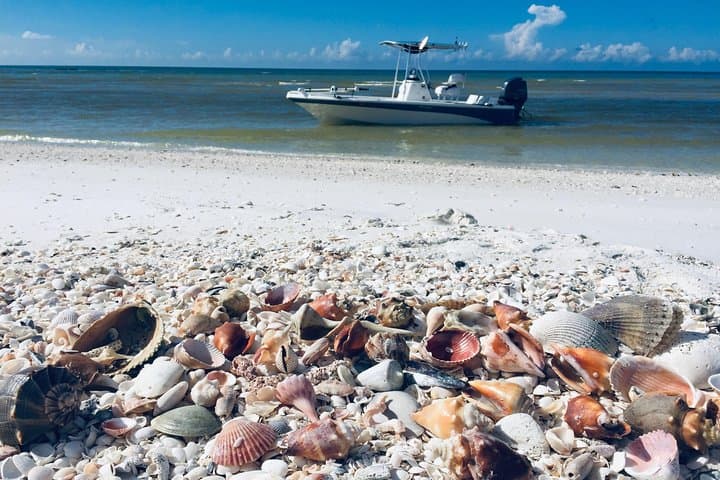
Here is why. Sanibel lies east to west at the end of a shallow Gulf plateau, so anything the sea picks up gets driven straight onto the beach rather than carried along it. A day of wind and sea out of the west is what loads the wrack line. The mornings that produce the shells people talk about for years — the big whelks, the lion's paws, the occasional junonia — are the mornings after exactly the front that spoiled the previous afternoon. Serious shellers on this island do not check the forecast hoping for sun. They check it hoping for a westerly blow.
So the answer to a wet Sanibel day is usually: take the indoor hours, then set an alarm.