Private and Luxury
Sunset Cruise Fort Myers Beach (opens in a new tab)
Join us for a scenic 90 minute cruise at sunset that blends comfort, adventure, and the wonders of nature. Book your spot today and…
1–2 hours
Prices checked
Trail
Last updated
The island's wettest public trail, named for a tree that grows standing in water — and the closest walk to the causeway toll plaza.
Photo: Eric FriedebachCC BY 3.0
The Pond Apple Trail is the first thing on Sanibel you could actually go and do. It leaves from beside the Chamber of Commerce building on Causeway Boulevard, which is roughly the first structure you pass after paying the toll, and heads inland into wetland. If you arrive at eleven and cannot check in until four, this is the answer to the afternoon.
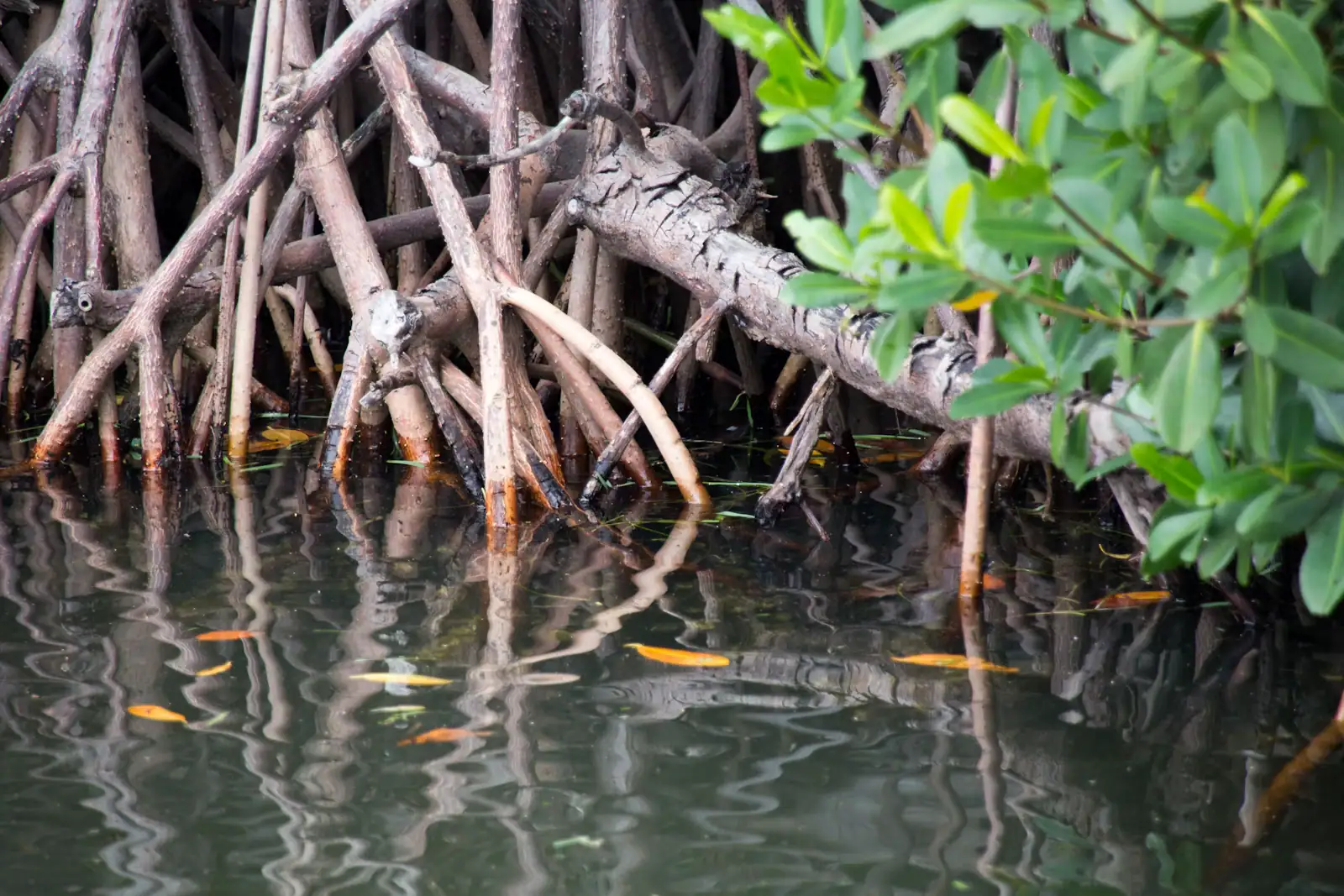
It takes its name from the pond apple, a small wetland tree that grows with its roots in standing water and drops a soft green fruit that raccoons think more of than people do. That single fact tells you what the trail is: a walk through the island's interior freshwater system rather than along its edges. Sanibel has a spine of fresh water running most of its length, a slough that islanders call the river, and the Pond Apple Trail runs along part of it.
The consequence, stated plainly by the people who manage the trail, is that this section floods and floods often. In the dry months, roughly December to April, it is a straightforward flat walk. In the wet season it can be ankle-deep in places and genuinely impassable in others. Nobody is being careless about this; it is a wetland trail and wetlands are wet. Bring footwear you do not mind writing off, or come in winter.
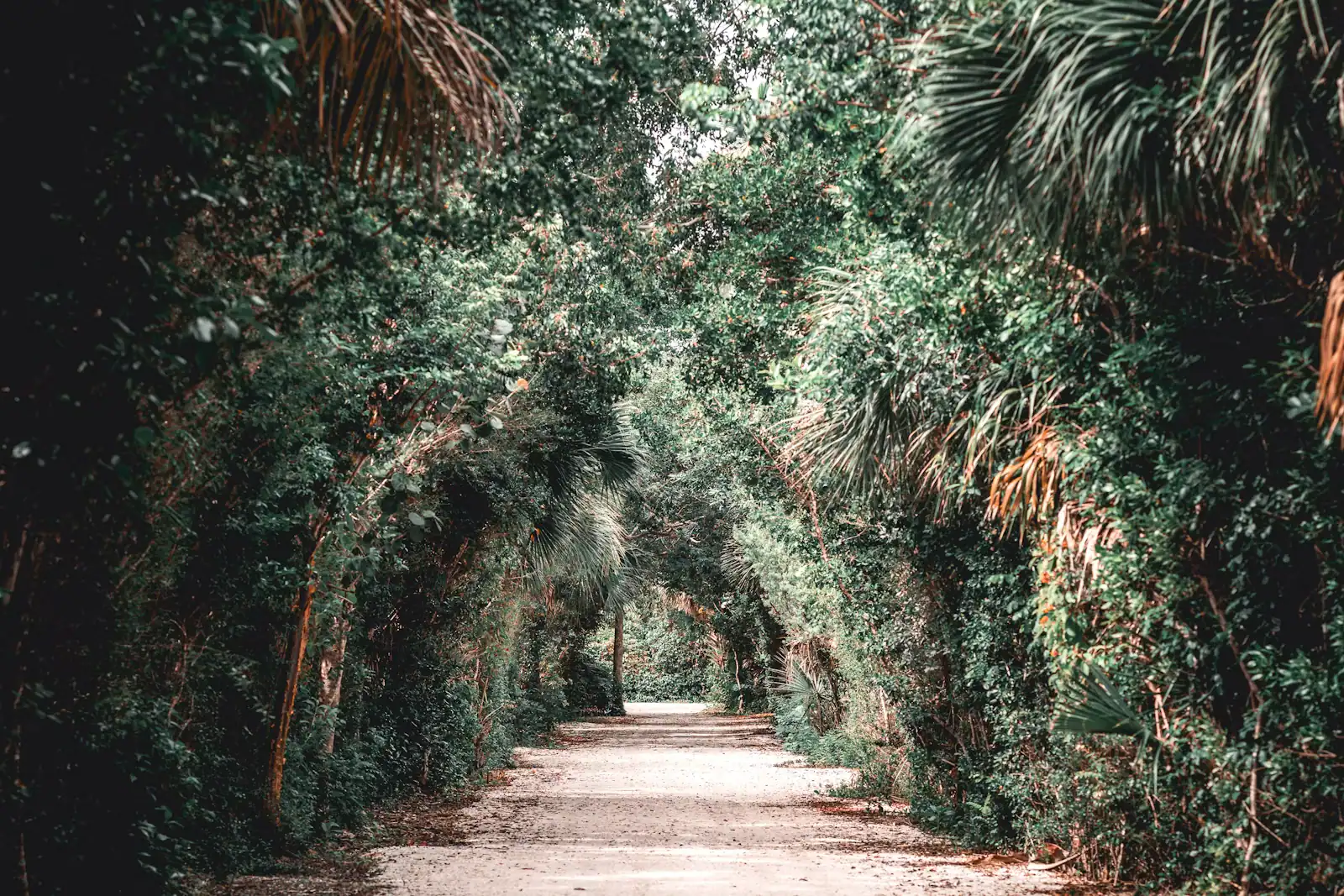
What you get for the inconvenience is the part of Sanibel that behaves like Florida rather than like a beach resort. Alligators live in this water, and you may well see one. Wading birds work the margins at either end of the day. The cover is dense enough that the temperature drops noticeably when the canopy closes.
At its western end the trail crosses the Starr D. Thomas Memorial Boardwalk and becomes SCCF's Shipley Trail, continuing to the Bailey Homestead Preserve on Periwinkle Way. The full run, both trails together, is a mile and a quarter one way.
The eastern trailhead is beside the Sanibel Chamber of Commerce building on Causeway Boulevard, a few hundred yards past the causeway toll plaza as you come onto the island. It is the closest public trail to the bridge by some distance.
The western approach is from the SCCF Bailey Homestead Preserve on Periwinkle Way, walking or riding the Shipley Trail east until the boardwalk hands over.
By bicycle, the Shared Use Path passes both ends, so the two trails together make a good inland alternative to riding Periwinkle Way through the plaza traffic.
Parking at the Chamber serves the visitor centre, not the trail, so read the signage and keep the stay short. The Bailey Homestead car park at the other end is free and has no such constraint.
This is the practical heart of the page. The people who manage these trails describe flooding on the Pond Apple section as common rather than occasional, and they are right.
Dry season, roughly December to April. Expect a firm, flat walk with damp patches. This is when to bring visiting parents and a pushchair.
Wet season, roughly June to October. Expect standing water. Depth varies from a puddle you step round to a stretch you wade. After a run of afternoon storms, or after a tropical system, sections become impassable and staying dry stops being an option.
What to wear when it is wet. Old trainers or sandals with a heel strap. Not flip-flops, which come off in mud and leave you barefoot in water you cannot see the bottom of.
What not to do. Do not wade through standing fresh water in low light. Alligators live in this system and dusk is when they move. This is not a reason to avoid the trail; it is a reason to walk it in daylight and keep out of the water.
Check first. The trail is unstaffed and there is no gate to tell you it is closed. Ask at the Chamber building if it is open, or look at the first hundred yards and be honest with yourself.
The interior wetland holds a different cast from the refuge flats, and a quieter one.
Alligators. The island has a healthy population and this is prime habitat. They are wild, they are not fed, and the city is unsentimental about people who make them otherwise. Keep dogs on a short lead, keep children in front of you, and do not approach the water's edge for a photograph.
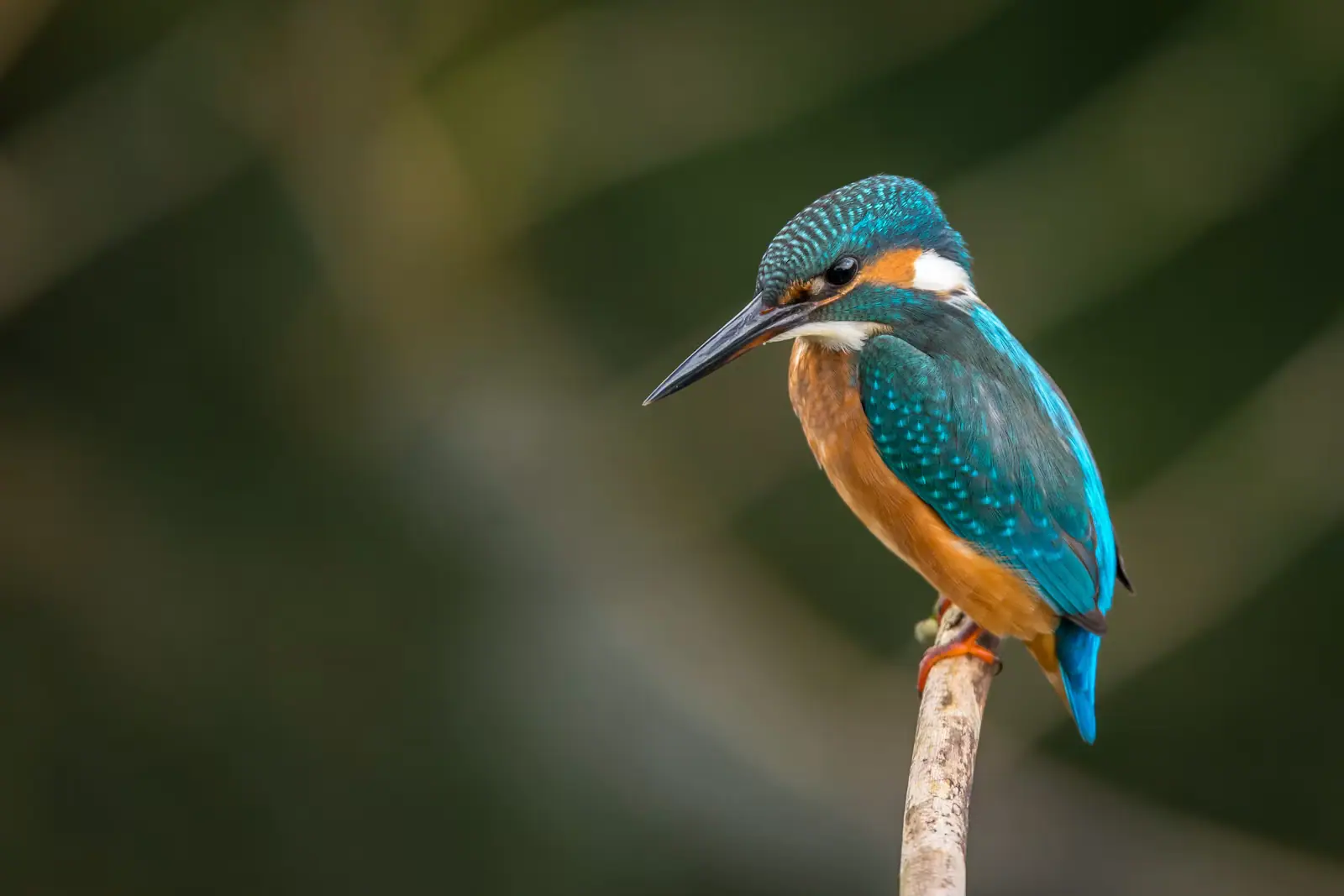
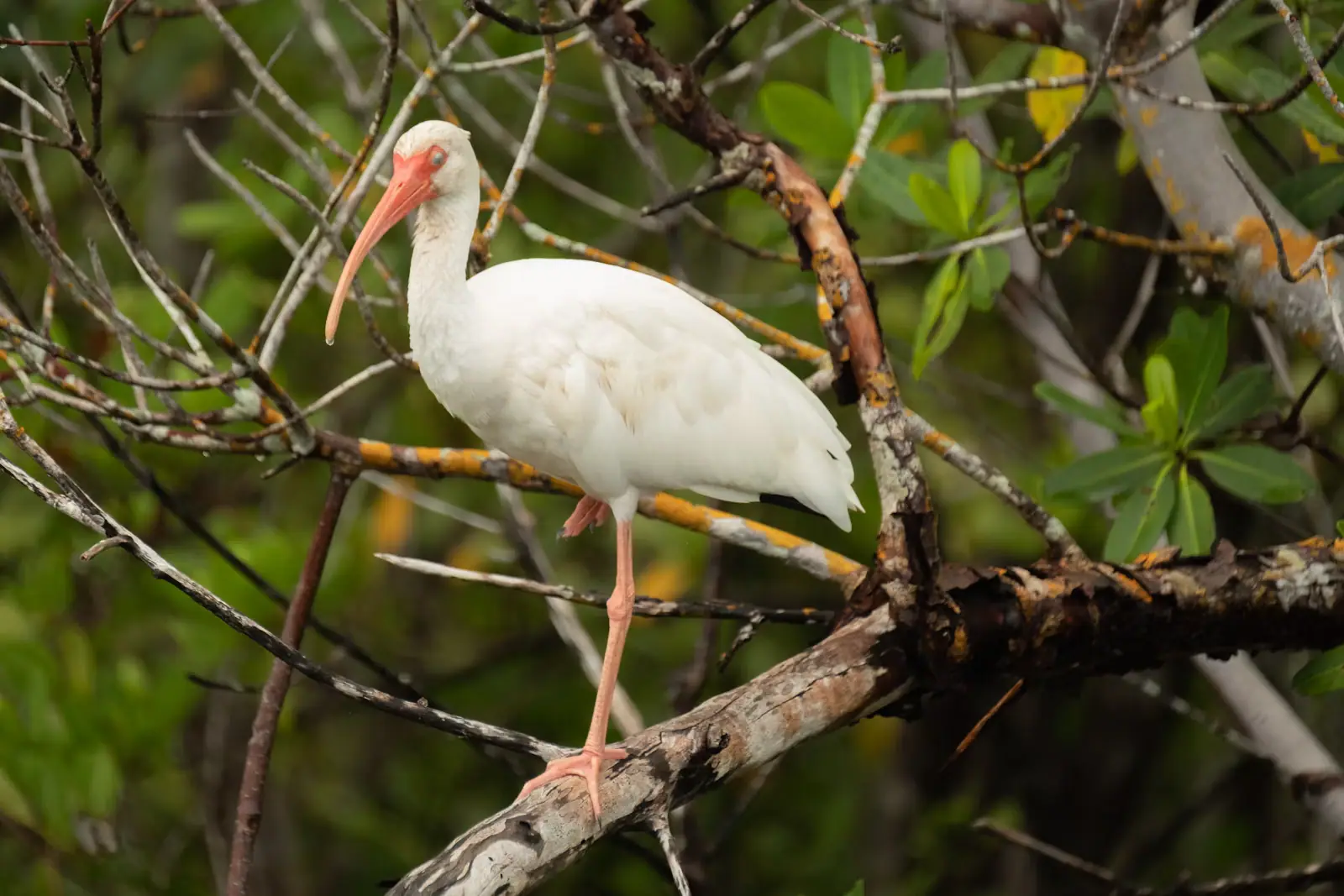
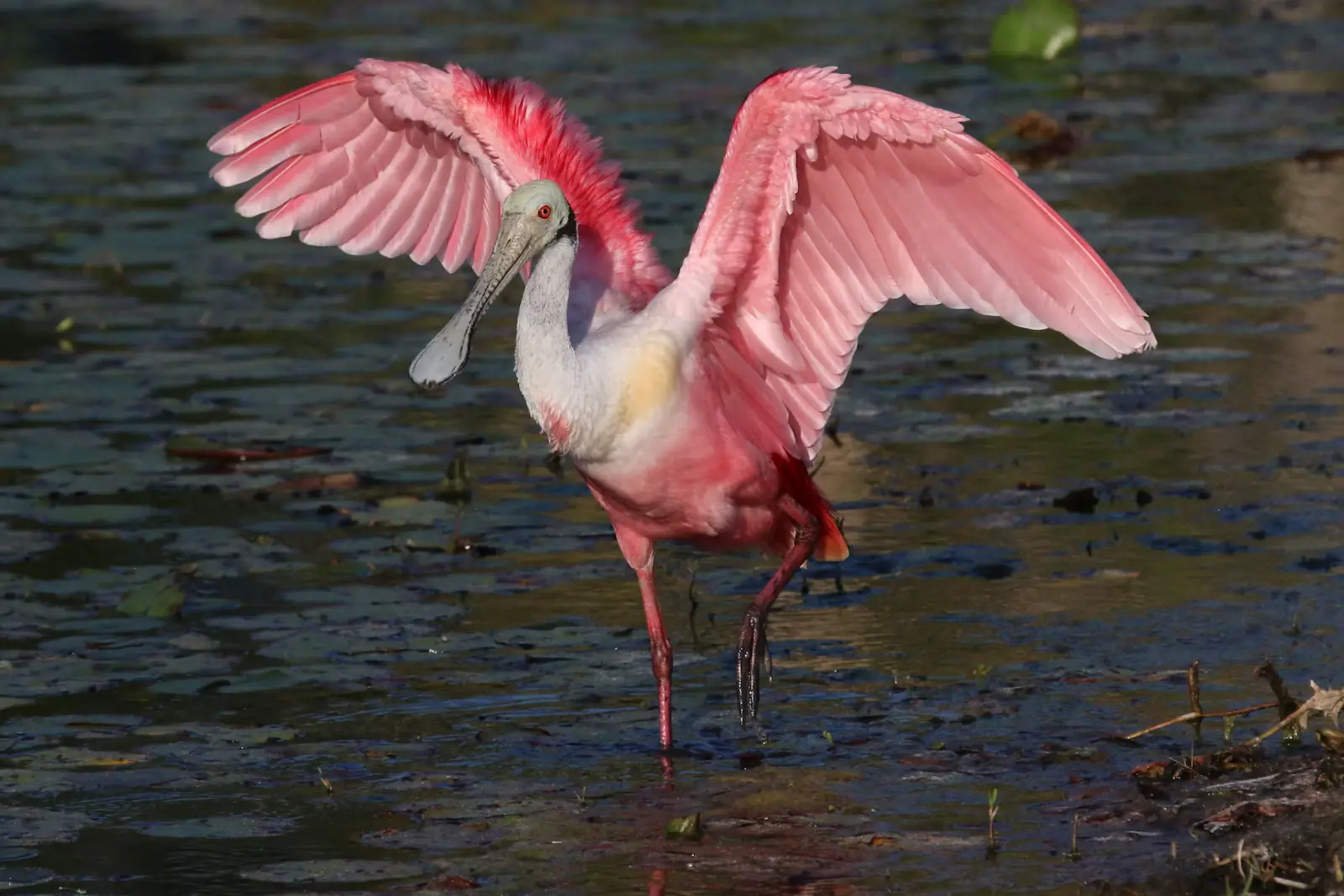
Wading birds at the margins: green heron, little blue heron, night herons, and the occasional limpkin working for apple snails.
Pond apple itself, which is worth identifying once. Leathery leaves, a trunk that flares at the base to stand in water, and a fruit that looks like a small green heart.
Cypress, willow and leather fern through the wetter stretches, giving way to cabbage palm and oak as the ground rises towards the boardwalk.
Mosquitoes and no-see-ums. Abundant, obviously. This is the trade you make for a freshwater wetland in the subtropics and there is no clever way round it. Repellent, long sleeves, and midday rather than dawn.
Bird activity peaks in the last hour of daylight, which is unfortunately also peak insect hour. Choose your priority.
Most Sanibel rentals change over on a Saturday and most of them will not let you in before four in the afternoon. You have crossed the causeway with a car full of luggage and five hours to fill.
The Pond Apple Trail is a few hundred yards past the toll plaza. That proximity is its real argument.
A sensible arrival-day sequence: stop at the Chamber building for the current island information, which is more useful in person than online because it is updated by people who were on the island that morning; walk as much of the trail as the water allows; then carry on a mile or two west to the plazas on Periwinkle Way for a first grocery run before the afternoon queue builds.
Park considerately. The Chamber car park serves a working visitor centre rather than a trailhead, so read the signs and do not leave a car there for half a day in season.
The other good use of this trail is a rainy-day fallback that is not a shop or a museum. A warm Florida drizzle in a wetland is a fair experience, and you will have the place entirely to yourself.
Operators run these trips past Pond Apple Trail, or stop there as part of a longer route. We list what the booking data supports — not everything that mentions the name.
These go through Viator and we take a commission. Same price to you, and no bearing on what we chose to put here.

Private and Luxury
Join us for a scenic 90 minute cruise at sunset that blends comfort, adventure, and the wonders of nature. Book your spot today and…
1–2 hours
Prices checked

Involves Animals
Come join us for a once in a lifetime experience that is great for all skill levels. There are only a few places on earth to see the West…
2 hours
Prices checked

Wildlife Watching
SWFL sunsets are the best, and there is no better place to watch them than from the deck of our 36ft. Sailing Catamaran, "Copacetic". The…
2 hours
Prices checked

Short term availability
On this trip, Guests will be exploring the local Islands around Fort Myers and Naples area. The Islands are well known for their excellent…
2 hours
Prices checked

Bus Tours
Experience the road to Hana in ultimate comfort in a private luxury SUV for groups of up to 5 or a transit van for groups of up to 12. We…
Full day
Prices checked

Short term availability
Enjoy speeding over the waters of Fort Myers Beach with a fun Sea-Doo rental! We offer the fastest and most stable water craft for you to…
1 hour
Prices checked
Straight-line distances, so allow more on the road — the island is long and has one main parkway.

Trail
A shaded interior trail from a 1890s homestead and native-plant nursery to the boardwalk where the city's Pond Apple Trail begins.
0.5–2 hoursFree. Parking at the preserve is free too.0.6 mi away

Trail
Twenty-five-plus miles of separated paved path from the lighthouse to Blind Pass, on an island with no traffic signal to stop you.
1–5 hoursFree to use. Bicycle hire and refuge entry are separate costs.1.9 mi away

Landmark
Three bridges, two man-made islands, one toll charged in a single direction, and the only place you can park at the water's edge.
0.5–3 hoursToll charged island-bound only — recently around $6 with a transponder and $9 by plate. Free leaving the islands.2.8 mi away

Shopping
Sanibel's main street and the birthplace of its bike path network. No traffic lights, no chain fast food, shops set back behind planting.
1–4 hoursFree. The plaza car parks along the street are free to customers.1.6 mi away
Where this place fits into a day, and the pages that plan one.

Guide hub
Most destinations have wildlife somewhere near the edges. Sanibel organised itself around it. When the causeway opened in 1963 and Lee County's plan…

Things to do
Sanibel packs four separate bird habitats into twelve miles, which is why it holds up as a birding destination rather than a pleasant place to see…

Budget
Almost everything worth doing on Sanibel is free. The beaches are free. Shelling is free and requires no equipment. The interior trails are free…

Who it suits
Start with the honest part. Sanibel has almost no indoor infrastructure. There is one significant museum, one historical village that closes for the…

Things to do
Almost everyone arrives here in a car, because the causeway is the only way on and there is no other option. Almost everyone then spends the week…

Guide
The island chose a bicycle network over wider roads. Twenty-five-plus miles of separated paved path, flat end to end, and the better way to see almost everything.
8 min readRosa Villanueva

Guide
Four miles of one-way road through 6,400 acres of mangrove. It is closed on Fridays, and the tide decides whether you see anything.
8 min readCaleb Nystrom

Guide
More than 245 species have been recorded at the refuge alone. The trick is not where to stand — it is when, and the answer is a falling tide.
7 min readCaleb Nystrom
Often, and the people who manage it say so plainly. This is a wetland trail along the island's interior freshwater system, so from roughly June to October you should expect standing water, and after a run of storms or a tropical system parts of it become impassable. December to April is dependably walkable. If you go in the wet season, wear shoes you can write off and do not wade through water you cannot see the bottom of.
Yes. Sanibel has a healthy alligator population and the interior freshwater wetland this trail follows is exactly their habitat. Seeing one is a reasonable expectation rather than a rare event. Walk in daylight, keep dogs on a short lead and away from the water's edge, keep children ahead of you where you can see them, and never approach or feed one. Feeding alligators is illegal in Florida and it is what gets them destroyed.
At the Sanibel Chamber of Commerce building on Causeway Boulevard, a few hundred yards past the toll plaza as you come onto the island, which makes it the closest trail to the causeway. It runs inland to the Starr D. Thomas Memorial Boardwalk, where it becomes SCCF's Shipley Trail and continues to the Bailey Homestead Preserve on Periwinkle Way. The two together are a mile and a quarter one way.
A small subtropical wetland tree, Annona glabra, that grows with its roots in standing fresh water and flares at the base to stay upright in it. It produces a soft green fruit shaped roughly like a heart, which wildlife eats and people generally do not. It is a good indicator species: where pond apple is thriving, the ground beneath it is wet for much of the year, which is precisely the situation on this trail.