Jay Norwood Darling was a Pulitzer-winning newspaper cartoonist who wintered on Captiva, ran the federal Bureau of Biological Survey under Roosevelt, and invented the duck stamp that still funds refuge land purchases. In 1945 he leaned on Washington to stop a stretch of Sanibel mangrove being sold off for development. The refuge that grew out of that now runs to better than 6,400 acres, about 2,620 of which Congress designated as Wilderness in 1976.
It occupies a large share of the island, and it is the single most visited thing on Sanibel. It is also the thing most often visited badly, for two avoidable reasons.
The first reason: it is closed on Fridays
Wildlife Drive, the Visitor & Education Center, the Nature Store and the Indigo Trail all close every Friday. Every week, without exception, all year.
Somebody is caught by this every single week. Plan a beach morning or the shell museum for your Friday and go to the refuge on any other day.
The Bailey Tract, a separate freshwater parcel off Tarpon Bay Road, stays open sunrise to sunset seven days a week, which is a useful consolation.
The second reason: the tide matters more than the clock
This is the part nobody tells visitors, and it is the difference between a drive past some mangroves and an afternoon you talk about afterwards.
Wildlife Drive runs along the edge of a tidal impoundment. When the water is high, the birds are dispersed and mostly invisible. As the tide drops, mudflats emerge, fish and crustaceans are concentrated into shrinking pools, and every wading bird in the neighbourhood arrives to work them.
Go on a falling tide, arriving roughly two hours before low water. That is the rule. A mid-morning low tide on a Tuesday will show you more than a perfect sunset at high water.
| Tide state | What you will see |
|---|---|
| Two hours before low, falling | The best of it. Roseate spoonbills, ibis, herons and egrets feeding shoulder to shoulder on the emerging flats |
| Low water | Still excellent, though the birds spread out as more mud appears |
| Rising | Thinning. Birds drift off as the pools refill |
| High water | Mangroves, an alligator if you are lucky, and very few wading birds |
Check a tide chart for San Carlos Bay before you decide which morning to go. It is free, it takes thirty seconds, and it is worth more than any other piece of planning on this island.
Practicalities
Gate times on Wildlife Drive were revised with effect from 1 August 2026 and now run from early morning to mid-evening — 7am to 7:30pm at the time of writing. The Fish and Wildlife Service has changed these before and lists federal holiday arrangements separately, so confirm on the refuge's own page for the day you are going.
Fees at the time of writing are ten dollars per vehicle and one dollar per cyclist or pedestrian. Federal recreation passes are accepted. The Visitor & Education Center is free to enter.
That price gap is worth a sentence. Ride in. A dollar instead of ten, no queue at the gate, and Wildlife Drive is a far better experience at ten miles an hour than at twenty-five, because you can stop wherever you like and you can hear things. The shared-use path runs to the refuge entrance from both directions.
The Visitor & Education Center has closed more than once since 2022, first for storm damage and then for reconstruction work tied to the recovery. Check its status separately from the drive's; the drive has often been open when the building was not.
The four miles, in order
The drive is one-way, unpaved but graded, and takes anywhere from forty minutes to three hours depending on how often you stop. There is no turning back, so do not rush the first mile.
- The first bay, right after the gate. The largest open water on the drive and the most reliable spoonbill viewing. Pull fully into a designated pull-off; stopping in the lane is the one thing that genuinely annoys everyone behind you.
- The Indigo Trail leaves from near the Visitor Center: two miles out and back on a level crushed-shell path along a dike, good for warblers in migration and for the alligator that is usually somewhere along the first quarter mile.
- Cross Dike and the observation tower, roughly halfway, where you can get out, climb a little and look across the whole impoundment. Best light in the last hour of the day.
- Red Mangrove Overlook, a short boardwalk into the mangrove itself — the place to understand what prop roots actually do and where the yellow-crowned night herons sit.
- The Calusa Shell Mound Trail, a quarter-mile loop on a boardwalk over an ancient midden. Shaded, quiet, and the best mosquito habitat on the island; bring repellent or keep moving.
- Wulfert Keys and the west end, where the drive turns back toward San-Cap Road and the water opens out again.
Tram tours run the drive with a naturalist commentary and are operated by the refuge's concessionaire at Tarpon Bay. They book up and they are a good answer if you would rather look than drive. Reservations are the norm rather than the exception.
The other ways in
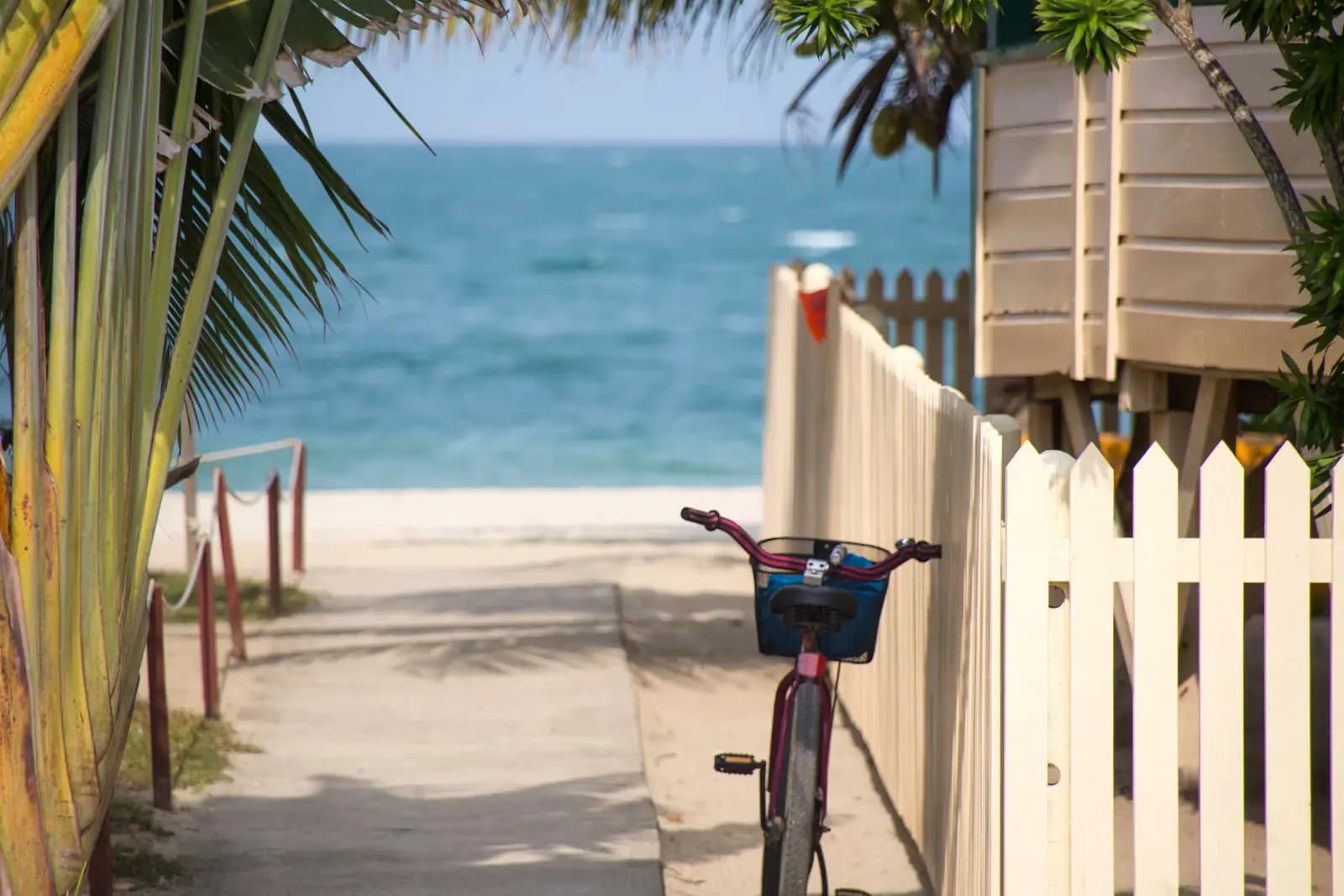
Tarpon Bay is the refuge's water access, on the bay side off Tarpon Bay Road. Kayaks and canoes launch onto a marked trail through the mangrove, and paddling into a rookery at dusk is a genuinely different experience from the drive. The concession also rents bikes and runs guided paddles and cruises.
The Bailey Tract is the freshwater half of the refuge: about a hundred acres of ponds and flat, unpaved trails off Tarpon Bay Road, free, open dawn to dusk, and almost always empty. It is where you go for alligators, gallinules, rails and the small freshwater birds that never appear on Wildlife Drive.
The Shell Mound and Indigo trails are both walkable without paying the vehicle fee if you arrive on foot or by bicycle.
What actually lives here
The refuge records more than 245 bird species, and the headline ones are genuinely easy to see rather than a promise you have to take on trust.
Roseate spoonbills are the reason half the photographers are there: pink, absurd, and feeding by sweeping that flattened bill sideways through shallow water. Winter and early spring are the reliable months.
Reddish egrets are the bird to actually look for. There are only a few thousand in the United States and they hunt by running, staggering and canopying their wings over the water, which is unmistakable once you have seen it.
White pelicans arrive for the winter and are enormous — a nine-foot wingspan, fishing cooperatively in lines. They are not the brown pelicans you see diving off the beach.
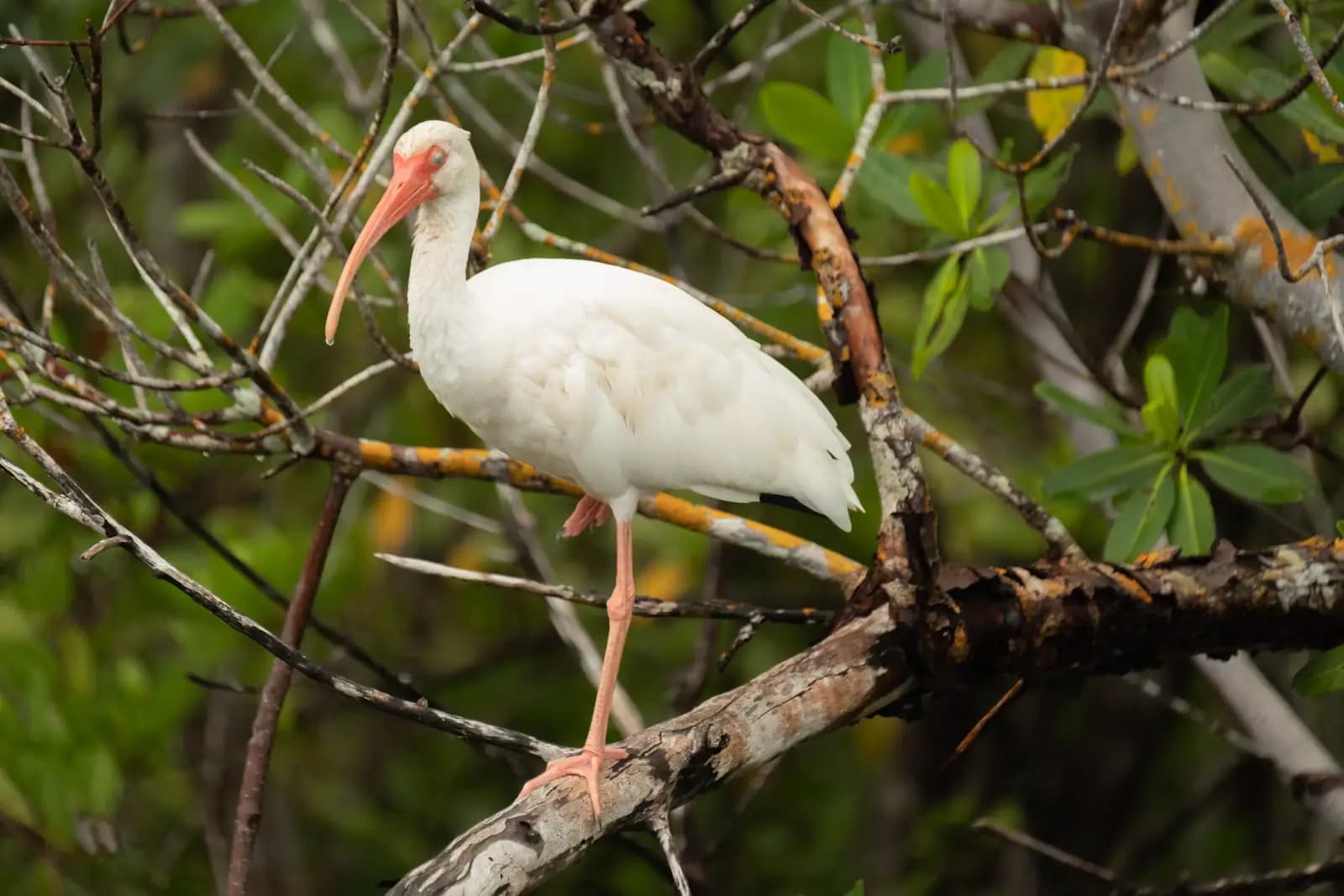
Then the reliable cast: white ibis in flocks, yellow-crowned and black-crowned night herons, tricolored and little blue herons, great and snowy egrets, anhingas drying their wings, ospreys on almost every pole, and mangrove cuckoos for the people who really know what they are doing.
American alligators live in the freshwater parts, notably the Bailey Tract and the Sanibel Slough. Bobcats, river otters and marsh rabbits are all present and mostly nocturnal. Manatees turn up in Tarpon Bay in the cooler months.
Refuge etiquette, which is stricter than a park
A National Wildlife Refuge is managed for the wildlife first and for visitors second. That distinction has practical consequences.
Stay in your vehicle except at designated pull-offs and trailheads. Walking the dike edge to get closer flushes birds off the feeding flats, which is the one thing the impoundment exists to provide.
Do not feed anything, ever. Feeding an alligator is a criminal offence in Florida carrying penalties comparable to the shelling ban, and the city rewrote its nuisance-alligator policy after a fatal attack on Sanibel in July 2004.
Keep pets in the vehicle. Dogs are not permitted out of a car on Wildlife Drive.
Drones are prohibited across the refuge.
Drive slowly and pull fully off before stopping. The drive is narrow and a car halted in the lane to photograph an ibis is the standard complaint.
Take the mosquito warning at the Shell Mound trail seriously in summer. This is a mangrove refuge on a subtropical island, and the insects are the reason the habitat works.
Last updated
Opening hours, ordinances and prices move with the season. We re-check this guide rather than rewrite it, and the date above is the last time someone did. How we research and correct.